Chicken Satay – Spring Roll Bowls: Bold Flavor Meets Fresh Simplicity
Introduction
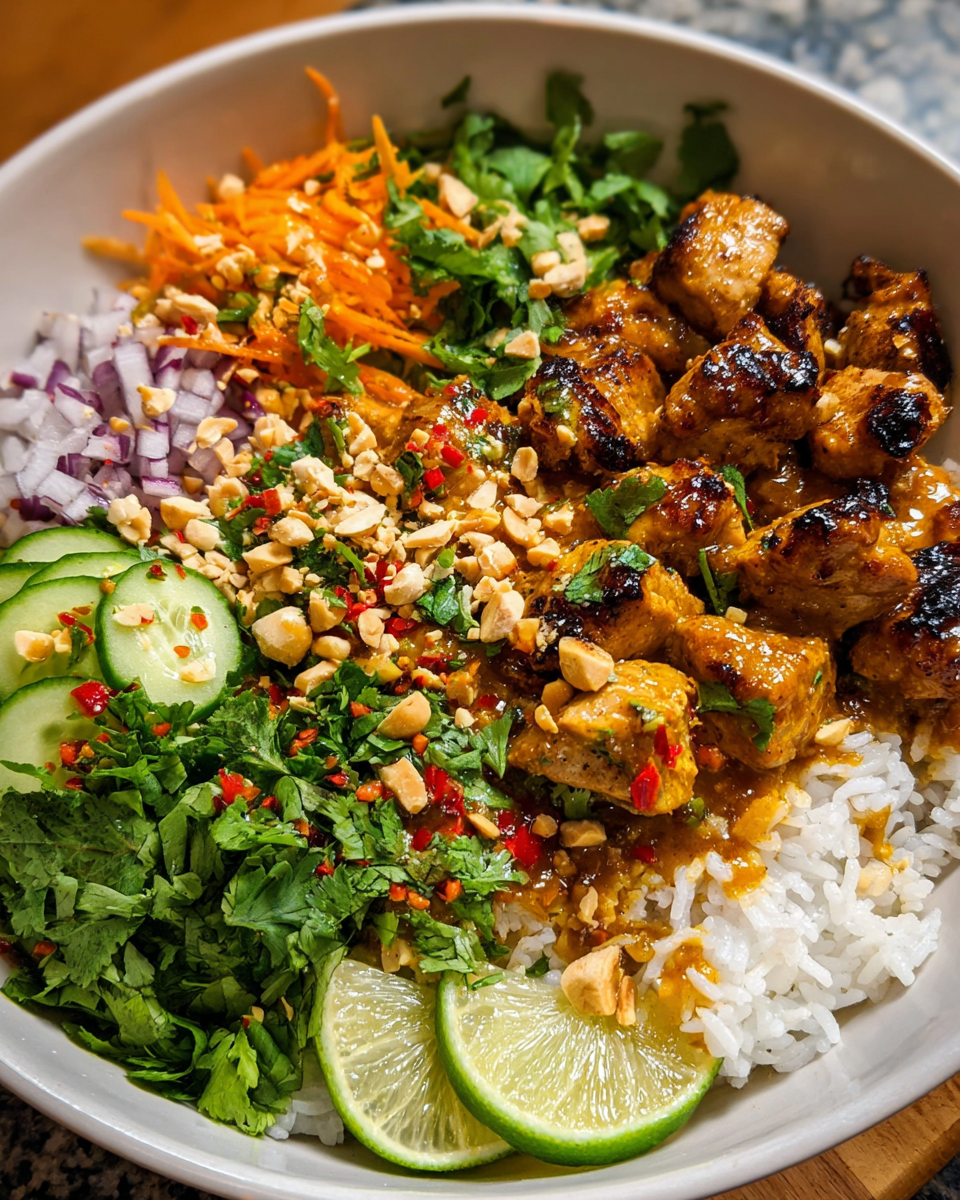
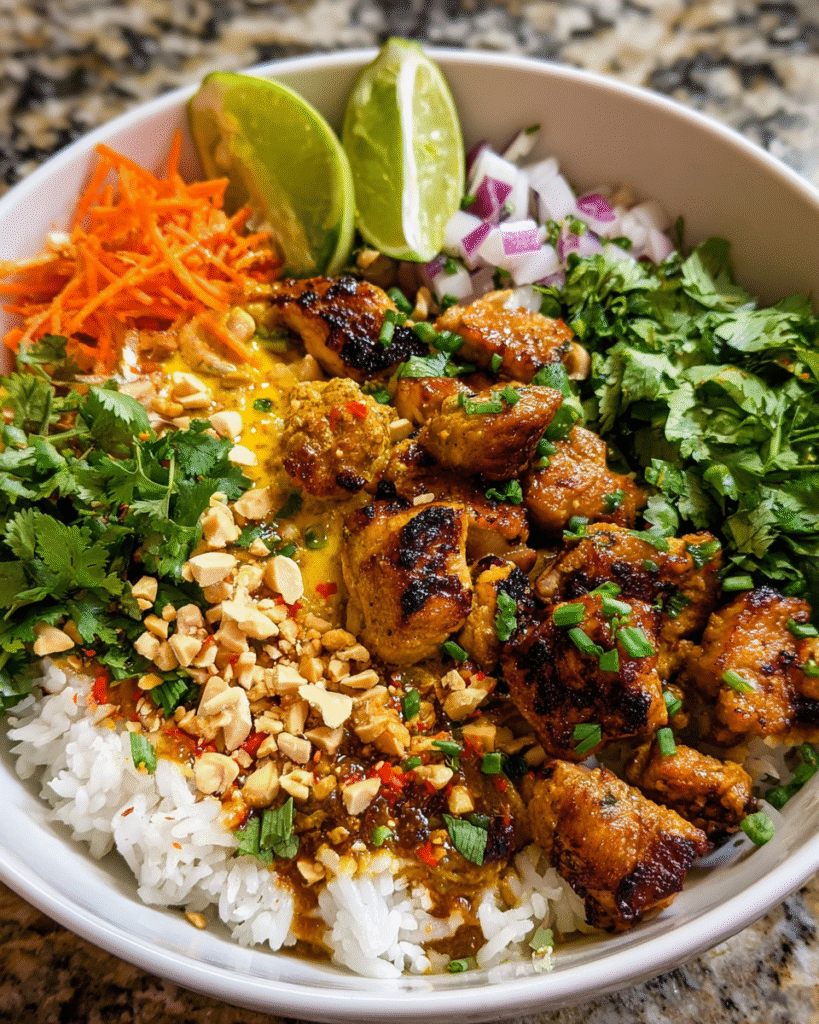
Chicken Satay – Spring Roll Bowls combine the bold, savory taste of Southeast Asian grilled chicken with the refreshing crunch of spring roll ingredients — all layered into one vibrant bowl. This recipe isn’t just a feast for your tastebuds; it’s a smart, customizable meal that’s perfect for meal prep, quick dinners, or impressing guests. With marinated chicken, crisp vegetables, fragrant herbs, and a finishing drizzle of sauce, it checks every box: bold flavor, balanced nutrition, and beautiful presentation. In this article, you’ll discover how to make, serve, and elevate these Chicken Satay – Spring Roll Bowls effortlessly at home.
Print
Chicken Satay – Spring Roll Bowls: Bold Flavor Meets Fresh Simplicity
- Total Time: 50 minutes
- Yield: 4 servings
Description
- Chicken Satay – Spring Roll Bowls combine grilled curry chicken with fresh vegetables in one easy, healthy meal bowl.
Ingredients
-
2 pounds boneless, skinless chicken thighs, cut into bite-sized pieces
-
2 tablespoons olive oil
-
2 teaspoons finely minced fresh garlic
-
2 teaspoons ginger paste
-
2 tablespoons low-sodium soy sauce
-
2 teaspoons yellow curry powder
-
1 teaspoon ground turmeric
-
2 teaspoons ground coriander
-
2 teaspoons chili powder
-
1/4 cup coconut milk
-
1 1/2 teaspoons salt, or to taste
-
1/2 teaspoon ground black pepper
-
2 teaspoons brown sugar or honey
-
Red pepper flakes, to taste
-
Chopped fresh cilantro, lime juice, and chopped peanuts (for garnish)
Instructions
-
In a large mixing bowl, combine the chicken with olive oil, garlic, ginger, soy sauce, curry powder, turmeric, coriander, chili powder, coconut milk, salt, black pepper, red pepper flakes, and brown sugar or honey. Mix thoroughly to coat the chicken evenly.
-
Cover and let the chicken marinate in the refrigerator for at least 30 minutes.
-
Thread the marinated chicken pieces onto skewers, using about 5 to 6 pieces per skewer. (If using wooden skewers, soak them in water for 30 minutes beforehand.)
-
Heat a cast-iron skillet over medium-high heat and add a small amount of oil.
-
Cook the skewers in batches if necessary, placing them in the pan without crowding. Sear for about 5 to 6 minutes on one side, then flip and cook for another 6 minutes until golden brown.
-
Reduce the heat to low and cook for an additional 1 to 2 minutes or until the chicken is cooked through.
-
Remove from heat and finish with chopped cilantro, a squeeze of lime juice, and a sprinkle of chopped peanuts.
-
Serve as a main dish over rice with your choice of fresh vegetables.
- Prep Time: 35 minutes
- Cook Time: 15 minutes
- Category: Seasonal and Holiday Salads
- Method: Skillet
- Cuisine: Southeast Asian-Inspired
Table of Contents
What Is a Chicken Satay – Spring Roll Bowl?
Origins of Chicken Satay and Spring Rolls
Chicken satay, a beloved Southeast Asian dish, originated in Indonesia and quickly spread across Malaysia and Thailand. It features marinated meat—usually chicken or beef—grilled on skewers, often served with peanut sauce. On the other hand, spring rolls come from Vietnam and China, typically packed with fresh vegetables, herbs, and sometimes noodles, wrapped in delicate rice paper. But what happens when you remove the wrapper and reimagine the experience in bowl form? That’s where the magic of Chicken Satay – Spring Roll Bowls begins—a smart, deconstructed twist on two cultural favorites. The idea isn’t new, but this version elevates it through a fusion of flavor, texture, and ease.
Components of a Chicken Satay – Spring Roll Bowl
At the heart of this bowl is the chicken: marinated in coconut milk, soy sauce, curry powder, and warm spices. It’s seared until golden, locking in flavor. Next comes the “spring roll” inspiration—think shredded cabbage, crisp cucumbers, matchstick carrots, mint, basil, and cilantro. Add a base like rice or rice noodles, and you’ve got a filling foundation. What pulls it together? Crunchy chopped peanuts, a squeeze of lime juice, and a light drizzle of sauce. The result is vibrant, nourishing, and anything but boring.
Why This Dish Is So Popular Now
Why are Chicken Satay – Spring Roll Bowls trending? Because they tick every modern food box: gluten-optional, meal-prep friendly, visually stunning, and full of contrast. The savory chicken balances beautifully with the brightness of raw vegetables and herbs. Busy home cooks love that it’s easy to prepare ahead and versatile—swap proteins, change bases, or adjust spice levels. Plus, bowls like this are more forgiving than tightly rolled spring rolls and far more customizable. Whether you’re craving bold Southeast Asian flavor or need a weekday dinner that delivers big without the fuss, this dish checks every box.
How to Make the Chicken Satay – Spring Roll Bowls (Step-by-Step)
Preparing & Marinating the Chicken Satay
The flavor of chicken satay hinges on the marinade. For this version, start with bite-sized chicken thigh pieces—dark meat stays juicier than breast. The marinade is where complexity unfolds: olive oil, garlic, ginger paste, low-sodium soy sauce, yellow curry powder, turmeric, coriander, chili powder, coconut milk, and a dash of brown sugar or honey. Don’t forget salt, pepper, and a few red pepper flakes if you like heat. Mix everything in a bowl, toss the chicken to coat, and refrigerate for at least 30 minutes. This time allows the spices and coconut milk to deeply penetrate, resulting in tender, flavorful chicken.
Cooking the Skewers & Finishing Touches
Once marinated, thread the chicken pieces onto soaked wooden skewers. Preheat a cast-iron skillet and add a touch of oil. Sear the skewers on medium-high heat—about 5 to 6 minutes per side—until golden and slightly charred. Reduce heat and cook 1 to 2 more minutes to ensure the chicken is done through. Remove from heat and let them rest for a minute. Finish with a sprinkle of chopped peanuts, fresh cilantro, and a bright squeeze of lime. The aroma is incredible, and the balance of savory, smoky, and fresh is spot-on.
Assembling the Spring Roll Bowl
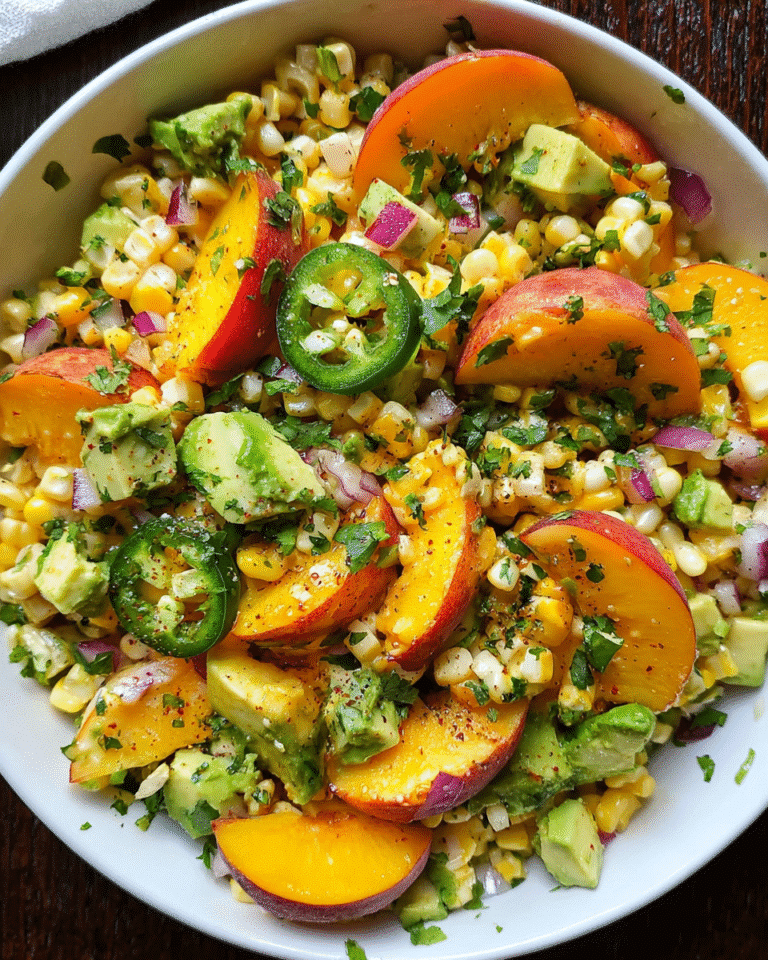
Now comes the layering. Start with your base: jasmine rice, rice noodles, or even shredded lettuce if you want it low-carb. Add sliced cucumbers, shredded cabbage, julienned carrots, mint, basil, and cilantro. Remove the chicken from skewers and place on top. For sauce, you can drizzle a light peanut dressing or even a tamari-lime vinaigrette for a lighter feel. To keep it ultra-fresh, add the sauce just before serving. Garnish with extra peanuts and herbs. For a bright contrast, try serving it with this summer peach balsamic caprese salad—it adds a sweet counterpoint to the bowl’s savory core.
Tips & Secrets to the Best Chicken Satay – Spring Roll Bowls
Achieving Tender, Juicy Chicken Satay
The secret to tender chicken satay lies in a three-part balance: acid, fat, and time. Coconut milk provides fat and moisture, soy sauce brings umami and salt, and the combination of spices deeply seasons the meat. Letting the chicken marinate for a minimum of 30 minutes (ideally overnight) makes all the difference. Once it hits the skillet, avoid overcrowding. Sear in batches if needed to maintain heat and caramelization. Don’t rush the final low-heat step—it finishes cooking the center without drying it out. Resting the meat post-cook helps redistribute juices, keeping every bite succulent.
Balancing Flavors & Textures
Great bowls are built on contrast. The chicken satay is warm, spiced, and savory, so balance it with raw, cool vegetables like cucumber and cabbage. Carrots add crunch, while herbs like mint and basil offer brightness. A light peanut or tamari-lime sauce adds creaminess and tang. Always taste your bowl before serving and adjust as needed—maybe a pinch of chili flakes for heat or an extra lime wedge for acid. A balanced bowl keeps each bite exciting. Pair it with a savory veggie side like this fresh corn and bacon dish to round out your plate.
Variations & Substitutes
One of the strengths of Chicken Satay – Spring Roll Bowls is how adaptable they are. For a vegetarian option, swap chicken with tofu or tempeh. Prefer seafood? Shrimp works beautifully with the same marinade. Can’t handle peanuts? Try sunflower seed butter for a similar creamy richness in your sauce. Rice noodles can be replaced with brown rice or cauliflower rice, and gluten-free soy sauce or tamari works for those with sensitivities. You can even go low-carb by using spiralized vegetables as the base. It’s your bowl—customize it to fit your taste, diet, and pantry.
Nutrition, Health & Smart Serving Ideas
Nutritional Profile & Benefits
A single bowl of this Chicken Satay – Spring Roll recipe delivers around 420 calories, 38g of protein, and only 8g of carbohydrates. It’s a protein-packed, low-sugar option that works for both high-energy days and light dinners. Thanks to the use of chicken thighs, coconut milk, and olive oil, it includes healthy fats—25g total, including both saturated and unsaturated. Spices like turmeric and coriander bring natural anti-inflammatory properties, while the fresh vegetables offer fiber, crunch, and vitamins. For those monitoring sodium, opt for low-sodium soy sauce and reduce added salt slightly. You get flavor without compromising on health.
Serving Suggestions & Pairings
Wondering what to pair chicken satay with? Think contrast and refreshment. Crisp cucumber salads, light pickled veggies, or chilled fruit slaws make excellent sides. For a more complete plate, steamed jasmine rice or rice noodles are classic. You can even go fusion—serve it alongside tropical fruit like mango or pineapple to brighten the dish. Drinks? Thai iced tea, sparkling lime water, or a light rosé all complement the satay spice beautifully. For a well-rounded table, add something hot and hearty, like miso soup or roasted edamame, for warmth and texture contrast.
Storing, Reheating & Meal Prep Tips
This recipe is meal-prep gold. Store each component separately in airtight containers for up to 3 days. Keep sauces in small jars and herbs in paper towel-lined containers to maintain freshness. When reheating chicken, use a skillet over low heat or gently microwave with a damp towel to avoid drying out. Assemble bowls fresh just before serving. For quick weekday lunches, pre-chop veggies and keep ready-to-go rice portions in the fridge. Having your chicken already cooked and sliced will cut prep time to under 5 minutes per meal.
Troubleshooting & Common Mistakes
Chicken Is Tough or Dry
If your chicken turns out dry, chances are it was either overcooked or under-marinated. Chicken thighs are more forgiving, but still benefit from a marinade with coconut milk and oil to tenderize. Don’t skip the resting time post-cooking—it helps juices redistribute. Avoid high heat for too long; instead, sear first, then reduce the heat to cook it through gently. Use a thermometer if needed; 165°F internal temp is your safe target for juicy results.
Sauce Too Thick or Too Thin
Homemade satay sauces can vary wildly in consistency. If your sauce is too thick, thin it with a bit of warm water, coconut milk, or lime juice—just a teaspoon at a time. Too thin? Stir in more nut butter or reduce on low heat until thickened. Always taste as you go. Salt, sweetness, and acid need to be in harmony. When stored, the sauce may thicken in the fridge, so give it a gentle warm-up and stir before serving.
Vegetables Soggy / Bowl Becomes Watery
A soggy bowl often results from wet vegetables or overdressed ingredients. To prevent this, dry your vegetables thoroughly after washing. Add sauces and lime juice just before serving, not during prep. Also, avoid layering hot chicken directly onto fresh greens—let it cool slightly to keep herbs crisp. When meal prepping, store each component separately and assemble fresh to preserve texture. A quick fix if your bowl gets watery? Add extra shredded cabbage or herbs to absorb excess moisture and revive crunch.
Serving Ideas & Presentation
Bowls vs Skewers — Presentation Options
Presentation can elevate your Chicken Satay – Spring Roll Bowls from everyday to exceptional. For a rustic, casual look, serve the chicken directly over the bowl, freshly sliced off the skewers. Prefer a bolder, structured presentation? Keep the skewers intact and place them across the bowl diagonally—it adds height and drama. When hosting or plating for photos, use shallow white bowls and contrast the warm tones of the chicken with the vibrant greens and oranges from the vegetables for maximum visual impact.
Garnish & Final Touches
Finishing touches are more than just decoration—they add flavor and texture. A generous sprinkle of chopped peanuts brings nutty crunch, while torn mint or Thai basil infuses a cooling, herbal lift. Lime wedges served on the side let guests adjust the acidity to taste. A final drizzle of sauce—either artfully zigzagged or pooled at the base—makes the bowl feel restaurant-worthy. For added flair, you can top it with sesame seeds or a quick chili oil splash if you’re feeling adventurous.
Serving for Occasions & Meal Prep
Hosting a dinner party or prepping weekday lunches? This dish flexes to fit. For groups, set up a DIY bowl bar with components laid out for guests to build their own—like a spring roll buffet. Keep hot items like skewers warm in the oven while fresh ingredients stay chilled. For meal prep, portion everything into containers: one for chicken, one for veggies, one for base, and a small jar for sauce. This keeps textures crisp and flavors distinct until you’re ready to assemble and enjoy.
FAQs
What to Pair Chicken Satay With?
Chicken satay is bold and spiced, so ideal pairings are light and crisp. Think cucumber salad, steamed jasmine rice, pickled vegetables, or a cool noodle salad with lime dressing. These side dishes add brightness and crunch, making the overall meal more dynamic. For a summery pairing, a peach salad or fresh corn side can soften the spice with sweetness and texture. Drinks like citrus-infused water or lightly sweetened teas are perfect to round it out.
What Is the Secret to Tender Chicken Satay?
The key to tender chicken satay lies in the marinade and the meat choice. Chicken thighs, with their higher fat content, stay juicier than breast. A well-balanced marinade that includes fat (coconut milk), acid (soy sauce), and aromatics (garlic, ginger, curry) breaks down fibers and infuses flavor. Letting it sit for at least 30 minutes—or overnight—unlocks maximum tenderness. Cooking over medium-high heat seals in juices, and a final low-heat step ensures the inside is done without drying the exterior.
Is Chicken Satay from Chinese Healthy?
Chicken satay actually hails from Southeast Asia, particularly Indonesia, Malaysia, and Thailand—not China. Its health factor depends on preparation. When grilled with minimal oil and paired with a fresh vegetable bowl, chicken satay becomes a protein-rich, low-carb option. Using lean cuts, less sugar in the marinade, and controlling sodium makes it an even better fit for a health-conscious diet. The spices offer metabolic and anti-inflammatory benefits too.
What Is a Spring Roll Bowl?
A spring roll bowl is a deconstructed version of traditional fresh spring rolls. Instead of being wrapped in rice paper, the same ingredients—like vermicelli noodles, herbs, crisp vegetables, and proteins—are layered into a bowl. It’s less mess, more flexibility, and perfect for larger servings or lunch prep. The idea is to retain the flavor and texture of spring rolls while removing the difficulty of rolling and wrapping.
Conclusion
Chicken Satay – Spring Roll Bowls deliver vibrant flavor, crunchy texture, and nourishing ingredients in every bite. This recipe blends rich marinated chicken with crisp vegetables and fresh herbs for a bowl that’s bold, flexible, and endlessly craveable. Whether you’re meal-prepping lunches, hosting a flavor-forward dinner, or simply looking for a smart weeknight dinner, this dish adapts to your needs without compromising taste or presentation.
Love this bold and fresh style? Don’t miss my Summer Peach Balsamic Caprese Salad or Fresh Corn and Bacon Side Dish for even more seasonal inspiration.
For more successful recipes, you can visit our Facebook page or our Pinterest account