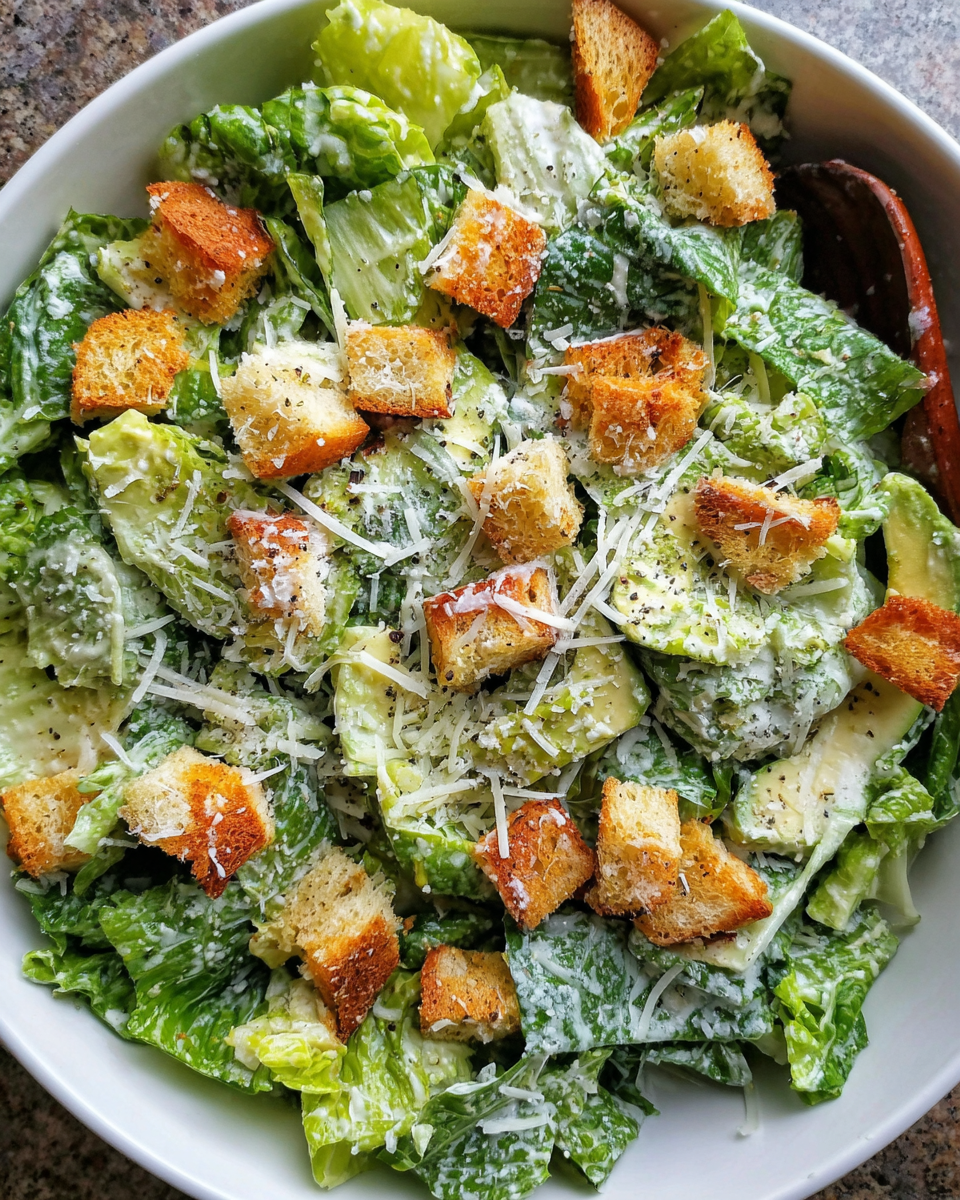
Caesar Salad with Homemade Caesar Dressing: Crisp, Creamy, Classic
Introduction :
Craving the bold, tangy crunch of a classic Caesar Salad with Homemade Caesar Dressing? You’re in the right place. This article dives deep into the timeless favorite, uncovering its origin, essential ingredients, step-by-step preparation, and expert tips to elevate your salad game. Whether you’re curious about making the perfect coddled egg dressing or want a crisp bite loaded with flavor, we’ll guide you through each part. You’ll also discover smart add-ons, nutritional tips, and creative ways to customize your Caesar. Let’s reimagine this iconic dish with a homemade touch that’s both fresh and unforgettable.
Print
Caesar Salad with Homemade Caesar Dressing: Crisp, Creamy, Classic
- Total Time: 20 minutes
- Yield: 4 servings
Description
- Caesar Salad with Homemade Caesar Dressing – discover how to make this creamy, tangy classic from scratch with bold flavor and simple steps.
Ingredients
-
For the Salad:
-
1 large head romaine lettuce, chopped (or 2 small heads)
-
1/3 cup shredded or shaved Parmesan cheese
-
1 to 2 ripe avocados, diced (optional)
-
1 cup croutons
-
Freshly ground black pepper, to taste
For the Dressing:
-
1 cup light olive oil
-
1/3 cup fresh lemon juice (about 1½ lemons)
-
6 anchovy fillets (packed in oil)
-
1 large egg, coddled (or 1 tablespoon mayonnaise as a substitute)
-
2 garlic cloves
-
2 tablespoons milk
-
1/2 teaspoon Worcestershire sauce
-
1 teaspoon mustard powder
-
1/2 teaspoon ground black pepper
-
Instructions
-
Prepare the Coddled Egg (Optional):
-
Bring a small pot of water to a boil.
-
Gently lower the egg into the boiling water and stir continuously for 2½ minutes.
-
Transfer the egg to cold water, then crack and split it open. Scoop out the yolk and scrape the cooked whites into a bowl.
-
-
Make the Dressing:
-
In a blender or food processor, combine the coddled egg (or mayonnaise), olive oil, lemon juice, anchovies, garlic, milk, Worcestershire sauce, mustard powder, and black pepper.
-
Blend until smooth. Adjust the seasoning as needed, such as adding more lemon juice.
-
Chill the dressing in the refrigerator while assembling the salad.
-
-
Assemble the Salad:
-
In a large bowl, combine chopped romaine, shredded Parmesan, and avocado if using.
-
Drizzle with the desired amount of dressing and toss until evenly coated.
-
Top with croutons and freshly cracked black pepper.
-
Serve immediately.
-
- Prep Time: 20 minutes
- Cook Time: 00 minutes
- Category: Healthy Salad Recipes
- Method: Tossed
- Cuisine: American
Table of Contents
Origins & Essentials of Caesar Salad
The Origin Story of the Caesar Salad
Despite what many believe, Caesar Salad wasn’t born in Italy—it was created in Tijuana, Mexico, by Italian-American restaurateur Caesar Cardini in the 1920s. Faced with a kitchen shortage on a busy holiday weekend, Cardini improvised with what he had: romaine lettuce, garlic, croutons, Parmesan, eggs, olive oil, and Worcestershire sauce. The resulting salad was so unique and flavorful that it quickly became a culinary icon. Over time, it evolved, with the addition of anchovies and lemon juice enhancing its complexity. Today, the Caesar Salad with Homemade Caesar Dressing is revered for its bold simplicity and global appeal.
What Defines a Caesar Salad?
At its core, a traditional Caesar Salad is about texture and flavor harmony. Crisp romaine provides the crunch, shaved Parmesan adds salty depth, croutons offer buttery crunch, and the dressing ties everything together with its creamy, umami-rich punch. While bottled versions exist, nothing compares to a homemade Caesar dressing. Made from anchovies, lemon juice, mustard, garlic, egg (or mayo), and olive oil, it’s what gives the salad its signature taste. When these elements are balanced right, Caesar Salad becomes more than a side—it turns into a crave-worthy main.
Why Make Caesar Salad with Homemade Caesar Dressing?
The store-bought dressing often lacks the intensity and depth you get when crafting your own. Making Caesar Salad with Homemade Caesar Dressing gives you full control over texture, freshness, and flavor. You can adjust acidity, blend in ripe avocados for creaminess, or experiment with spices for a unique twist. Plus, when you create it from scratch, it becomes more than just a salad—it becomes a reflection of your kitchen confidence. And if you’re exploring fresh takes on salads, check out this cabbage salad with Indian tadka or this refreshing Indian cucumber yogurt salad.
Key Ingredients & Variations
Core Ingredients in Classic Caesar Salad with Homemade Caesar Dressing
A true Caesar Salad with Homemade Caesar Dressing begins with a short but powerful ingredient list. Romaine lettuce is the star—crisp, sturdy, and capable of holding dressing without wilting. Parmesan, preferably aged and shaved, adds nutty richness. Croutons provide a buttery crunch, often pan-toasted or oven-baked from day-old bread. Then comes the dressing: anchovies, lemon juice, mustard powder, garlic, and coddled egg blended with olive oil into a creamy emulsion. These elements work together in harmony, and without them, the Caesar loses its identity.
Optional Add-Ons (Avocado, Chicken, Croutons)
What elevates a Caesar Salad with Homemade Caesar Dressing from classic to customized is what you add next. Diced avocados bring buttery smoothness and healthy fats, making the salad heartier and more luxurious. Grilled chicken turns it into a full meal, offering lean protein and a smoky edge. Croutons—whether classic or seasoned—add contrast and crunch. You can also throw in bacon bits, grilled shrimp, or soft-boiled eggs depending on your preferences or the occasion. These enhancements make your Caesar as satisfying as it is adaptable.
Ingredient Substitutions & Dietary Tweaks
Need to tweak the recipe for dietary reasons? There are many easy swaps. If anchovies aren’t your thing, use capers or omit them entirely. For vegetarians, Worcestershire sauce can be replaced with tamari and a pinch of miso paste for depth. Egg-free? Just substitute a tablespoon of mayonnaise to mimic the emulsion. Want it dairy-free? Opt for nutritional yeast or a vegan Parmesan alternative. With so many options, Caesar Salad with Homemade Caesar Dressing remains a flexible, crowd-friendly favorite that can easily fit into any lifestyle.
Step-by-Step Method for Making Caesar Salad
Preparing the Lettuce and Croutons
Start with fresh, crisp romaine lettuce. Wash and dry thoroughly—moisture dilutes the dressing. Tear or chop into bite-sized pieces, then chill it briefly for extra crunch. For croutons, cube day-old bread and toss with olive oil, garlic, and a pinch of salt. Bake at 375°F until golden and crisp. Homemade croutons provide a satisfying texture that store-bought can’t match. Whether you keep them rustic or uniform, the goal is crunch without being overly hard.
Making the Dressing (Homemade Caesar Dressing)
The heart of Caesar Salad with Homemade Caesar Dressing is, of course, the dressing. Begin by coddling the egg: boil for 2½ minutes, then chill in cold water and scoop it out. In a blender, combine the egg (or mayo substitute), olive oil, lemon juice, anchovies, garlic, mustard powder, Worcestershire sauce, black pepper, and milk. Blend until emulsified and smooth. Chill the dressing for 10–15 minutes to let flavors deepen. It should be creamy, tangy, and savory with a hint of umami from the anchovies.
Combining & Serving Step by Step
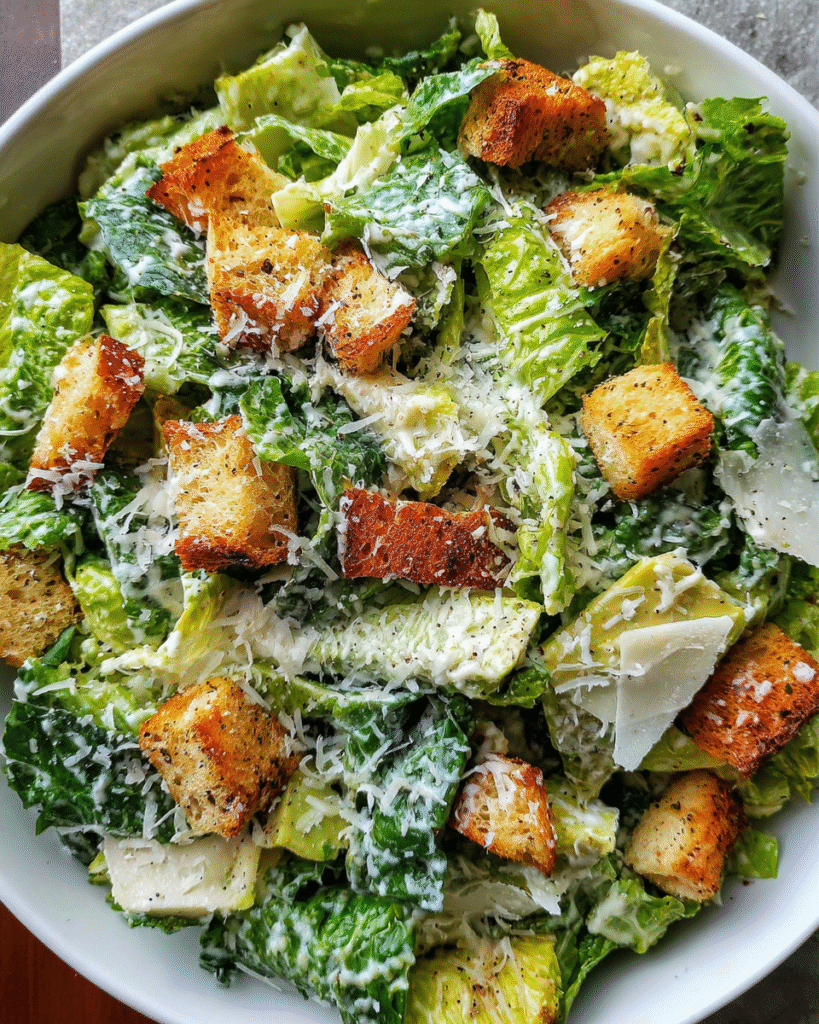
In a large salad bowl, toss your chilled romaine, Parmesan, and avocado (if using). Drizzle over the homemade Caesar dressing in small batches to avoid sogginess. Toss gently with salad tongs until coated evenly. Add the croutons just before serving to keep them crunchy. Top with a final grating of Parmesan and cracked black pepper. Serve immediately for the freshest experience—this Caesar Salad with Homemade Caesar Dressing deserves to shine crisp and cold.
Troubleshooting & Tips for the Perfect Caesar Dressing
How to Avoid a Split or Broken Dressing
One of the most common issues when making Caesar Salad with Homemade Caesar Dressing is the dressing separating. To prevent this, make sure all ingredients are at room temperature before blending. Add the oil slowly in a steady stream while the blender or food processor is running. This helps form a stable emulsion. If your dressing still breaks, add a teaspoon of warm water and blend again to bring it back together. Using mayo as a substitute for egg also helps beginners avoid separation.
Adjusting Flavor Balance (Salt, Acid, Umami)
A stellar Caesar dressing hits all the right notes—savory, tangy, and salty. If the dressing feels too sharp, balance it with a touch more olive oil. Too bland? Increase lemon juice for brightness or anchovies for umami. A small splash of white wine vinegar can also sharpen the flavor without overpowering it. Mustard powder enhances the dressing’s depth, while black pepper brings a subtle heat. Don’t forget to taste as you go; your Caesar Salad with Homemade Caesar Dressing should excite your taste buds.
Storage, Leftovers & Reheating Advice
This salad is best enjoyed immediately, but if you have leftovers, store the dressing and salad separately. The dressing can last up to 3 days in the fridge in a sealed jar. Croutons should be stored in an airtight container at room temperature. Re-crisp them in the oven if they soften. Never freeze the dressing—it breaks the emulsion. Assemble only what you’ll eat to preserve the crisp texture and signature freshness of Caesar Salad with Homemade Caesar Dressing.
Nutrition, Serving & Pairings
Nutritional Profile of Caesar Salad with Homemade Caesar Dressing
This Caesar Salad with Homemade Caesar Dressing delivers indulgence and nutrition in one bowl. With approximately 410 calories per serving, it provides a good balance of healthy fats (42g), protein (6g), and fiber (3g), especially when you include avocado. While it’s higher in fat due to olive oil and Parmesan, these are quality fats that support heart health. Sodium sits at around 520mg—mainly from anchovies, cheese, and croutons—so if you’re watching salt, opt for reduced-sodium options. The salad is naturally pescatarian and can be tailored further to meet keto or vegetarian diets.
Best Pairings and Serving Suggestions
While Caesar Salad with Homemade Caesar Dressing stands beautifully on its own, it also complements many dishes. Serve it alongside grilled chicken or salmon for a protein-rich meal. It pairs well with tomato-based pasta, roasted vegetables, or creamy soups. As a starter, it shines with any main course that’s not overly rich or creamy, offering a clean contrast. Hosting a gathering? Caesar cups in romaine leaves make an elegant appetizer. Serve with crusty sourdough or garlic bread to round out the meal without overwhelming the star of the plate.
Variants Around the World
Although the original Caesar Salad is beloved globally, different regions add their own spin. In Mexico, you might find it topped with chili-lime grilled shrimp. In the U.S., it’s common to see chicken Caesar wraps or even Caesar pizza. Vegan versions use tahini or cashew cream in place of egg and cheese, while gluten-free options substitute the croutons with roasted chickpeas. No matter the version, the essence of Caesar Salad with Homemade Caesar Dressing remains: a bold, savory mix that excites with every bite.
FAQS
How do you make homemade Caesar salad dressing?
To make Caesar Salad with Homemade Caesar Dressing, start by blending a coddled egg (or 1 tbsp of mayonnaise), lemon juice, anchovy fillets, garlic, mustard powder, Worcestershire sauce, and milk. While blending, slowly stream in light olive oil until the mixture emulsifies into a smooth, creamy dressing. Add black pepper to taste. Chill for 10–15 minutes to let the flavors meld. This simple homemade version delivers a fresh, bold taste that bottled dressings can’t replicate.
How to make a Caesar step by step?
First, wash and chop romaine lettuce, then chill it. Prepare croutons by toasting bread cubes with olive oil and garlic. Next, make the Caesar dressing as outlined above. In a large bowl, combine romaine, avocado (optional), Parmesan, and croutons. Drizzle with dressing and toss until coated. Add extra cracked pepper and cheese before serving. This Caesar Salad with Homemade Caesar Dressing comes together in minutes and tastes like a restaurant-quality dish.
What is usually in Caesar salad dressing?
Traditional Caesar dressing contains anchovies, lemon juice, olive oil, raw or coddled egg, garlic, Worcestershire sauce, mustard (or mustard powder), and black pepper. These ingredients create a creamy, savory, tangy dressing full of umami. Variants may include mayonnaise, yogurt, or dairy-free alternatives. The hallmark of Caesar Salad with Homemade Caesar Dressing is the emulsion—rich, thick, and punchy in flavor.
What are the original ingredients of a Caesar salad?
The original Caesar salad by Caesar Cardini included romaine lettuce, raw egg, Parmesan cheese, croutons, Worcestershire sauce, garlic, olive oil, and lemon juice. Anchovies were later added to amplify the umami element. This timeless combination remains the foundation of Caesar Salad with Homemade Caesar Dressing, honoring its roots while welcoming thoughtful twists.
Conclusion
Caesar Salad with Homemade Caesar Dressing is more than just a timeless dish—it’s a celebration of bold flavors and simple techniques. From its humble beginnings in a Tijuana restaurant to its place at dinner tables worldwide, this salad continues to evolve without losing its signature appeal. By mastering a few foundational steps—like emulsifying your dressing or crisping fresh romaine—you unlock a dish that’s endlessly adaptable, nutrient-rich, and always satisfying.
Whether you’re pairing it with grilled proteins, experimenting with avocado or spice, or serving it as a refreshing starter, the homemade version stands above all. So skip the bottle, gather your ingredients, and craft your own Caesar masterpiece. It’s fresh, it’s flavorful, and it’s uniquely yours.
For more successful recipes, you can visit our Facebook page or our Pinterest account