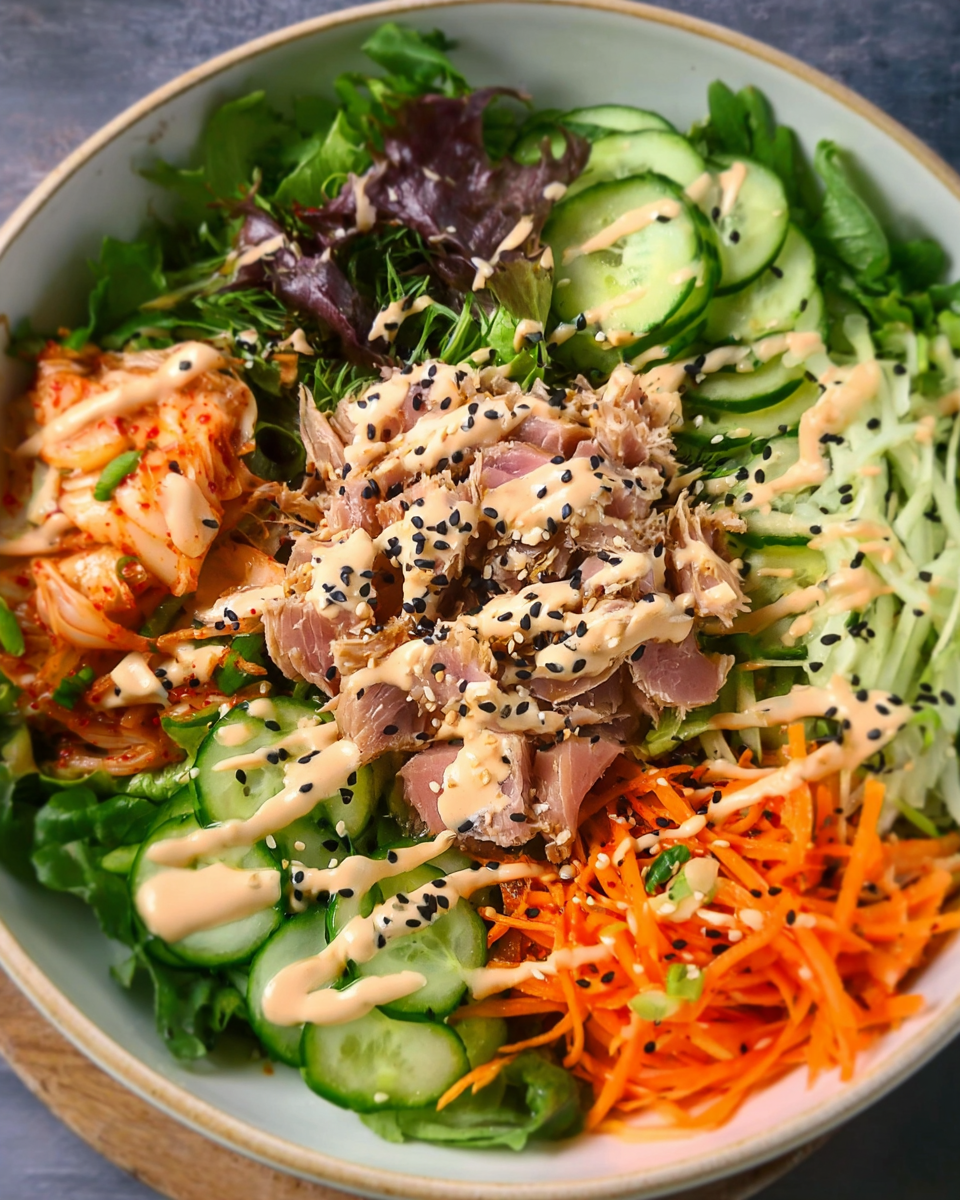
Kimchi Salad: Fresh, Spicy & Nutrient-Packed
Introduction:
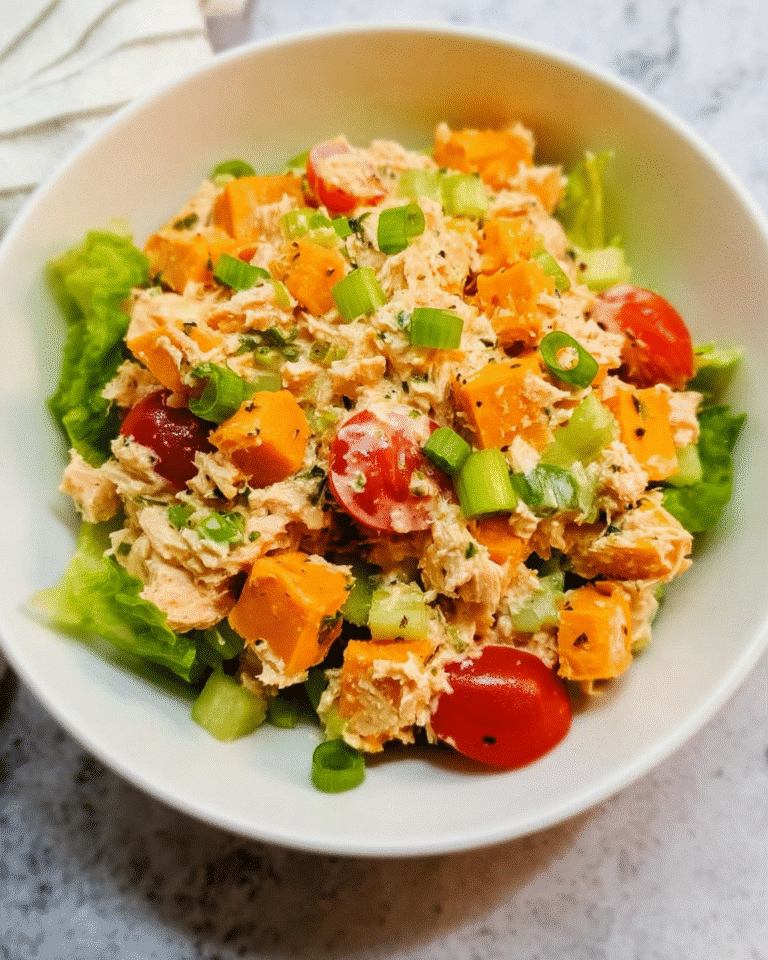
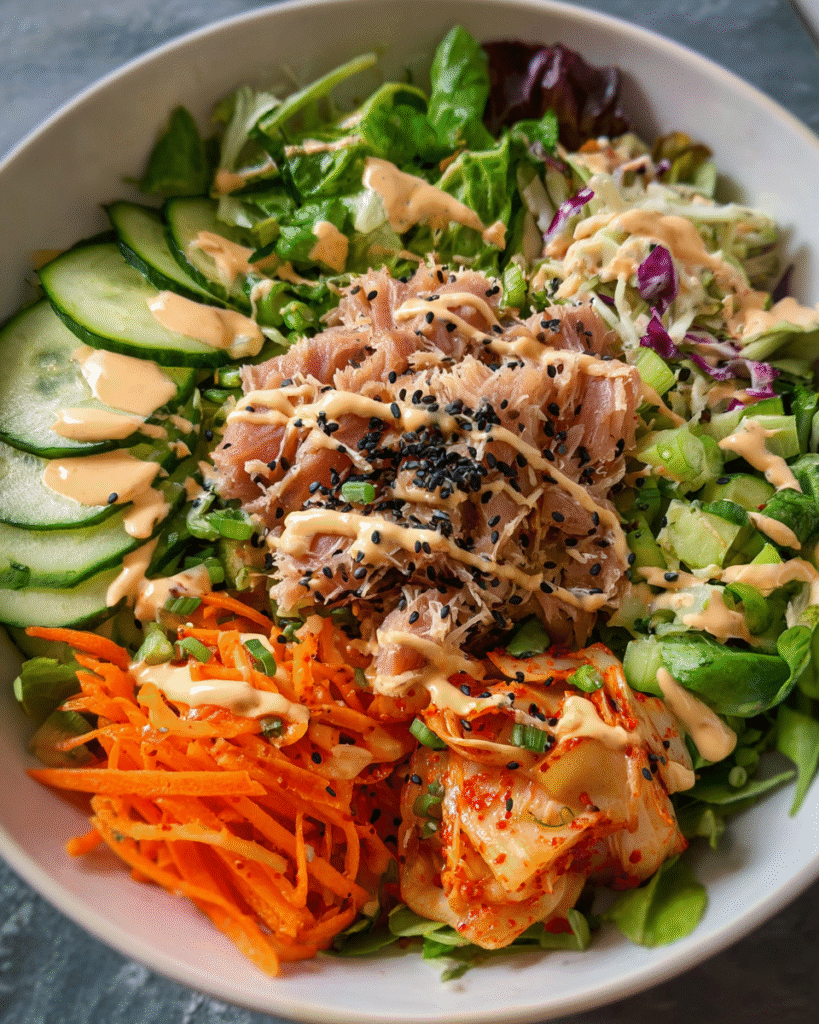
Looking for a bold, nutritious salad that excites your taste buds? A kimchi salad delivers exactly that—combining crisp greens, protein-rich ingredients, and the unmistakable tang of fermented vegetables. This article explores how to craft a vibrant kimchi salad using tuna, fresh veggies, and a spicy gochujang-mayo dressing. You’ll discover its health benefits, learn what makes kimchi special, and get step-by-step instructions for preparing a flavor-forward meal in minutes. Whether you’re new to kimchi or a longtime fan, this guide offers a delicious, wholesome twist on traditional salad.
Kimchi Salad: Fresh, Spicy & Nutrient-Packed
- Total Time: 10 minutes
- Yield: 4 servings
Description
- Kimchi salad blends bold flavor and crisp veggies with protein and probiotics. Discover how to make this spicy, healthy Korean-inspired salad in minutes.
Ingredients
-
For the Dressing:
-
½ cup mayonnaise
-
1 tablespoon rice vinegar
-
2 teaspoons soy sauce
-
2 teaspoons gochujang paste
-
2 teaspoons sesame oil
-
2 teaspoons sugar
For the Salad:
-
12 ounces tuna in water, drained and flaked
-
1 small cucumber, thinly sliced
-
1 cup carrots, julienned or shredded
-
4 cups mixed salad greens
-
1 cup celery, thinly sliced
-
½ cup kimchi, drained and chopped
-
Black sesame seeds, for garnish
-
Instructions
-
-
In a small bowl, mix the mayonnaise, rice vinegar, soy sauce, gochujang, sesame oil, and sugar until smooth. Set aside.
-
In a large salad bowl, combine the tuna, cucumber, carrots, mixed greens, celery, and chopped kimchi.
-
Drizzle the prepared dressing over the salad or serve it on the side.
-
Sprinkle with black sesame seeds before serving.
-
- Prep Time: 10 minutes
- Cook Time: 00 minutes
- Category: Protein-Packed Salads
- Method: No-cook
- Cuisine: Korean
Table of Contents
Understanding Kimchi Salad
What the term kimchi salad means
Kimchi salad refers to a dynamic fusion of fermented Korean vegetables—most commonly napa cabbage or radish—combined with fresh greens, proteins, and often a spicy, savory dressing. Unlike traditional kimchi served as a banchan (side dish), kimchi salad transforms the fermented flavors into a light, vibrant meal. It’s not just a side—it’s the main event. The dish balances the bold umami of kimchi with textures like crispy vegetables and flaky tuna, all bound together with a creamy gochujang-spiked dressing.
Why you should use kimchi in a salad
Incorporating kimchi into your salads does more than boost flavor—it transforms the dish into a nutrient-rich powerhouse. Kimchi brings depth, heat, and complexity without needing extra seasoning. The fermented edge also pairs beautifully with creamy or acidic dressings, helping to cut through richness while delivering gut-friendly benefits. If you’re building a salad that stands out from the usual leafy routine, kimchi is your secret weapon. It delivers a rare combination: spicy, tangy, crunchy, and slightly funky—all in one bite.
Core components of a kimchi salad
A well-balanced kimchi salad starts with three pillars:
- Fresh Base: Mixed greens, sliced cucumbers, julienned carrots, and thinly sliced celery provide crunch and freshness.
- Fermented Element: Chopped, drained kimchi infuses the salad with flavor and healthy probiotics.
- Protein & Dressing: Tuna adds satisfying richness, while a gochujang-infused mayonnaise dressing ties everything together.
This mix of textures and bold seasoning turns a simple salad into a craveable dish. Whether served chilled or at room temperature, it’s a complete meal you’ll return to again and again.
What Is Kimchi and How Is It Made?
Basic definition of kimchi
Kimchi is a traditional Korean staple made from fermented vegetables, most commonly napa cabbage or daikon radish, combined with a bold mix of garlic, chili flakes, ginger, and other seasonings. It’s spicy, tangy, and brimming with umami. While there are hundreds of regional variations, most kimchi recipes follow the same core process—brining vegetables, seasoning them generously, and allowing them to ferment until they reach their signature flavor. This fermentation gives kimchi its sour depth, which works beautifully when folded into dishes like kimchi salad.
Key ingredients and fermentation process
Making kimchi involves a few essential steps. First, the vegetables are salted to draw out moisture, which helps preserve texture and create the ideal environment for fermentation. Next, the vegetables are combined with aromatics and seasonings—often including gochugaru (Korean chili flakes), garlic, ginger, and fish sauce or salted shrimp. Once packed into jars, the mixture is left to ferment at room temperature for a few days before being stored in the fridge to slow the process.
This fermentation is powered by naturally occurring lactic acid bacteria. These microbes break down sugars in the vegetables, producing lactic acid—which not only preserves the kimchi but also enhances its complex taste. The result? A bold, acidic kick that brightens every bite of your kimchi salad.
How that process influences flavor and texture
Fermentation makes kimchi unlike any other salad ingredient. The crunchy vegetables become slightly softened but still retain bite. The flavor transforms: sweet becomes tangy, mild becomes bold, and every mouthful brings heat, savoriness, and a subtle funk. When added to a salad, these properties don’t just mix—they elevate the dish. Combined with cooling cucumbers or a creamy dressing, fermented kimchi balances everything out with a spicy punch.
Is Kimchi Salad Healthy?
Nutritional and probiotic benefits
Kimchi salad isn’t just flavorful—it’s a nutritional win. At its core, kimchi provides live probiotics that support gut health, thanks to its natural fermentation. These beneficial bacteria aid digestion, strengthen the immune system, and help maintain a healthy microbiome. The salad’s fresh ingredients—like carrots, cucumber, and greens—add fiber, vitamins, and antioxidants to the mix. Tuna brings in lean protein, making this kimchi salad a well-rounded, nourishing meal. It’s low in calories but rich in essential nutrients, ideal for those looking to eat clean without sacrificing taste.
Evidence for health outcomes
Multiple studies have highlighted the positive effects of fermented foods like kimchi. Regular consumption has been linked to improved digestion, reduced inflammation, and enhanced metabolic function. Kimchi may even contribute to lower cholesterol and support heart health. When it’s part of a balanced meal like this salad, those benefits multiply. According to Healthline and WebMD, fermented foods can also help regulate blood sugar and reduce the risk of chronic diseases when consumed regularly. That makes kimchi salad more than just a culinary treat—it’s a proactive health choice.
Practical health considerations
While kimchi salad is packed with advantages, balance is key. Kimchi itself can be high in sodium, so portioning wisely and pairing it with fresh vegetables helps offset the salt. The dressing—though rich in flavor—includes mayo and sugar, so you can adjust amounts to suit dietary needs. Want to reduce sodium even further? Rinse the kimchi lightly before chopping it. Whether you’re managing cholesterol, watching carbs, or simply aiming for clean eating, this kimchi salad checks all the boxes. For another smart option, try this Chinese Tofu Salad with Sesame Vinaigrette—it’s another great balance of flavor and health.
How to Make Kimchi Salad (Step-by-Step)
Ingredients list (what you’ll need)
This kimchi salad recipe brings together a mix of crunchy vegetables, protein-packed tuna, and a spicy, creamy dressing that ties it all together. Here’s what you’ll need:
For the Dressing:
- ½ cup mayonnaise
- 1 tablespoon rice vinegar
- 2 teaspoons soy sauce
- 2 teaspoons gochujang paste
- 2 teaspoons sesame oil
- 2 teaspoons sugar
For the Salad:
- 12 ounces tuna in water, drained and flaked
- 1 small cucumber, thinly sliced
- 1 cup carrots, julienned or shredded
- 4 cups mixed salad greens
- 1 cup celery, thinly sliced
- ½ cup kimchi, drained and chopped
- Black sesame seeds, for garnish
This combination offers bold spice, freshness, and satisfying richness—all in one bowl. It’s a ten-minute no-cook meal perfect for busy nights.
Instructions (how to make it)
- Make the dressing: In a small bowl, whisk together mayonnaise, rice vinegar, soy sauce, gochujang, sesame oil, and sugar until smooth. Set aside.
- Assemble the salad: In a large mixing bowl, combine tuna, cucumber, carrots, salad greens, celery, and kimchi. Toss gently.
- Dress and garnish: Drizzle the creamy gochujang dressing over the salad, or serve it on the side. Sprinkle with black sesame seeds just before serving.
This salad is ready in just 10 minutes and is best served fresh. It’s a no-fuss, flavor-forward meal that works for lunch, dinner, or a hearty side dish.
Tips for best results
- Drain the kimchi well to prevent the salad from becoming watery.
- Use cold, crisp veggies for optimal crunch.
- Taste the dressing before serving—add more gochujang for heat or more vinegar for tang.
- Serve immediately for best texture, or store dressing separately if making ahead.
This recipe pairs well with other bold-flavored dishes. For example, the Blackened Chicken and Grape Arugula Salad also balances spicy, sweet, and savory beautifully.
Serving Suggestions and Pairings
Ideal occasions and meal settings
Kimchi salad is one of those rare dishes that feels at home in both casual and elevated settings. It’s ideal for busy weeknights when you want something fast but flavorful. It also works well for lunch prep—just keep the dressing separate until mealtime. Because it’s light yet protein-rich, it’s perfect for warmer months, picnic spreads, or when you want a satisfying meal without cooking. Hosting a dinner party? This salad adds a zesty, eye-catching side to grilled mains or Korean-inspired dishes.
What goes with kimchi salad?
The bold flavor of kimchi makes this salad a standout, but it also plays well with others. Pair it with steamed jasmine rice or a side of miso soup for a more complete Korean-style meal. Want extra crunch? Add roasted seaweed snacks or sesame crackers on the side. It also pairs nicely with grilled proteins like fish, shrimp, or tofu. Because kimchi carries a spicy, tangy kick, neutral or subtly sweet pairings are ideal. Cold soba noodles, plain rice cakes, or even avocado toast are great companions.
Variations and internal linking to other salads
One of the best things about this recipe is how flexible it is. Swap tuna for shredded chicken or pan-fried tofu for a vegetarian version. Not a fan of mayonnaise? Greek yogurt makes a creamy and lighter base for the dressing. You can also experiment with different greens—try arugula or baby spinach for a peppery bite. For another bold salad idea, don’t miss the Blackened Chicken and Grape Arugula Salad. It offers a similar balance of bold protein and crisp greens with a fruity twist.
FAQS
What is kimchi salad made of?
Kimchi salad is crafted from a flavorful mix of ingredients centered around fermented kimchi. Typically, it includes crisp vegetables like cucumbers, carrots, and celery, a protein like tuna or tofu, and leafy greens such as mixed salad greens or romaine. The dressing varies but often includes bold elements like gochujang paste, sesame oil, and rice vinegar. In our recipe, we’ve used a creamy base with mayo for added richness, balanced by spicy, tangy notes that complement the kimchi perfectly.
Is kimchi salad healthy?
Yes, kimchi salad is a nutritious choice packed with health benefits. Kimchi itself contains live probiotics that support digestion and gut health. It’s low in calories and rich in vitamins A, C, and K, along with essential minerals. When combined with lean protein like tuna and fiber-rich vegetables, the result is a balanced, filling meal. Just watch the sodium content, especially if you’re pairing it with other salty dishes or store-bought kimchi. Adjust portions of dressing or rinse the kimchi lightly if needed.
What is kimchi actually made of?
Traditional kimchi is made by fermenting vegetables—most commonly napa cabbage or Korean radish—with salt and a spicy seasoning mix. This mix typically includes garlic, ginger, gochugaru (Korean chili flakes), scallions, and often a seafood component like fish sauce or salted shrimp to add depth. Over time, fermentation develops lactic acid, giving kimchi its sour, tangy bite and boosting its nutritional value with healthy bacteria.
What does kimchi go well with?
Kimchi’s strong, tangy flavor pairs well with a variety of dishes. It’s commonly served alongside rice, grilled meats, soups, and noodles. In salads, it works beautifully with creamy dressings, mild proteins, and crunchy vegetables. For a creative pairing, you might even try it on sandwiches, tacos, or grain bowls. Think of it as a bold condiment that elevates whatever it touches—especially in fresh, simple dishes like this salad.
Conclusion
Kimchi salad brings together the very best of bold flavor and healthy eating. With its vibrant mix of crunchy vegetables, lean protein, and fermented kimchi, it’s more than just a salad—it’s a full sensory experience. This dish offers an easy way to enjoy the unique health benefits of kimchi while delivering texture and satisfaction in every bite. Whether you’re in the mood for a quick, no-cook lunch or a flavorful addition to your weekly menu, this salad delivers every time.
Ready to explore more? Expand your salad collection with vibrant options like the Chinese Tofu Salad with Sesame Vinaigrette or the Blackened Chicken and Grape Arugula Salad. These recipes will add fresh variety to your table and help you unlock the full potential of bold, healthy meals.
For more successful recipes, you can visit our Facebook page or our Pinterest account