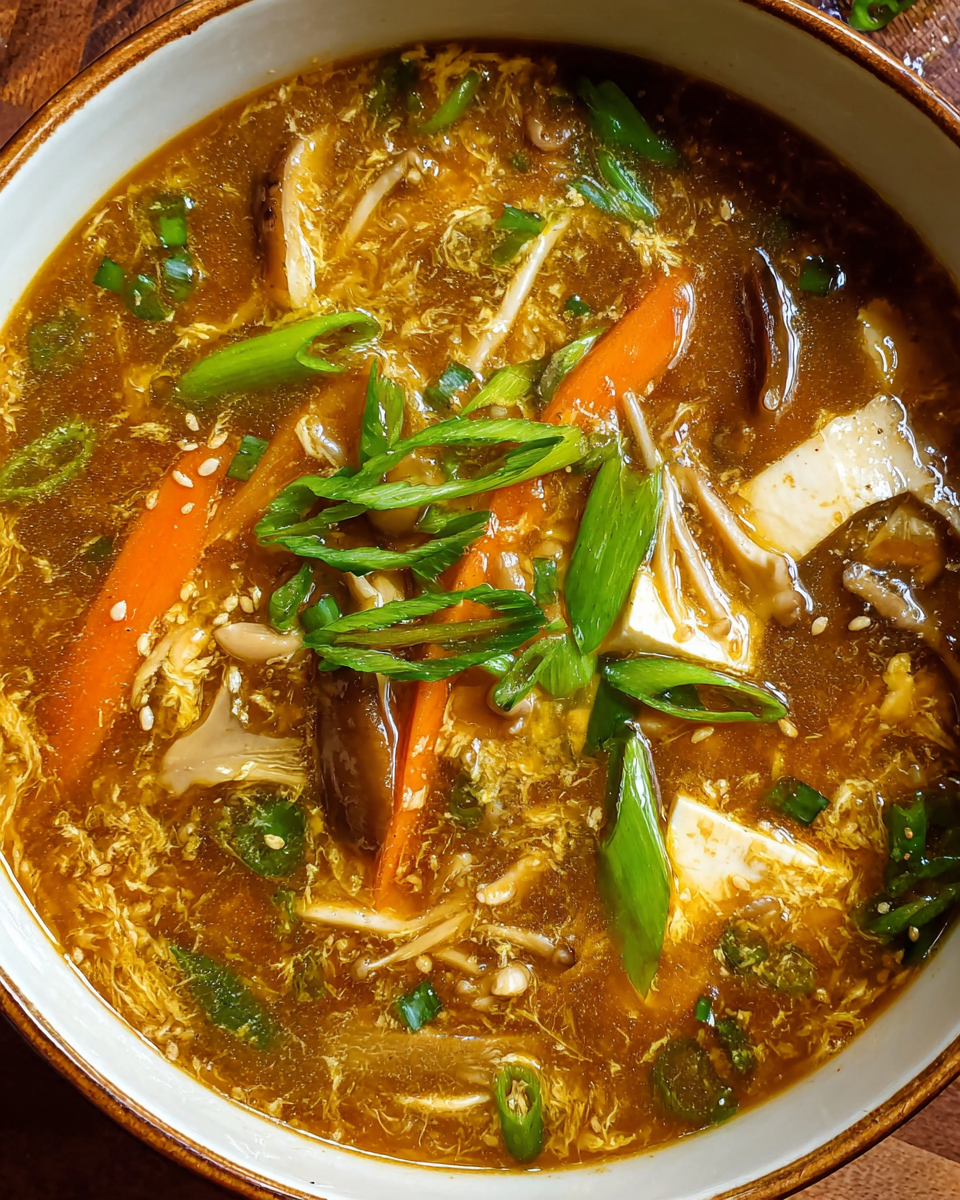
Hot And Sour Soup – A Complete Vegetarian Guide
Introduction:
There’s something soul-warming about a bowl of hot and sour soup — the bold tang of vinegar, the sharp kick of white pepper, and the comforting layers of tofu, mushrooms, and silky egg ribbons. This classic Asian soup has traveled from humble Chinese kitchens to become a global favorite, and in this guide, we’re exploring it in all its glory. From its flavorful roots to a vegetarian-friendly recipe, ingredient tips, and healthy adaptations, you’ll learn how to master the balance of heat and tang like a pro. Let’s dive in and unlock the full potential of this bold, satisfying soup.
Hot And Sour Soup – A Complete Vegetarian Guide
- Total Time: 25 minutes
- Yield: 4 servings
Description
- Hot And Sour Soup made easy: discover a vegetarian recipe, flavour secrets, health facts & ways to serve this Asian classic.
Ingredients
-
1 small carrot, julienned
-
7 ounces shiitake mushrooms, sliced (stems removed)
-
4 ounces firm tofu, sliced
-
4 ounces canned bamboo shoots, cut into strips
-
6 cups vegetable broth (low sodium or no sodium added)
-
1 teaspoon ground white pepper
-
1 tablespoon dark soy sauce
-
¼ cup low-sodium soy sauce
-
¼ cup white vinegar
-
3 tablespoons cornstarch mixed with 3 tablespoons water
-
2 large eggs, beaten
-
Salt, to taste
-
1 teaspoon sesame oil (for garnish)
-
2 green onions, sliced on the diagonal (for garnish)
Instructions
-
Cook the vegetables: In a large pot, combine the carrot, mushrooms, tofu, bamboo shoots, and vegetable broth. Bring to a simmer over medium heat.
-
Add flavor: Stir in the white pepper, dark soy sauce, regular soy sauce, and vinegar. Let simmer for about 3 minutes until the mushrooms soften.
-
Thicken the soup: Mix in the cornstarch slurry and cook for another minute until the soup thickens slightly.
-
Add the eggs: Stir the soup in a circular motion, and slowly drizzle in the beaten eggs to form ribbons.
-
Adjust and garnish: Taste and adjust seasoning with salt or vinegar if needed. Ladle into bowls, drizzle with sesame oil, and top with green onions.
- Prep Time: 10 minutes
- Cook Time: 15 minutes
- Category: SOUPS
- Method: Stovetop
- Cuisine: Asian
Table of Contents
Understanding Hot And Sour Soup
What is Hot And Sour Soup?
Hot and sour soup is a flavorful, aromatic dish that lives up to its name — combining a spicy kick with a mouth-puckering tang. At its core, this soup delivers a powerful contrast between heat (often from white pepper or chili) and sourness (typically from vinegar). This balance defines the dish’s sensory appeal and is what keeps fans coming back for more.
While versions vary globally, the essential ingredients often include tofu, mushrooms, bamboo shoots, and beaten eggs — all simmered in a savory broth that’s slightly thickened with cornstarch. The depth of flavor comes from soy sauces, vinegar, sesame oil, and white pepper, giving it complexity and bite in every spoonful. It’s one of the few soups where each slurp feels like a burst of flavor.
Why the Name “Hot and Sour” Matters
The name “hot and sour soup” doesn’t just describe the taste; it embodies the philosophy behind the dish. In Chinese culinary tradition, balancing flavors is essential, and this soup represents that balance in full force. “Hot” refers to its heat — not necessarily in the chili sense, but the sharp, nasal spiciness of white pepper. “Sour” comes from vinegar, which cuts through the richness of the broth and lifts the flavors.
This name helps cooks focus on what to adjust. If the soup lacks punch, more vinegar might brighten it. If it feels bland, a touch more pepper could do the trick. Understanding this interplay helps you craft a bowl that excites the palate without overpowering it.
Common Ingredients That Define It
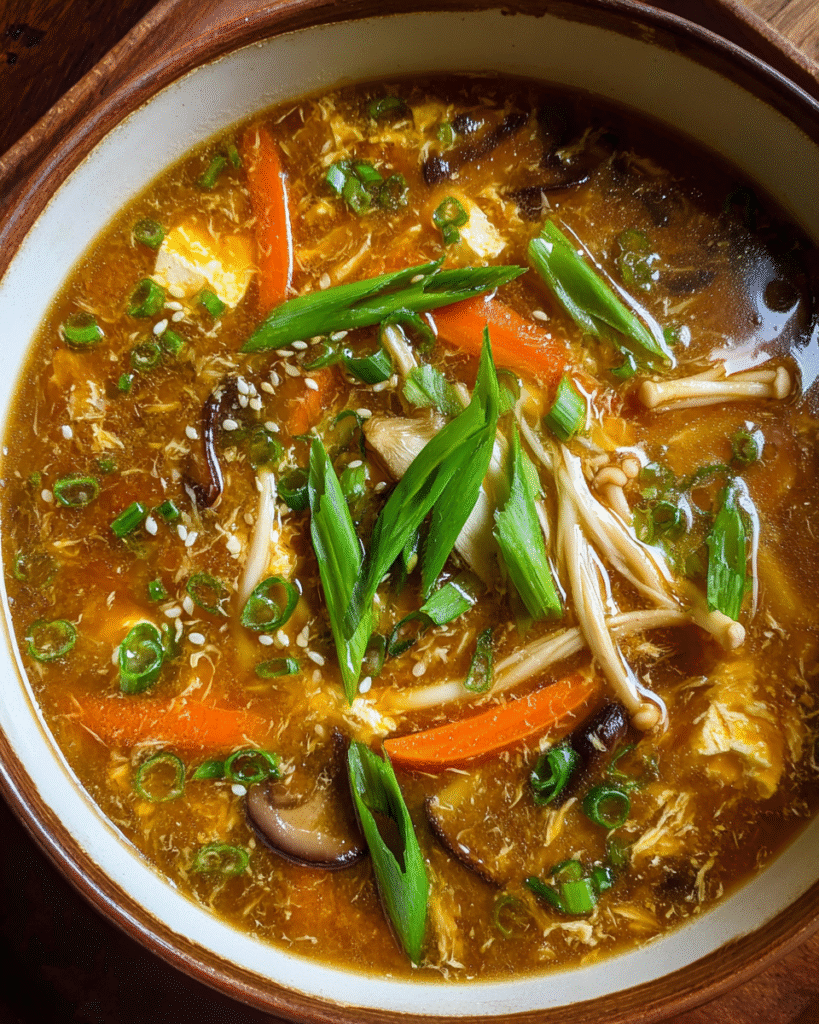
Several ingredients appear in most traditional and modern versions of hot and sour soup. Shiitake mushrooms provide earthiness and umami. Tofu adds protein and a soft texture. Bamboo shoots lend crunch and a subtle sweetness. Then there’s the beaten egg, stirred in to form silky ribbons, enhancing both look and mouthfeel.
The broth — often vegetable-based in vegetarian recipes — is seasoned with soy sauce, vinegar, white pepper, and sesame oil. These layers create the signature taste that defines hot and sour soup. Even minor tweaks in ingredient ratios can shift the profile, making this a deeply customizable dish.
Historical Origins of Hot And Sour Soup
Deep Roots in Chinese Culinary History
Hot and sour soup has a long-standing history within Chinese cuisine, with origins that date back centuries. Though widely associated with Sichuan food, the version most people know today is actually more closely aligned with styles from Henan and Jiangsu provinces. These regional variations reflect the diversity of Chinese cooking and how flavors were influenced by climate, available ingredients, and cultural preferences.
The earliest mentions of Suan La Tang (酸辣汤), the Chinese name for this soup, appear in Qing Dynasty texts. While the exact origin point is hard to pin down, it’s clear this dish evolved naturally across multiple regions as a way to warm the body and stimulate digestion. Over time, it became a staple in households and local eateries across China, celebrated for its strong, appetite-awakening flavors.
From Traditional Kitchens to Global Tables
The journey of hot and sour soup from regional China to international fame is a story of adaptation. As Chinese immigrants brought their culinary traditions to new countries, they adjusted recipes based on available ingredients and local tastes. In many Western versions, you’ll find a thicker broth, thanks to added cornstarch, and common ingredients like canned bamboo shoots or mushrooms.
In the U.S., hot and sour soup became a Chinese-American takeout staple — often served as a starter alongside egg rolls or fried rice. These versions tend to be heartier and saltier than their traditional counterparts, appealing to local palates but also shaping global expectations of what the soup should taste like.
Today, hot and sour soup is made and enjoyed worldwide, from fine dining restaurants to homemade recipes. Its enduring popularity is a testament to its bold flavor, cultural richness, and the way it effortlessly bridges old and new culinary worlds.
Recipe – Vegetarian Hot And Sour Soup
Ingredients You’ll Need
Making a vegetarian hot and sour soup that’s full of flavor starts with fresh, quality ingredients. The beauty of this soup lies in its simplicity — every component adds something unique to the overall flavor and texture.
Here’s what you’ll need:
- 1 small carrot, julienned
- 7 ounces shiitake mushrooms, sliced (stems removed)
- 4 ounces firm tofu, sliced
- 4 ounces canned bamboo shoots, cut into strips
- 6 cups vegetable broth (low sodium or no sodium added)
- 1 teaspoon ground white pepper
- 1 tablespoon dark soy sauce
- ¼ cup low-sodium soy sauce
- ¼ cup white vinegar
- 3 tablespoons cornstarch mixed with 3 tablespoons water
- 2 large eggs, beaten
- Salt, to taste
- 1 teaspoon sesame oil (for garnish)
- 2 green onions, sliced on the diagonal (for garnish)
Each of these ingredients plays a key role. The mushrooms and tofu add depth and protein. The bamboo shoots and carrots bring texture and brightness. Soy sauces and vinegar offer the essential hot and sour flavors, while cornstarch gives the soup its signature thickness.
Step-by-Step Instructions
Crafting this soup at home is simple and deeply satisfying. Follow these steps for a restaurant-quality result in under 30 minutes.
- Cook the vegetables: In a large pot, combine the carrot, mushrooms, tofu, bamboo shoots, and vegetable broth. Bring to a simmer over medium heat, allowing the ingredients to soften and release their aromas.
- Add flavor: Stir in the ground white pepper, dark soy sauce, low-sodium soy sauce, and white vinegar. Simmer for another 3 minutes to meld the flavors and soften the mushrooms.
- Thicken the broth: Mix the cornstarch slurry into the pot and let it cook for about a minute, stirring until the soup thickens slightly.
- Create egg ribbons: Stir the soup in a circular motion, then slowly drizzle in the beaten eggs to create silky strands.
- Finish and garnish: Taste and adjust seasoning with salt or more vinegar if needed. Just before serving, drizzle with sesame oil and sprinkle with green onions.
This easy vegetarian version captures everything beloved about traditional hot and sour soup. And if you enjoy comforting soups like this, you’ll love our Italian Meatball Soup or the seasonal favorite Asparagus Soup.
Flavor Balancing & Ingredient Variations
Mastering the Balance of Heat and Tang
The magic of a perfect hot and sour soup lies in the balance between its two dominant notes: heat and sourness. It’s a dance of opposites that, when done right, makes every spoonful intriguing and satisfying.
To increase the heat, add a little more white pepper — the traditional choice for its sharp, clean spiciness. Unlike chili, white pepper warms the palate without overwhelming it. For more sourness, add white vinegar slowly, tasting as you go. A little goes a long way, and the right amount can brighten the entire dish.
It’s essential to balance these flavors with salty depth from soy sauce and subtle umami from mushrooms or tofu. If the soup starts to feel flat, a touch more soy sauce can ground it. If it’s too intense, a splash of broth can mellow things out. Always aim for a well-rounded bowl where heat, sourness, and savoriness shine together.
Customizing with Ingredient Swaps
Hot and sour soup is wonderfully flexible. You can tailor it to your pantry, dietary needs, or taste preferences without losing its essential spirit.
For more vegetables, add napa cabbage, bok choy, or even zucchini. For a more robust soup, swap the tofu with seitan or add noodles. You can use chili oil instead of white pepper if you prefer a richer heat or rice vinegar for a subtler tang.
Those looking to make it gluten-free can opt for tamari or certified gluten-free soy sauce. To reduce sodium, choose low-sodium broth and soy sauces, and skip the added salt altogether.
Even the thickening agent is optional — for a lighter version, leave out the cornstarch or reduce it by half. The soup will still be flavorful and satisfying, just with a more delicate texture.
Nutrition & Health Aspects of Hot And Sour Soup
Nutritional Highlights of the Dish
When thoughtfully prepared, hot and sour soup can be a health-conscious choice packed with nutrition. With a broth base and loads of vegetables, it’s naturally low in calories and high in comfort. The vegetarian version in particular offers a clean, nourishing experience that doesn’t skimp on flavor.
Shiitake mushrooms provide antioxidants and compounds known to support immune health. Tofu brings plant-based protein and calcium, while bamboo shoots add dietary fiber with barely any calories. Eggs supply additional protein, vitamins, and healthy fats. And the soup’s warmth itself can help support digestion and hydration, especially in cooler months or when you’re feeling under the weather.
With only about 184 calories per serving, the soup can easily be worked into various diets, from low-calorie plans to vegetarian menus. Its high fluid content also contributes to a feeling of fullness, which helps curb unnecessary snacking.
Be Mindful of Sodium and Modifications
The biggest nutritional watch-out in many versions of hot and sour soup is sodium. Between broth, soy sauces, and added salt, levels can spike quickly. In our version, we reduce that risk by using low-sodium broth and soy sauces, and by omitting added salt unless needed for flavor balance.
Cornstarch, often used to thicken the soup, adds carbs — but in small amounts, it’s not a concern. For those on low-carb or keto diets, simply reduce or omit it. You’ll still enjoy all the flavors, just with a thinner broth.
For a lighter dish, you can skip the egg or use egg whites only. Need more fiber? Increase the veggie ratio. Craving more richness? Add a drizzle of chili oil or a touch more sesame oil at the end. With thoughtful adjustments, this soup can be both a flavor bomb and a health-friendly option.
FAQS
What is typically in hot and sour soup?
At its core, hot and sour soup combines simple ingredients with bold seasoning. The most common elements include tofu, mushrooms (especially shiitake or wood ear), bamboo shoots, and egg ribbons. These float in a broth seasoned with soy sauce, vinegar, and white pepper — delivering the signature hot and sour flavor profile. Some versions include pork or chicken, but vegetarian options use hearty vegetables and umami-rich elements like mushrooms to maintain depth.
Is Chinese hot and sour soup healthy?
Yes, it can be — especially when homemade. A well-balanced hot and sour soup offers low calories, moderate protein, and nutrients from vegetables like mushrooms and carrots. It’s hydrating, satisfying, and can be adjusted for low-sodium or gluten-free diets. The key to keeping it healthy is watching the sodium content, minimizing oil, and using fresh, whole ingredients. Our vegetarian version, for example, keeps calories around 184 per serving while staying full-flavored and nourishing.
Why do they call it hot and sour soup?
The name reflects the dish’s two dominant flavors. “Hot” refers to the spicy bite typically delivered by white pepper, while “sour” comes from vinegar — often white or rice vinegar. These two flavors work in harmony to stimulate the appetite and create a uniquely bold taste. It’s this yin-yang contrast that makes the soup such a beloved staple in Chinese cuisine and why it’s named so directly and descriptively.
What is hot and sour soup called?
In Mandarin, it’s called Suan La Tang (酸辣汤). “Suan” means sour, “La” means hot or spicy, and “Tang” means soup. This name is used throughout China and in many Chinese-speaking regions, although local dialects and cooking traditions may influence the pronunciation and ingredients slightly. In restaurants worldwide, it’s almost universally listed as “hot and sour soup.”
Conclusion
Hot and sour soup is more than just a menu favorite — it’s a dish rooted in history, crafted through balance, and adaptable to modern tastes. With its dynamic flavor, minimal prep time, and nourishing ingredients, it deserves a place in every home cook’s rotation. Whether you’re warming up on a chilly day or looking for something bold and comforting, this soup delivers on every level.
The vegetarian version we explored offers all the signature traits — spice, tang, umami — without compromising health or simplicity. Now that you understand its origins, preparation methods, and serving tips, you’re ready to make a bowl that honors tradition while fitting seamlessly into your modern kitchen. For more comforting bowls, don’t miss our hearty Italian Meatball Soup or delicate Asparagus Soup.
Embrace the art of contrast and let this soup bring warmth and satisfaction to your next meal.
For more successful recipes, you can visit our Facebook page or our Pinterest account