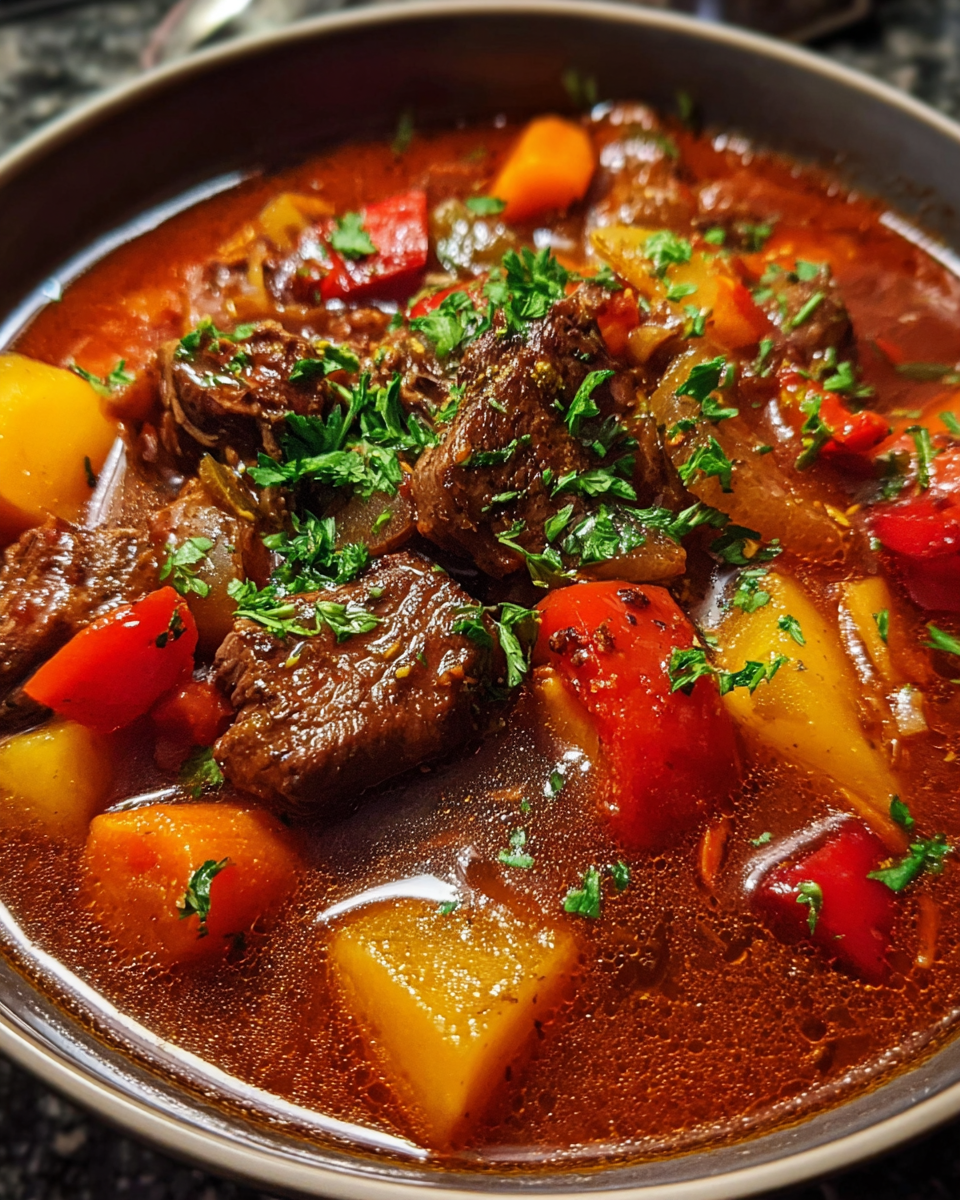
Hungarian Goulash: Discover the Bold Flavor of This Hearty Classic
Hungarian goulash is more than just a soup or stew—it’s a culinary symbol of warmth, history, and bold flavors. In this article, we’ll explore what makes Hungarian goulash truly authentic, from its traditional ingredients and distinct cooking methods to how it compares with other versions around the world. We’ll also uncover the secrets behind crafting the perfect bowl, walk through the full recipe, and highlight cultural insights that elevate its importance. Whether you’re revisiting this dish or discovering it for the first time, Hungarian goulash promises a satisfying, flavorful experience worth every bite.
Print
Hungarian Goulash: Discover the Bold Flavor of This Hearty Classic
- Total Time: 2 hours 15 minutes
- Yield: 5 servings
Description
- Hungarian goulash is a hearty, paprika-rich stew made with tender beef, vegetables, and bold spices. Discover how to make this traditional classic.
Ingredients
- 2 lbs beef chuck, cut into 1.5-inch cubes
- 1 3/4 teaspoons salt
- 1 teaspoon black pepper
- 1 tablespoon olive oil
- 2 tablespoons unsalted butter
- 2 medium brown onions, diced
- 5 garlic cloves, minced
- 1 red bell pepper, chopped
- 1 yellow bell pepper, chopped
- 2 medium tomatoes, chopped
- 1/4 cup sweet paprika (Hungarian-style if possible)
- 1 teaspoon caraway seeds (optional)
- 1 bay leaf
- 4 cups low-sodium vegetable broth
- 2 carrots, peeled and sliced
- 2 medium potatoes, diced
- 1 tablespoon fresh parsley, chopped (optional)
Instructions
- Preheat your oven to 350°F (or 320°F for convection ovens).
- Season the beef cubes with half the salt and pepper.
- In a large oven-safe pot or Dutch oven, heat the olive oil and melt the butter over high heat. Add the onions and cook for about 6 minutes until they are soft and beginning to brown.
- Add the seasoned beef to the pot and stir for about 2 minutes until browned on the outside.
- Add the garlic, bell peppers, and tomatoes. Cook for another 3 minutes, allowing the tomatoes to soften.
- Stir in the paprika, caraway seeds (if using), and bay leaf. Cook for 30 seconds.
- Pour in the vegetable broth, bring to a simmer, cover with a lid, and transfer the pot to the oven. Cook for 1.5 hours.
- Remove the pot from the oven, stir in the carrots and potatoes, and return it to the oven for another 30 minutes or until the beef is fork-tender.
- Serve the goulash hot, garnished with parsley if desired. Enjoy with crusty bread if you like.
- Prep Time: 15 minutes
- Cook Time: 2 hours
- Category: SOUPS
- Method: Oven-baked
- Cuisine: Hungarian
Table of Contents
Understanding Hungarian Goulash
What Hungarian goulash is made of
At its core, Hungarian goulash is built on a foundation of tender beef cubes, aromatic onions, and a generous amount of Hungarian sweet paprika. These core ingredients simmer slowly in a rich broth until deeply infused with flavor. The classic recipe often includes garlic, tomatoes, bell peppers, and a blend of vegetables like carrots and potatoes. What sets it apart is not just the ingredients but how they come together in harmony. The paprika does more than add color—it defines the essence of this dish, giving it its signature warmth and depth.
Origins of Hungarian goulash in Hungarian cuisine
Hungarian goulash has roots that stretch back to the Middle Ages, where it began as a shepherd’s stew cooked over open flames in iron pots. The word “gulyás” refers to herdsmen, and the dish reflects their need for a sustaining, one-pot meal. Over time, this rustic stew evolved into a beloved national symbol, representing Hungary’s hearty culinary tradition. Unlike many modern stews, Hungarian goulash was designed to nourish while highlighting simple, regional ingredients in a deeply flavorful way.
Key ingredients that define Hungarian goulash
While variations exist, authentic Hungarian goulash always includes paprika, beef, onions, and broth. Sweet Hungarian paprika, preferably fresh and vibrant, is critical—subtle smoky, fruity notes elevate the dish beyond a basic stew. Caraway seeds, though optional, enhance the traditional profile with a light anise flavor. Bell peppers and tomatoes bring brightness, while potatoes and carrots round out the body of the soup. This balance of spice, sweetness, and substance makes it a standout among global comfort foods.
Hungarian Goulash vs. Regular Goulash
How Hungarian goulash differs from American or other goulash versions
Many people associate goulash with pasta-heavy casseroles or thick tomato sauces, especially in the U.S. However, Hungarian goulash stands apart as a brothy, stew-like dish. It focuses on clean, bold flavors from paprika and beef, rather than the cheese, elbow macaroni, or ketchup that American versions often include. Hungarian goulash is lighter in texture but deeper in flavor, relying on a slow-cooked base to develop richness without heaviness.
Texture, broth and ingredient differences in Hungarian goulash
The texture of Hungarian goulash is more soup-like than typical stews. Instead of a thick gravy, the broth remains silky and spiced, with tender chunks of beef and vegetables floating throughout. No flour is used to thicken it; instead, the reduction of broth and natural starches from potatoes create body. Tomatoes and peppers contribute a subtle sweetness, contrasting with the sharp edge of paprika—a detail that’s often missing in other goulash styles.
Why the term “goulash” covers many variations but Hungarian goulash remains distinct
“Goulash” has become a broad term globally, often applied to any beef-and-tomato dish. Yet Hungarian goulash maintains its distinction through cultural authenticity and specific cooking techniques. In Hungarian cuisine, it’s never baked, never cheesy, and never bland. It’s a stew with a purpose: to highlight beef, paprika, and tradition. Even when adapted in other countries, true Hungarian goulash retains its clear identity—anchored in flavor, history, and soul.
The Secret to a Good Hungarian Goulash
Choosing the right beef and letting Hungarian goulash develop flavor
To create exceptional Hungarian goulash, start with quality beef chuck. This cut has the perfect balance of marbling and connective tissue, breaking down into buttery tenderness during long, slow cooking. Cutting it into uniform cubes ensures even cooking. Avoid lean cuts—they dry out instead of melting into the broth. Give the beef time to sear properly before simmering; the caramelized edges deepen the flavor base and enrich the final result.
The role of paprika, caraway seeds and traditional seasonings in Hungarian goulash
Paprika isn’t just a spice in Hungarian goulash—it’s the soul of the dish. Sweet Hungarian paprika brings color, mild heat, and a deep earthy taste. It must be added at just the right moment—briefly toasted with fat before the liquid is added—to unlock its flavor. Caraway seeds, often overlooked, add a whisper of warm, licorice-like complexity. A bay leaf lends a soft herbaceous layer, while garlic and black pepper subtly round everything out.
Cooking method tips to maximize the flavor of Hungarian goulash
The secret to flavor lies in the cooking method. Begin by sautéing onions slowly in butter and oil until golden brown. Then sear the meat to lock in juices. Once all vegetables and spices are added, bake the goulash slowly in the oven—this steady, gentle heat enhances the texture and blends all flavors seamlessly. Resist rushing the process; time is what transforms simple ingredients into a deeply savory and satisfying bowl of Hungarian goulash.
Cooking the Recipe for Hungarian Goulash
Preparing ingredients for Hungarian goulash (meat, vegetables, spices)
Before you start cooking, prep all your ingredients. Cut the beef chuck into 1.5-inch cubes for ideal tenderness. Dice onions finely and chop red and yellow bell peppers into medium pieces. Mince garlic cloves and roughly chop fresh tomatoes. Slice the carrots and dice the potatoes evenly. Measure out the Hungarian sweet paprika generously—¼ cup is traditional. Optional ingredients like caraway seeds and parsley should also be prepped for layering flavors later.
Step-by-step cooking method for Hungarian goulash (searing, simmering, oven)
Start by heating butter and olive oil in a large Dutch oven. Sauté the onions until golden brown. Add the seasoned beef and brown it on all sides to create depth. Stir in garlic, peppers, and tomatoes, letting everything soften. Toast the paprika, caraway seeds, and bay leaf briefly before adding the broth. Once it simmers, cover and bake in a 350°F oven for 1.5 hours. Add carrots and potatoes, then return to the oven for 30 more minutes until the beef is fork-tender.
Serving and garnish ideas to present Hungarian goulash beautifully
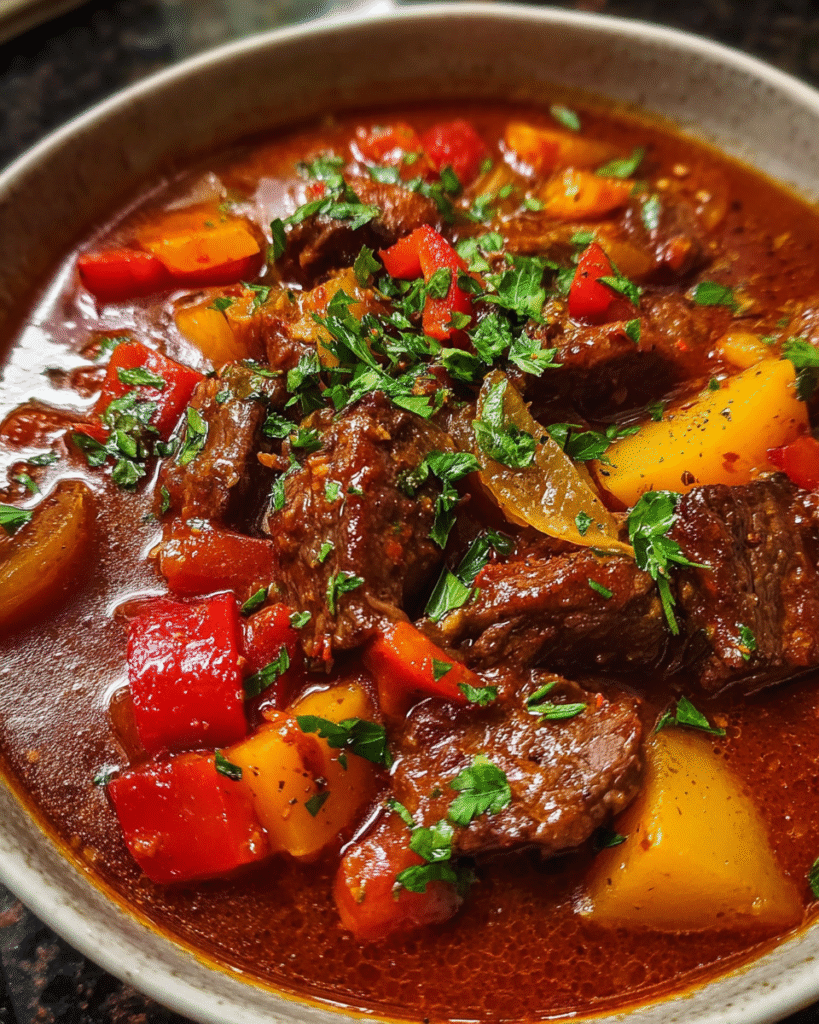
Serve Hungarian goulash piping hot in deep bowls. Garnish with a sprinkle of chopped parsley for freshness. Offer crusty bread on the side to soak up the vibrant broth. For a traditional touch, consider serving it with egg noodles or a dollop of sour cream. To complete the meal, a crisp green salad adds contrast. Its bold red color and rustic ingredients make it visually striking and inviting—perfect for gatherings or cozy nights.
Variations and Serving Suggestions for Hungarian Goulash
Traditional sides, breads or noodles with Hungarian goulash
Hungarian goulash pairs wonderfully with rustic sides that complement its rich broth. The most traditional accompaniment is csipetke, small pinched noodles added directly to the pot near the end of cooking. Crusty artisan bread also works well, perfect for soaking up the vibrant paprika broth. For a heartier touch, some serve it over buttery egg noodles or mashed potatoes. Each option enhances the dining experience, giving the stew even more comfort appeal.
Ingredient variations (vegetables, spices, regional differences) in Hungarian goulash
While the classic recipe is revered, Hungarian goulash allows for subtle regional and personal tweaks. Some regions use pork or lamb instead of beef. Others might add celery root, parsnips, or hot paprika for added depth and heat. Red wine is sometimes used for richness, though this recipe remains alcohol-free for purity of flavor. Whether you opt for caraway or skip it, the core of goulash remains paprika-driven and proudly Hungarian.
Make-ahead, reheating and storing Hungarian goulash
Hungarian goulash tastes even better the next day. Make it ahead and store in an airtight container in the fridge for up to 4 days. The flavors deepen overnight, making reheating a delicious affair. Gently warm it on the stove to preserve texture—avoid boiling. It also freezes well for up to 3 months. Simply thaw in the refrigerator overnight and reheat slowly. Ideal for meal planning, entertaining, or enjoying a second helping later in the week.
Hungarian Goulash in Culture and Cuisine
Hungarian goulash as a staple dish in Hungary and Central Europe
Hungarian goulash isn’t just a comfort food—it’s a cultural touchstone across Central Europe. In Hungary, it’s served not only in homes but at festivals, markets, and traditional taverns called csárdas. It represents national pride and culinary heritage. Even neighboring countries like Austria and Slovakia serve goulash in their own styles, but none hold the iconic status of the Hungarian version. It’s a dish that tells a story—of resilience, community, and the richness of simple ingredients.
When Hungarian goulash is served and its social context
Goulash often makes its appearance during colder months, served hot during family dinners or community gatherings. It’s also common during holidays and rural celebrations, often cooked over open flames in large cauldrons. Sharing a pot of goulash is a symbol of generosity and unity. Whether it’s an everyday meal or part of a festive spread, its warming quality and deep flavor make it ideal for feeding a crowd with minimal fuss.
Why Hungarian goulash remains beloved worldwide
Despite its humble origins, Hungarian goulash has earned a place in kitchens around the world. Its blend of spice, comfort, and rustic charm appeals across cultures. Home cooks love it for its simplicity and depth, while food lovers appreciate the authenticity and bold flavor. It has even inspired dishes like chili and stew variations across continents. Hungarian goulash endures because it’s both nostalgic and adaptable—an edible tradition that continues to evolve.
FAQS
What is Hungarian goulash made of?
Hungarian goulash is traditionally made from beef chuck, onions, garlic, sweet Hungarian paprika, bell peppers, and tomatoes. It’s simmered in a broth often enhanced with caraway seeds and bay leaf, then finished with root vegetables like potatoes and carrots. The signature element is sweet paprika, which gives it a warm, smoky flavor and deep red color.
What is the difference between Hungarian goulash and regular goulash?
Hungarian goulash is a brothier stew that emphasizes paprika and slow cooking, with chunks of beef and vegetables in a spiced soup base. Regular or American-style goulash often includes ground beef, pasta, tomato sauce, and cheese—more like a casserole than a soup. Hungarian goulash is more refined, emphasizing traditional spice profiles and a rustic, spoonable texture.
What is the secret to a good goulash?
The secret lies in patience and quality ingredients. Slow-cooking allows flavors to fully develop. Using authentic sweet Hungarian paprika is essential—freshness matters. Properly browning the beef and onions also enhances depth. The right balance of broth, spices, and vegetables ensures that each bite is rich, tender, and well-rounded.
What is the national dish of Hungary?
Hungarian goulash (gulyás) is widely considered the national dish of Hungary. It represents the soul of Hungarian cooking—hearty, simple, and deeply flavorful. It’s more than just a meal; it’s a cultural treasure that reflects the country’s agricultural roots and communal spirit.
Conclusion
Hungarian goulash is far more than a stew—it’s a symbol of Hungary’s rich culinary history and a comfort food loved across the globe. Whether you’re drawn to its vibrant paprika-spiced broth or the tradition behind each bite, this dish delivers soul-satisfying warmth every time. From understanding its origins and key ingredients to mastering the recipe and exploring serving ideas, you’ve now unlocked everything you need to bring authentic Hungarian goulash into your kitchen. Try it once, and it just might become your new go-to dish for cozy nights or family gatherings.
For more hearty and flavorful soup ideas, explore this cozy Instant Pot Chicken Noodle Soup or spice things up with this Spicy Korean Noodle Soup—both are guaranteed to warm your table.
For more successful recipes, you can visit our Facebook page or our Pinterest account