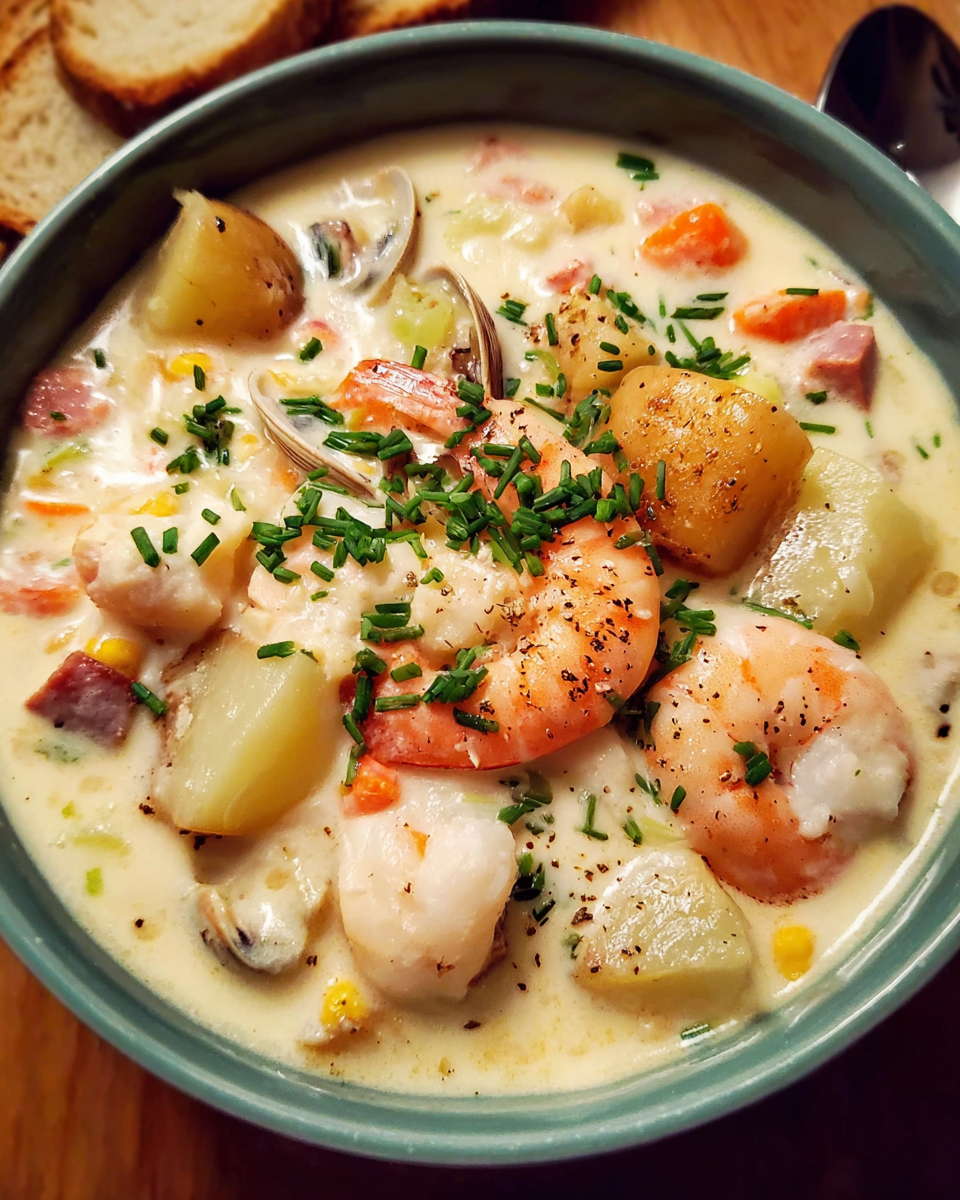
Seafood Chowder Magic: Creamy Comfort in Every Spoonful
Seafood chowder delivers the ultimate cozy experience—a rich, creamy soup brimming with the fresh taste of the sea. Whether you’re craving warmth on a chilly evening or planning a dinner that feels indulgent yet easy, this classic bowl does it all. In this article, you’ll discover the story behind seafood chowder, its essential ingredients, expert cooking tips, and how to give it an Irish twist. We’ll also cover nutrition facts, serving ideas, and storage tricks. Get ready to unlock the secrets of a hearty seafood chowder that’s as nourishing as it is irresistible.
Print
Seafood Chowder Magic: Creamy Comfort in Every Spoonful
- Total Time: 40 minutes
- Yield: 5 servings
Description
- Seafood chowder delivers creamy, coastal flavor in every bite. Learn the secrets to a rich, hearty bowl with fresh seafood and classic ingredients.
Ingredients
- 1.3 lbs mixed seafood (such as fish, squid, shrimp, and mussels)
- 3 tablespoons unsalted butter
- 2 cloves garlic, finely minced
- 1/3 cup all-purpose flour
- 4 cups low-sodium chicken broth (or homemade fish stock)
- 2 medium carrots, peeled and diced (about 1 1/2 cups)
- 2 large potatoes, peeled and cubed (about 2 1/2 cups)
- 1 cup heavy cream (or whole milk for a lighter version)
- 1 cup corn (frozen or canned and drained)
- 2 teaspoons fish sauce
- Pinch of white or black pepper
- 3 tablespoons chopped chives or parsley (for garnish)
- Crusty bread (optional, for serving)
Instructions
-
- If using a seafood mix with cooked components (like mussels), separate them from the raw seafood and set aside.
- Cut any large pieces of fish into 1-inch cubes.
- In a large pot, melt the butter over medium heat. Add garlic and sauté for 10 seconds.
- Stir in the flour and cook for 1 minute to form a roux.
- Gradually whisk in 1 cup of the broth to dissolve the roux. Then add the remaining broth, stirring until smooth.
- Bring the mixture to a boil, then add the carrots and potatoes. Reduce heat to medium and simmer for 10-12 minutes, or until vegetables are tender.
- Add the cream, fish sauce, pepper, corn, and raw seafood. Simmer for about 3 minutes, until seafood is just cooked.
- Stir in the previously separated cooked seafood and heat through. Taste and adjust seasoning if necessary.
- Serve hot, garnished with chopped chives or parsley, alongside crusty bread if desired.
- Prep Time: 20 minutes
- Cook Time: 20 minutes
- Category: SOUPS
- Method: Stovetop
- Cuisine: Western
Table of Contents
Seafood Chowder Origins & Comfort Food Appeal
The Cozy Legacy of Seafood Chowder
Seafood chowder has roots that run deep in coastal communities across the globe. From New England fishing villages to the rugged shores of Ireland, this creamy, seafood-laden soup began as a humble fisherman’s dish. Cooks combined the catch of the day with staple vegetables and creamy broth to create something both nourishing and soul-warming. Over generations, seafood chowder evolved into a comfort food essential—served in seaside pubs, family dinners, and holiday tables alike. The hearty texture and familiar aroma bring people back to moments that feel like home. Today, it remains a dish that reflects tradition and adaptability.
Why This Dish Defines Comfort
There’s a reason why seafood chowder holds a permanent spot in comfort food rankings. First, it wraps you in warmth from the very first spoonful. The thick, velvety broth soothes and satisfies, especially during colder months. Then, there’s the depth of flavor—each bite delivers a blend of tender seafood, earthy potatoes, and sweet carrots. It’s the kind of meal that invites lingering at the table, often paired with crusty bread and great conversation. For many, it recalls a parent’s kitchen or a coastal getaway, proving that seafood chowder is far more than just food—it’s a feeling.
How Seafood Chowder Evolved Globally
As it spread from its coastal origins, seafood chowder adapted to different culinary traditions. In France, variations include white wine and leeks. In Ireland, cooks might add smoked haddock or dill. Across the U.S., New England chowder sticks to a cream base, while Southern styles might feature spicy notes or corn. What unites all these versions is the celebration of seafood’s delicate texture and flavor. No matter where it’s made, the heart of seafood chowder stays the same: a bowl that balances richness with freshness, and tradition with creativity.
Key Ingredients for Authentic Seafood Chowder
Seafood Chowder Essentials: From Sea to Bowl
The foundation of any great seafood chowder lies in its seafood selection. Choosing a well-balanced mix enhances texture and depth. A combination of white fish like cod or halibut provides flakiness, while shrimp and squid introduce chew and richness. Mussels or clams add an unmistakable briny essence. When sourcing, freshness is everything—frozen options can work if thawed correctly, but fresh seafood gives the broth its signature oceanic flavor. Before adding seafood to the pot, cut larger fillets into bite-sized cubes. This ensures even cooking and keeps each spoonful consistent and delicious.
Vegetables & Aromatics That Elevate Flavor
Beyond seafood, vegetables are essential to round out the chowder’s flavor. Potatoes bring body and structure—especially when they break down slightly to thicken the soup. Carrots add subtle sweetness and color contrast. Corn, whether frozen or canned, introduces a pop of sweetness that balances the savory seafood. Garlic is the key aromatic here, infusing the base with warmth and complexity. Some versions include onions or celery for extra depth, but they aren’t mandatory. The beauty of seafood chowder lies in layering simple vegetables into a broth that’s anything but ordinary.
Cream, Broth, and Seasoning: The Balancing Act
A creamy base transforms seafood chowder from soup to soul food. Most recipes use either heavy cream or whole milk to create that silky consistency. To lighten things up without sacrificing flavor, you can combine milk with a splash of cream. The broth also plays a central role—use chicken broth for ease or homemade fish stock for authenticity. Fish sauce is a hidden gem in modern chowders, adding umami without overpowering the dish. Finally, a touch of pepper brings it all together. With these ingredients in perfect balance, every bowl becomes a masterclass in comfort.
How to Make Seafood Chowder at Home
Step-by-Step Guide to Homemade Seafood Chowder
Making seafood chowder at home might seem complex, but with a simple process, you’ll be ladling out bowls in under an hour. Start by melting butter in a large pot and sautéing minced garlic to release its aroma. Stir in flour to form a smooth roux, which thickens the base. Gradually whisk in chicken broth—this ensures no lumps and a silky finish. Next, add diced potatoes and carrots, letting them simmer until tender. Then comes the magic: pour in cream, sprinkle in fish sauce and pepper, and stir in the seafood. Cook until the seafood is just done, then top with chopped parsley or chives. For an extra cozy dinner, serve it with warm crusty bread.
Smart Cooking Tips for Flawless Results
Timing is everything when working with seafood. Overcooked shrimp or squid can turn rubbery, so add them last and simmer gently. Cut fish into even cubes to avoid overcooking smaller pieces. Stir frequently, especially after adding cream, to prevent sticking. Want a thicker chowder? Use a potato masher to gently break down some cubes before adding seafood. For a deeper, richer base, swap out chicken broth with homemade fish stock or even the liquid from steamed mussels. Small touches like these elevate your seafood chowder from basic to breathtaking. For more soup inspiration, check out our Country Harvest Root Vegetable Soup—a hearty bowl perfect for weeknights.
Time-Saving & Make-Ahead Techniques
You can absolutely prepare parts of this recipe in advance. Dice your vegetables and clean your seafood the night before to reduce prep time. You can even cook the chowder base—broth, vegetables, and cream—ahead of time. When you’re ready to serve, reheat the base, stir in seafood, and simmer briefly. Leftovers? Store them in the fridge for up to two days. Reheat slowly on the stovetop, stirring often. This method helps maintain the creamy texture and prevents seafood from turning tough. If you’re a fan of warming bowls, don’t miss our creamy Zuppa Toscana—a rich, flavor-packed favorite.
Irish Seafood Chowder vs. Classic Versions
What’s Unique About Irish Seafood Chowder
Irish seafood chowder has a character all its own. While the base is still creamy and rich, it often includes smoked fish such as haddock or salmon, adding a subtle smoky flavor that distinguishes it from American styles. The broth is typically more delicate, sometimes enhanced with white wine or bay leaf for an aromatic edge. You’ll also find Irish chowder served with brown soda bread, a hearty partner for soaking up the broth. Irish kitchens often rely on locally caught shellfish, making each version distinct. Yet at its heart, Irish seafood chowder remains comforting, rustic, and deeply rooted in tradition.
Comparing Regional Chowder Styles
Though the essence of seafood chowder is universal, the regional interpretations offer fascinating contrasts. New England chowder leans heavily on cream, butter, and large chunks of white fish. Southern U.S. versions might feature a hint of spice or corn for sweetness. Irish seafood chowder is smoother and more herbaceous, often with less cream but added flavor from smoked fish or leeks. In Mediterranean countries, chowder-like stews omit cream entirely and highlight olive oil, tomatoes, or saffron. Each version mirrors the local culture and available ingredients, but all share one purpose: delivering a satisfying, seafood-packed experience.
How to Infuse Your Version with Irish Flair
You can easily give your seafood chowder an Irish twist without changing the entire recipe. Start by adding a splash of white wine to your broth and let it reduce slightly before adding the vegetables. Include a bit of smoked fish alongside your seafood mix for added depth. Instead of parsley, garnish with dill or finely chopped scallions. A pinch of white pepper will mimic the subtle heat found in Irish versions. Serve it with a slice of wholemeal soda bread, and you’ve just brought a taste of the Irish coast into your kitchen.
Serving, Pairings & Presentation Tips
Best Sides to Serve with Seafood Chowder
Seafood chowder stands well on its own, but thoughtful pairings elevate the experience. Crusty bread is a classic—perfect for soaking up the creamy broth. Try sourdough, rye, or a rustic baguette. For a lighter touch, a crisp green salad with citrus vinaigrette balances the richness of the chowder. Looking for something heartier? A side of roasted seasonal vegetables complements the dish without overwhelming it. Chowder also pairs beautifully with light white wines such as Sauvignon Blanc or Pinot Grigio. Each side brings balance, texture, or contrast, helping your seafood chowder shine at any meal.
Presentation Tips for Impressive Bowls
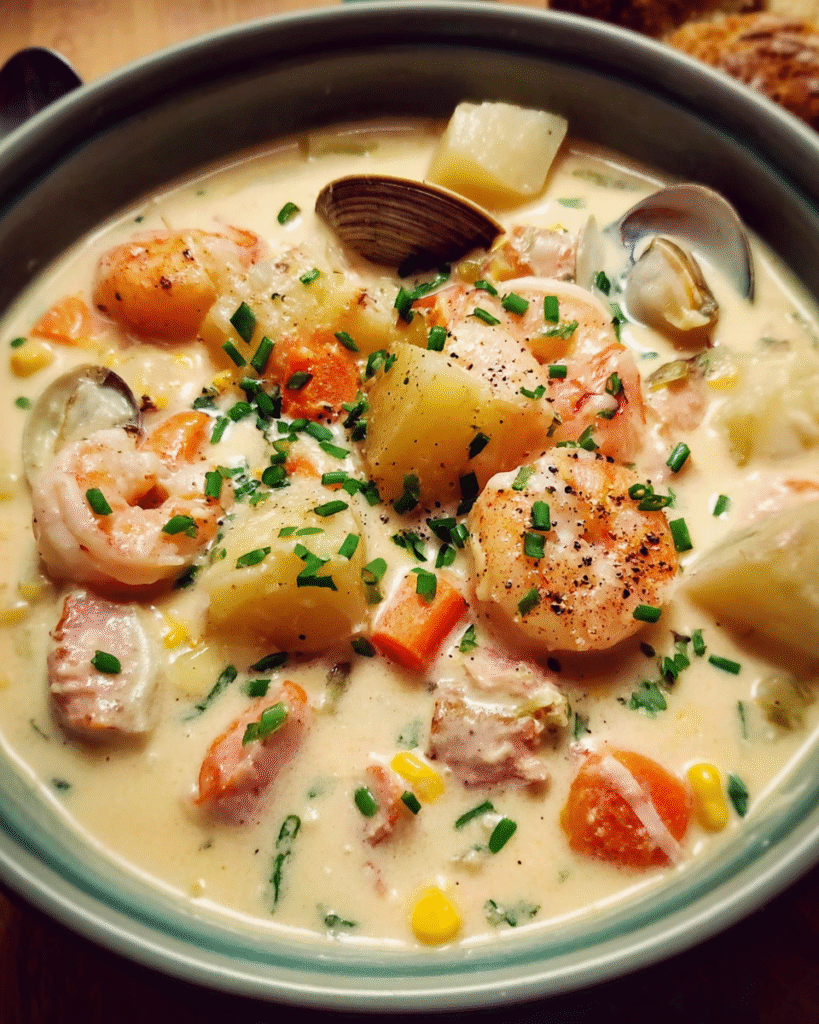
Presentation adds that finishing touch that turns seafood chowder from comforting to captivating. Use wide, shallow bowls that showcase the colors of the seafood and vegetables. Garnish with freshly chopped parsley or chives for a pop of green. A swirl of cream or drizzle of olive oil across the surface enhances the visual appeal. For a rustic aesthetic, serve with a side of warm bread wrapped in linen. If you’re plating for a gathering, try ladling chowder into individual ramekins and topping each with a single shrimp or mussel for an elegant finish.
How to Store and Reheat Seafood Chowder
Proper storage ensures your seafood chowder remains just as satisfying the next day. Cool leftovers quickly and transfer them to airtight containers. Store in the refrigerator for up to two days. When reheating, do so gently on the stovetop over medium-low heat, stirring frequently. Avoid boiling—this toughens the seafood and can separate the cream. If the chowder thickens too much in the fridge, add a splash of broth or milk as it reheats. These simple steps keep the texture smooth and the flavor intact.
Nutritional Profile & Dietary Adaptations
Understanding Seafood Chowder’s Nutrition
Seafood chowder offers a rich blend of nutrients, thanks to its combination of lean protein, vegetables, and cream. A typical bowl (about one-fifth of the recipe) contains 623 calories, 32g of protein, and 41g of carbohydrates. It’s also a solid source of healthy fats—especially if using seafood like salmon or mussels. The carrots and potatoes provide dietary fiber and essential vitamins, while the seafood contributes omega-3s and minerals such as selenium and iodine. While the sodium level (about 1596mg) may seem high, you can control this by using low-sodium broth or reducing added salt.
Lighter or Dairy-Free Adaptations
Craving a lighter version of seafood chowder? Swap the heavy cream for whole milk or evaporated milk to cut saturated fat. You can also reduce butter or use olive oil for sautéing. To make it dairy-free, use a plant-based cream alternative like oat milk or cashew cream. Choose unsweetened, unflavored versions for best results. These substitutes maintain creaminess without overpowering the seafood. For added thickness without flour or cream, blend a portion of the potatoes into the broth—a simple way to achieve texture and body naturally.
Pescatarian & Gluten-Free Friendly Versions
Seafood chowder naturally suits a pescatarian diet, but for gluten-free eaters, a few adjustments are key. Replace all-purpose flour with a gluten-free thickener like cornstarch or rice flour. Always double-check your broth and fish sauce labels to confirm they contain no hidden gluten. You can also add more vegetables like parsnips or leeks for variety. These adaptations ensure your chowder remains flavorful, satisfying, and inclusive for everyone at the table—no matter their dietary needs.
FAQS
What is seafood chowder made of?
Seafood chowder is made from a blend of seafood like shrimp, fish, squid, and mussels combined with vegetables such as potatoes, carrots, and corn. It’s thickened with a roux and finished with a creamy broth, often seasoned with fish sauce and herbs like chives or parsley.
What is chowder made of?
Chowder typically includes a creamy base made from milk or cream, thickened with flour or roux. It’s loaded with hearty ingredients like potatoes, corn, seafood, or chicken. Some regional versions also add bacon or smoked fish for extra depth.
What’s in Irish seafood chowder?
Irish seafood chowder often includes local fish like haddock or salmon, shellfish, and sometimes smoked fish. The broth is creamy but lighter than American versions and may be seasoned with herbs like dill or scallions. It’s usually served with brown soda bread.
How to make a creamy seafood chowder?
To make a creamy seafood chowder, start with a roux made from butter and flour. Gradually whisk in broth, then add diced vegetables and simmer until tender. Stir in cream, fish sauce, and seafood, cooking until just done. Finish with fresh herbs for garnish.
Conclusion: Discover the Soul of Seafood Chowder
Seafood chowder isn’t just a dish—it’s an experience that brings warmth, flavor, and a touch of nostalgia to your table. With its creamy base, fresh seafood, and hearty vegetables, it’s the ultimate comfort food. Whether you follow a traditional Irish style or customize your version, seafood chowder adapts to every taste and table. Serve it as a weeknight meal or the centerpiece of a gathering—it always delivers. With the right techniques, high-quality ingredients, and a few creative twists, your homemade seafood chowder can rival any restaurant bowl. Dive into the experience and make this classic your own.
For more successful recipes, you can visit our Facebook page or our Pinterest account