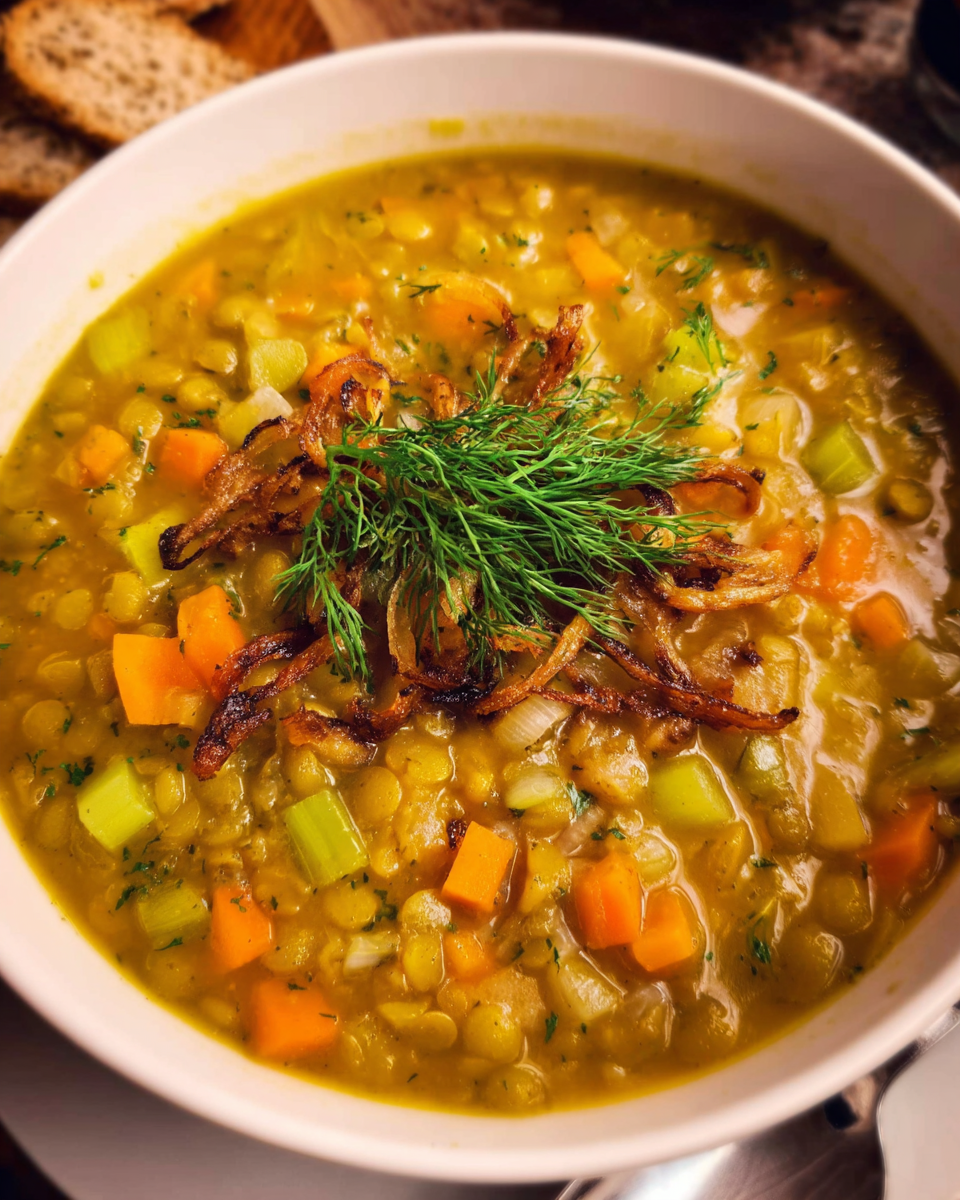
Vegetarian Split Pea Soup: A Hearty Bowl of Comfort and Nutrition
There’s something truly satisfying about a steaming bowl of vegetarian split pea soup. This article explores the heartfelt story behind the recipe, the nourishing ingredients, and the simple steps that make it a staple in home kitchens. We’ll cover the origin of this comforting dish, how to perfect it every time, and tips to avoid common cooking errors. You’ll also discover the soup’s numerous health benefits and how to tweak it for maximum flavor. Whether you’re a longtime fan or a first-timer, you’ll learn how to elevate this humble soup into something truly unforgettable.
Print
Vegetarian Split Pea Soup: A Hearty Bowl of Comfort and Nutrition
- Total Time: 1 hour 15 minute
- Yield: 6 servings
Description
- Vegetarian split pea soup is hearty, healthy, and easy to make. Packed with flavor, plant protein, and fiber.
Ingredients
-
2 tablespoons olive oil
-
2 medium yellow onions, chopped
-
2 medium celery stalks, diced
-
2 medium carrots, diced
-
1/4 medium celery root, diced (or substitute with potato, turnip, or parsnip)
-
6 cups vegetable broth
-
2 cups dried green split peas, rinsed
-
1 sprig fresh thyme
-
4 tablespoons fresh dill, chopped and divided
-
2 medium yellow onions, thinly sliced (for topping)
-
Salt and black pepper, to taste
Instructions
-
Warm the olive oil in a large soup pot over medium-high heat. Add the chopped onions and cook, stirring occasionally, until golden brown, about 15 minutes.
-
Stir in the diced celery, carrots, celery root, broth, split peas, thyme, and 2 tablespoons of the dill. Bring the mixture to a boil.
-
Reduce heat to medium-low. Cover the pot and simmer for 45 to 60 minutes, until the split peas are tender and the soup is aromatic.
-
Season the soup with salt and pepper to taste.
-
While the soup simmers, heat a skillet over medium-high. Add the sliced onions and sauté, stirring often, until they become dark and crisp, around 15 minutes. Set aside.
-
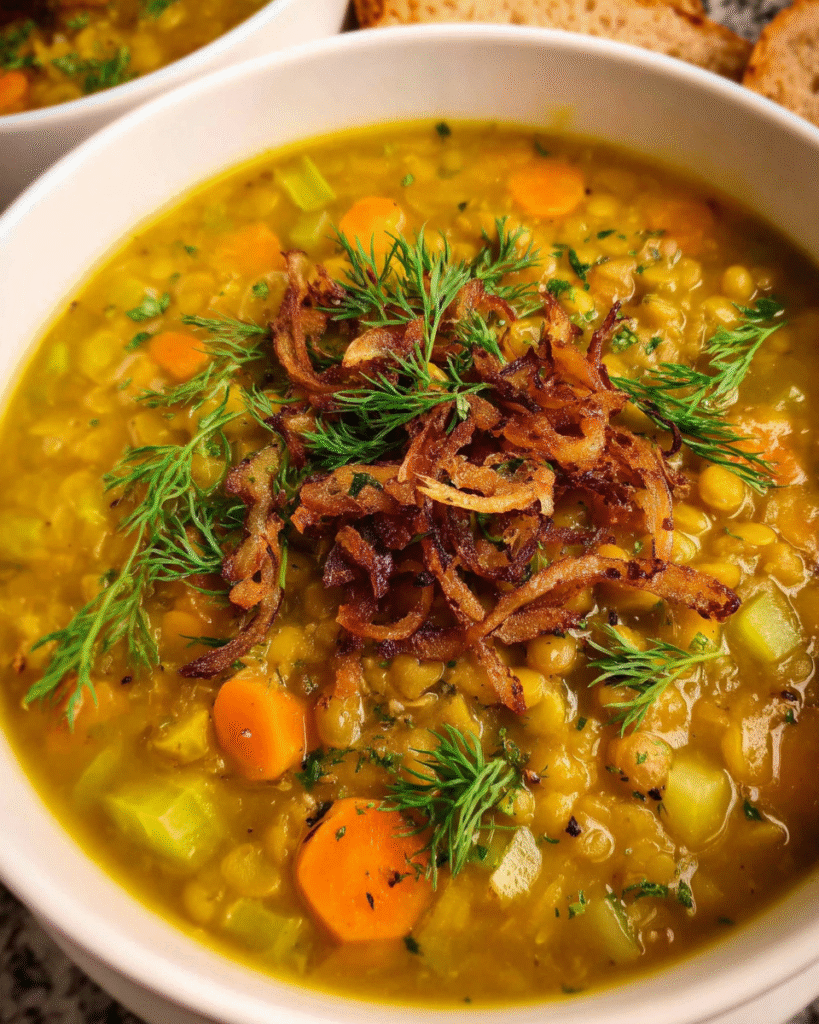
Ladle the soup into bowls and garnish each serving with the crispy onions and remaining dill.
- Prep Time: 15 minutes
- Cook Time: 1 hour
- Category: SOUPS
- Method: Stovetop
- Cuisine: American
Table of Contents
The Story Behind Vegetarian Split Pea Soup
A family favorite inspired by tradition
Growing up in New Orleans, where my kitchen always buzzed with the scent of onions and fresh herbs, vegetarian split pea soup was a staple we returned to often. My grandmother would simmer hers slowly on chilly afternoons, filling the house with rich, earthy aromas that made us hover around the stove. She believed in the magic of simple ingredients—just peas, carrots, onions, and love. I’ve since added my own twist, introducing crispy caramelized onions and fresh dill, but the heart of the recipe remains unchanged.
The perfect soup for every lifestyle
This soup fits perfectly into any routine—whether you’re a busy professional, feeding a family, or just craving something wholesome. It’s vegan, gluten-free, and packed with fiber and plant-based protein, making it ideal for those pursuing balanced nutrition. And with ingredients like celery root and thyme, it delivers deep flavor without requiring meat or artificial stock. If you’ve enjoyed dishes like creamy vegetable soup noodles or fish chowder soup, you’ll find this pea soup just as satisfying—yet completely plant-based.
From pot to bowl in under 90 minutes
With only 15 minutes of prep and an hour to simmer, this meal transforms basic pantry staples into a deeply flavorful experience. The instructions are straightforward, and the payoff is immense—a thick, velvety texture paired with bright herbs and sweet caramelized onion topping. Whether for a weekday dinner or weekend lunch, it’s a recipe you’ll want on repeat.
Key Ingredients That Elevate Vegetarian Split Pea Soup
Choosing the best split peas for optimal texture
Not all split peas are created equal. For a consistently creamy vegetarian split pea soup, opt for high-quality dried green split peas. These peas break down beautifully when simmered, providing a naturally thick consistency without the need for blending or thickening agents. Always rinse them thoroughly and check for any debris before cooking. Soaking isn’t necessary, but rinsing enhances texture and cooking efficiency.
Layering flavor with aromatics and herbs
The foundation of rich flavor lies in your aromatics. Onions, carrots, and celery form the classic mirepoix base, while a quarter of a celery root adds depth and slight earthiness. Fresh thyme infuses the broth during the simmer, and chopped fresh dill at the end brings a burst of brightness. Finish it off with a generous topping of caramelized onions—these offer a subtle sweetness and crispy texture that contrast beautifully with the velvety soup.
Broth matters: building body without meat
A robust vegetable broth makes a world of difference. Look for one that’s low in sodium but full of roasted vegetable notes. Avoid watery store-bought versions that dilute flavor. If you make your own broth, simmer scraps like onion skins, celery tops, and carrot peels for an hour beforehand. That concentrated liquid becomes the heart of this soup. It complements the peas while highlighting the herbal elements, making the final bowl both wholesome and rich in taste.
Avoiding Common Split Pea Soup Mistakes
Don’t undercook or overcook your peas
The biggest mistake with vegetarian split pea soup is cooking time mismanagement. Split peas need at least 45 minutes to break down properly, but overcooking beyond 75 minutes can destroy their structure entirely. You’re aiming for a creamy consistency with just a hint of texture. Always check around the 45-minute mark—if they’re tender and the soup thickens naturally, it’s done. Keep the pot partially covered to retain steam while letting some water evaporate.
Watch your salt and broth ratios
Adding salt too early can make the peas tough and hinder softening. Wait until the soup has simmered and the peas have softened before salting. This ensures a better texture and lets the other flavors build naturally. Also, keep your broth-to-pea ratio close to 3:1—about six cups of broth for two cups of dried peas. Too much liquid waters it down; too little risks burning or uneven cooking.
Overcomplicating the flavor
Split pea soup thrives on simplicity. Some cooks overload it with spices, processed ingredients, or extra vegetables that clash with its earthy nature. Stick with core elements—onions, carrots, celery, dill, thyme—and let them shine. If you’re craving extra protein, pair the soup with a slice of rustic bread or a side dish, but avoid turning the soup itself into a stew.
Nutritional Benefits of Vegetarian Split Pea Soup
A powerhouse of plant-based protein and fiber
One bowl of vegetarian split pea soup delivers around 18 grams of protein and 19 grams of fiber, making it a complete, satisfying meal. Split peas are rich in lysine, an essential amino acid often lacking in plant-based diets. This combination helps regulate digestion, maintain muscle mass, and keep you feeling full longer. For anyone following a vegan or vegetarian lifestyle, it’s a delicious way to meet nutritional needs without relying on meat or dairy.
Vitamins, minerals, and low fat content
In addition to protein and fiber, this soup is packed with micronutrients. Carrots and celery bring in vitamin A and K, while celery root contributes potassium and manganese. The use of olive oil provides heart-healthy unsaturated fats. Each serving contains just 6 grams of fat and zero cholesterol, making it ideal for heart-conscious eaters. Plus, the low glycemic index of peas helps stabilize blood sugar levels—a bonus for those managing insulin sensitivity.
Easy to digest and anti-inflammatory
Unlike many legumes, split peas are gentle on digestion when cooked thoroughly. They’re also high in antioxidants like flavonoids and polyphenols, which help reduce inflammation. Fresh dill and thyme further enhance this effect by offering antibacterial and anti-inflammatory properties. Together, these ingredients work synergistically to support gut health and overall well-being.
FAQS
What is a fact about split pea soup?
Split pea soup dates back to ancient Greece and Rome, where peas were a staple food due to their high protein content. Today, it remains popular globally for being affordable, filling, and packed with essential nutrients like iron, fiber, and B vitamins.
What are some common mistakes when cooking split peas?
One common mistake is skipping the rinse. Rinsing removes dust and small debris that can affect texture. Another is adding acidic ingredients too early—this slows softening. Lastly, overcooking can turn the soup too mushy or thin if water isn’t adjusted properly.
What is needed for split pea soup?
To make a basic vegetarian split pea soup, you’ll need green split peas, vegetable broth, onions, carrots, celery, herbs like thyme and dill, and a bit of oil for sautéing. A touch of salt and pepper finishes it, while caramelized onions on top add depth.
What are the benefits of split pea soup?
This soup is rich in fiber, aiding digestion and heart health. It’s also high in plant-based protein, supports blood sugar balance, and has anti-inflammatory properties thanks to herbs and olive oil. It’s a wholesome, low-fat meal ideal for most diets.
Conclusion
Whether you’re looking for comfort, nourishment, or a protein-rich vegan meal, vegetarian split pea soup checks all the boxes. With just a few humble ingredients and easy steps, you can craft a dish that’s deeply flavorful and wonderfully hearty. From its fiber-rich split peas to its fragrant fresh herbs and crispy onions, every element is carefully layered for a satisfying finish. Make it once, and it might just become your favorite go-to soup for cold nights, busy weeks, or healthy resets. Don’t forget to explore other cozy soups like fish chowder or creamy vegetable noodle soup for even more warming inspiration.
For more successful recipes, you can visit our Facebook page or our Pinterest account