Split Pea Soup with Ham: A Comforting Classic Made Easy
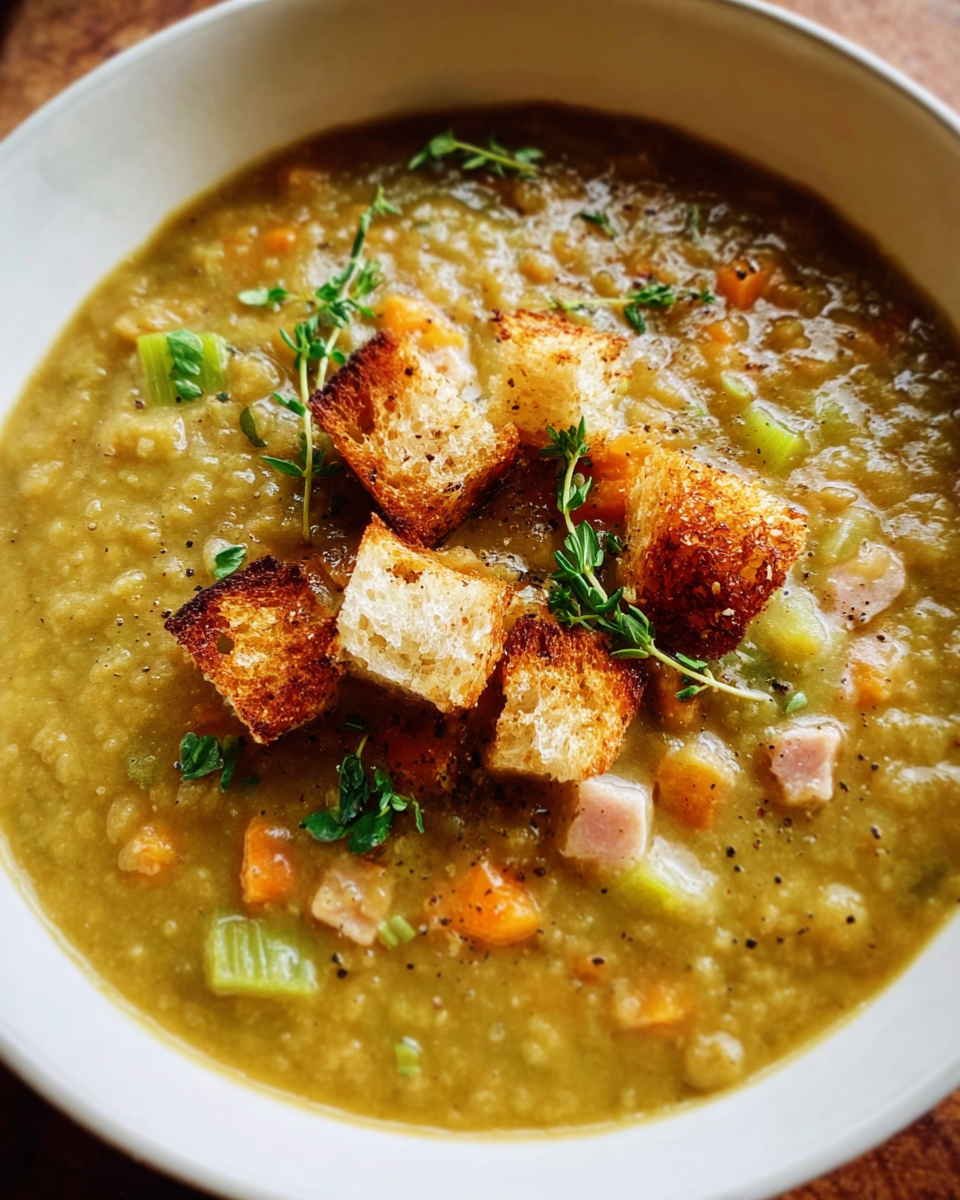
A warm bowl of Split Pea Soup with Ham delivers everything people love about cold-weather cooking—rich flavor, creamy texture, and dependable comfort. This guide explains every step, from ingredient selection to reheating, while also showing you how to adapt the recipe for personal preferences. You’ll also find tips for thickness, seasoning, and using leftovers smartly. Whether you’re preparing a weeknight dinner or stocking your freezer, this version makes the entire process simple and reliable.
Print
Split Pea Soup with Ham: A Comforting Classic Made Easy
- Total Time: 1 hour 30 minute
- Yield: 6 servings
Description
- Split Pea Soup with Ham made hearty and simple. Learn how to prep, cook, store, and customize this comforting classic.
Ingredients
-
¼ cup unsalted butter
-
2 cups chopped onion
-
1 cup diced carrot (¼-inch pieces)
-
1 cup diced celery (¼-inch pieces)
-
¼ to 1 teaspoon kosher salt, to taste
-
½ teaspoon freshly ground black pepper, plus more to taste
-
2 garlic cloves, minced
-
1 pound dried green split peas, rinsed and sorted
-
1 large bay leaf (or 2 small)
-
2 teaspoons fresh thyme leaves, divided
-
6 cups low-sodium vegetable broth
-
2 cups water
-
1½ cups diced cooked turkey (¼-inch pieces)
-
Garlic croutons, for serving
Instructions
-
In a large pot or Dutch oven, melt the butter over medium heat until it begins to foam. Add onions, carrots, celery, ¼ teaspoon salt, and ½ teaspoon black pepper. Sauté for 5 to 8 minutes until the vegetables soften.
-
Stir in garlic and cook for another minute until fragrant. Add the split peas and stir to combine.
-
Add the bay leaf, 1 teaspoon of thyme, vegetable broth, and water. Bring to a boil, then reduce heat and simmer uncovered for 60 to 90 minutes, stirring occasionally.
-
As the soup thickens, stir more frequently to prevent sticking. If it becomes too thick, add a bit more broth or water.
-
During the last 15 minutes of cooking, stir in the diced turkey.
-
Once the peas are fully softened and the soup reaches your desired consistency, remove the bay leaf and stir in the remaining 1 teaspoon thyme. Adjust seasoning with more salt and pepper if needed.
-
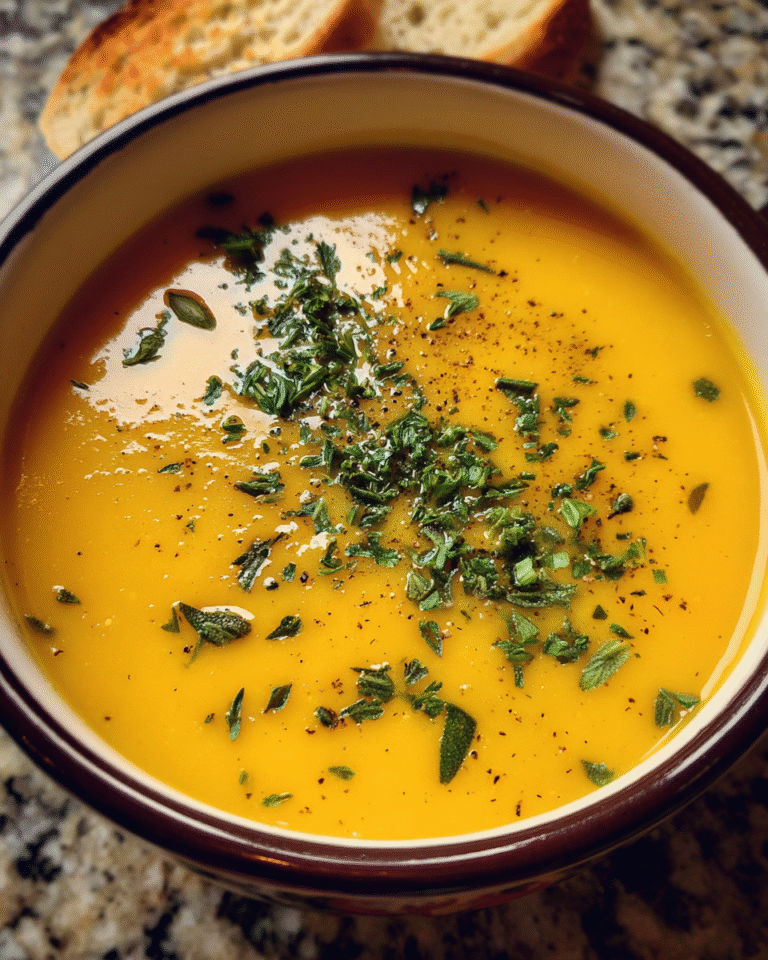
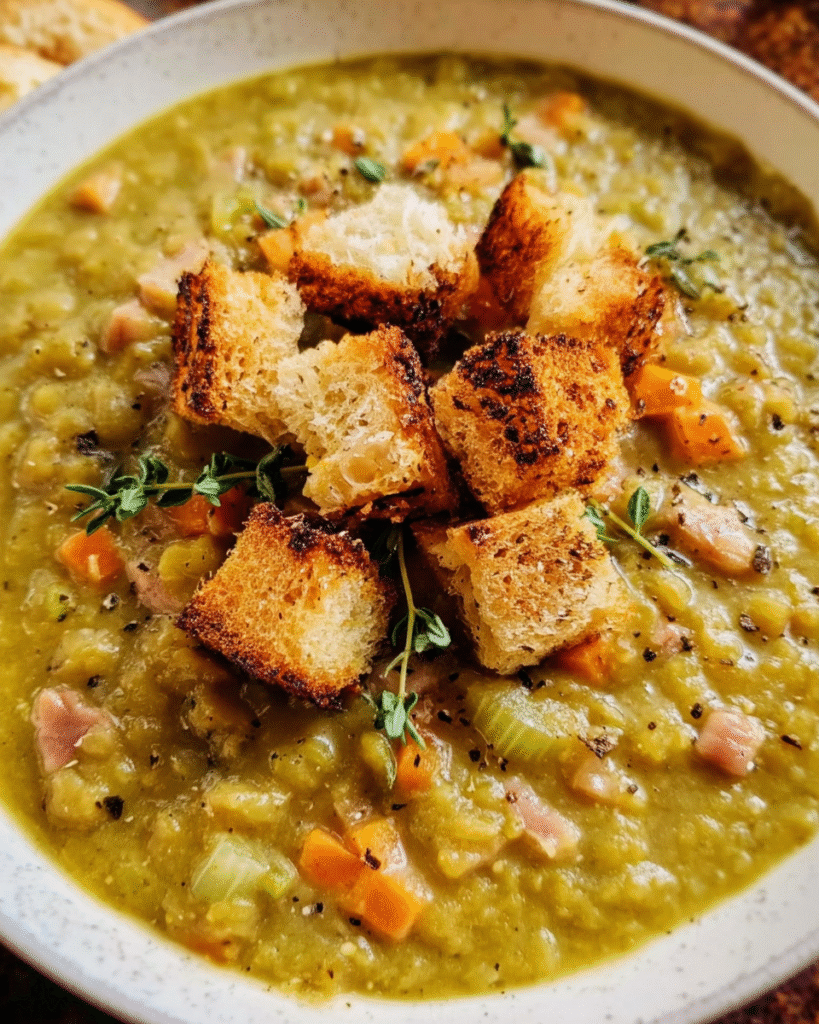
Serve hot, topped with garlic croutons and extra black pepper if desired.
- Prep Time: 15 minutes
- Cook Time: 1 hour 15 minutes
- Category: SOUPS
- Method: Stovetop
- Cuisine: American
Understanding Split Pea Soup with Ham
The History and Comfort Behind This Soup
Across generations, home cooks have relied on this nourishing bowl to stretch ingredients and create deeply satisfying meals. The gentle breakdown of peas naturally thickens the broth, creating a velvety texture without added cream. When paired with tender diced meat, the result becomes a hearty staple that fits both everyday meals and special family gatherings.
Why It Remains a Classic
A well-made Split Pea Soup with Ham stands out for its balance of creaminess and savory depth. Aromatics lay the foundation, peas release natural starches, and herbs create finish and character. It’s budget-friendly, protein-rich, and easy to scale—making it ideal for meal-prep and leftovers.
Key Ingredients That Shape the Flavor
Fresh thyme, bay leaf, and vegetable broth create gentle herbal undertones that work beautifully with peas. Softened onions, carrots, and celery provide sweetness, while butter contributes richness. Each component is simple but essential for building layers of flavor.
How to Make Split Pea Soup with Ham
Essential Techniques for an Excellent Result
Start by sweating aromatics in melted butter to release natural sweetness. Once softened, add garlic and peas to begin building depth. Maintaining a slow simmer helps the peas fully break down over time, ensuring consistent thickness from edge to center.
Choosing the Best Peas, Herbs, and Broth
Select high-quality dried green peas, sorting through them to remove debris. Fresh thyme brings brightness, while bay leaf provides the earthy backbone associated with classic soups. A low-sodium broth gives you more control over seasoning, preventing saltiness from overwhelming the dish.
Common Mistakes to Avoid
Rapid boiling toughens peas, slowing their ability to soften. Salt should be added gradually to avoid over-seasoning as the liquid reduces. To prevent burning, stir frequently as the peas begin to reach their creamy stage.
Serving Split Pea Soup with Ham
Toppings to Elevate Each Bowl
Crispy garlic croutons add crunch, while a drizzle of olive oil or a sprinkle of thyme brightens the finish. Freshly cracked pepper reinforces the soup’s warmth. For a creamy contrast, swirl in a spoonful of Greek yogurt.
Side Dishes That Complement the Soup
Warm crusty bread, roasted vegetables, or a simple mixed greens salad round out the meal. For a complementary flavor profile, consider pairing with a lighter soup from your collection, such as the cozy creamy white bean soup.
Adjusting Texture, Thickness, and Flavor
If the soup feels too thick, thin it with a splash of broth or water. For added richness, stir in a small pat of butter before serving. If you want more structure, reduce cook time so some peas remain intact.
Storage and Reheating Split Pea Soup with Ham
How Long It Keeps in the Fridge
Store leftovers in airtight containers for three to four days. The soup naturally thickens as it cools, so plan to loosen it with water or broth when reheating.
Freezing Tips for Long-Term Storage
This soup freezes exceptionally well. Cool fully before transferring to freezer-safe containers, leaving room at the top for expansion. Freeze for up to three months for best quality.
Reheating to Maintain Creaminess
Warm gently on the stovetop over medium-low heat, stirring frequently. Add liquid as needed to restore the original velvety consistency. Avoid rapid boiling, which can dull the flavor.
Variations of Split Pea Soup with Ham
Smoky, Spicy, and Herb-Forward Adaptations
To add smokiness, stir in a dash of smoked paprika or incorporate a meaty ham bone. For heat, add crushed red pepper flakes. Rosemary and sage offer a deeper herbal angle during fall and winter.
Vegetarian and Turkey-Based Options
You can easily swap the meat for hearty vegetables like mushrooms. This recipe uses tender diced turkey for a leaner twist with excellent protein. For another vibrant poultry-based soup, try adding inspiration from this comforting lemon chicken meatball soup.
Seasonal Changes for Any Time of Year
In winter, pair with roasted root vegetables. During spring, brighten the broth with lemon zest. For fall, add a splash of apple cider for gentle sweetness.
Nutritional Benefits of Split Pea Soup with Ham
High-Fiber Advantages
Split peas offer impressive fiber content, supporting digestion and steady energy. This naturally thick texture means no added cream is needed to achieve richness.
Protein and Satiety
Between peas and diced turkey or ham, the soup delivers long-lasting fullness without excessive fat. Balanced macronutrients make it ideal for wholesome weeknight meals.
How It Fits Into Balanced Diets
As a high-fiber, nutrient-dense soup, it supports many eating styles, including nut-free and high-fiber diets. Its make-ahead nature also supports consistent, health-focused meal planning.
FAQ: Split Pea Soup with Ham
How do I make Split Pea Soup with a ham bone?
Simmer the bone with peas, aromatics, and herbs, allowing marrow and flavorful bits to enrich the broth. Remove it before serving and pull off any tender meat.
What is the best Split Pea Soup recipe?
The best version strikes a balance between aromatics, slow simmering, and gradually adjusting texture with broth. Consistent stirring during thickening ensures creaminess throughout.
Why aren’t my peas softening?
Hard water, acidity, or very old peas can prevent softening. Use fresh dried peas, avoid acidic ingredients early in cooking, and maintain a gentle simmer.
Can I make this soup ahead of time?
Absolutely. In fact, resting overnight enhances flavor as herbs and aromatics meld into the base.
Conclusion
Crafting a memorable Split Pea Soup with Ham requires only essential ingredients, patient simmering, and a few strategic adjustments. With its creamy texture and naturally comforting character, it’s a reliable dish for weeknights, gatherings, and freezer-friendly batch cooking. Keep these techniques close, and you’ll always have a satisfying bowl ready to warm the table.
For more successful recipes, you can visit our Facebook page or our Pinterest account