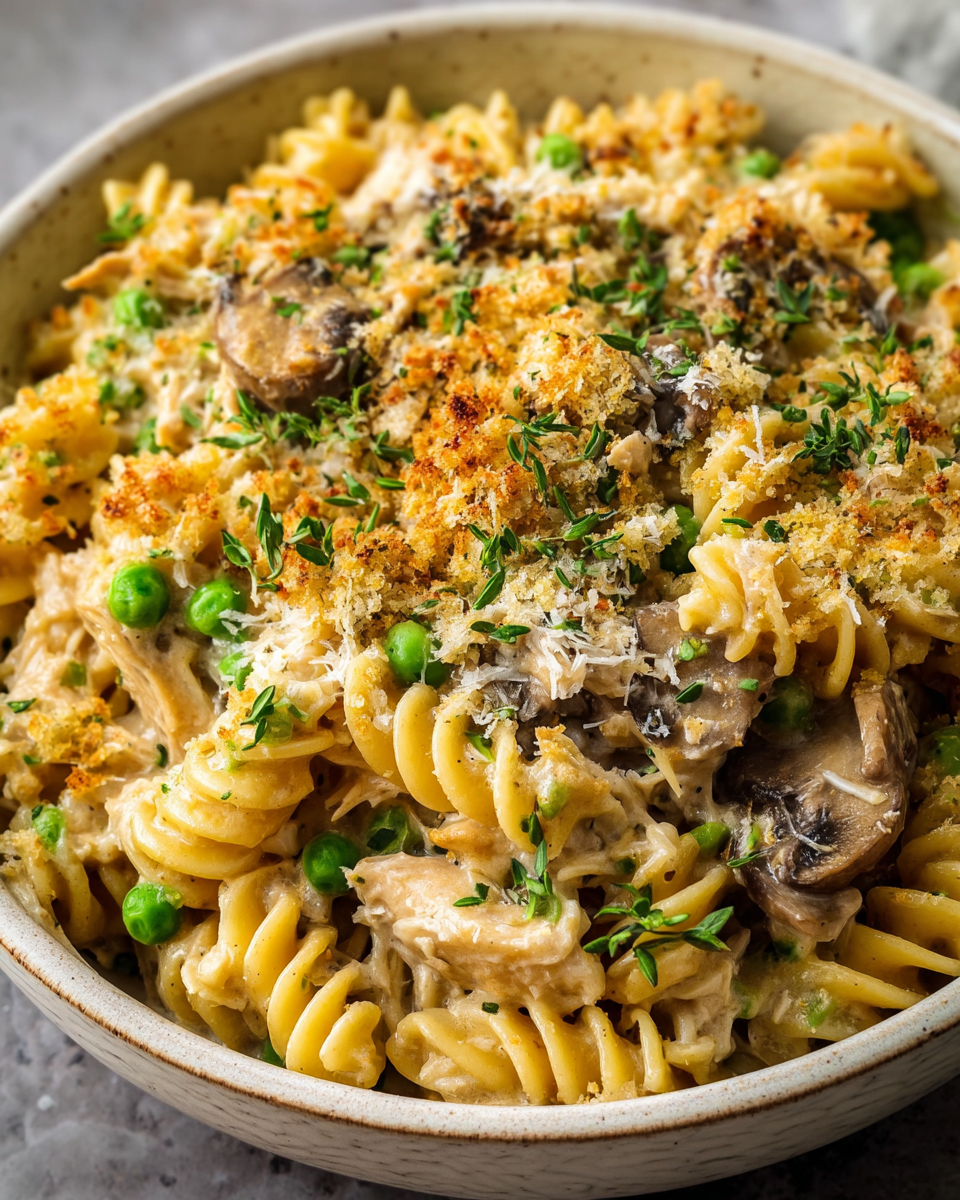
High-Protein Tuna Noodle Casserole That Feels Comforting and Nourishing
High-Protein Tuna Noodle Casserole is the kind of meal that balances comfort with smart nutrition. It delivers a creamy, satisfying texture while keeping protein front and center, making it ideal for busy weeknights or planned meal prep. This version skips heavy cream and unnecessary fillers, yet still feels rich and hearty straight from the oven.
Built with pantry staples, wholesome pasta, and quality tuna, this casserole fits into a modern, health-conscious kitchen. It works well for families, solo cooks, or anyone looking to enjoy a warm baked dish without compromise. From texture to flavor, every element is designed to feel familiar but updated.
Print
High-Protein Tuna Noodle Casserole That Feels Comforting and Nourishing
- Total Time: 55 minutes
- Yield: 4 servings
Description
This high-protein tuna noodle casserole is creamy, balanced, and comforting without being heavy. It uses simple ingredients and bakes into a nourishing, satisfying meal.
Ingredients
8 oz chickpea or regular rotini pasta
2 tablespoons olive oil
1 large yellow onion, chopped
8 oz baby bella mushrooms, sliced
2 cloves garlic, minced
1 teaspoon ground black pepper
1 teaspoon sea salt
3 tablespoons all-purpose or gluten-free flour
1 cup unsweetened almond milk
1 cup vegetable broth
½ cup shredded cheddar cheese
Two 5 oz cans albacore tuna, drained
1½ cups frozen peas
½ cup shredded Parmesan cheese
¼ cup almond meal or breadcrumbs
Instructions
1. Cook pasta until just tender. Drain and set aside.
2. Preheat oven to 375°F and grease a 9×9-inch baking dish.
3. Heat olive oil in a skillet. Sauté onion and mushrooms with salt and pepper for 5–7 minutes.
4. Add garlic and cook 1–2 minutes.
5. Stir in flour to coat vegetables.
6. Slowly add almond milk and broth. Simmer until thickened, 10–12 minutes.
7. Remove from heat and stir in cheddar until melted.
8. Mix in pasta, peas, and tuna.
9. Transfer to baking dish. Top with Parmesan and almond meal.
10. Bake 20–25 minutes. Broil 1–2 minutes if desired.
Notes
Use chickpea pasta for extra protein and fiber. Cottage cheese can replace part of the cheddar if blended smooth.
- Prep Time: 10 minutes
- Cook Time: 45 minutes
- Category: Healthy Comfort Food
- Method: Baking
- Cuisine: American
Why High-Protein Tuna Noodle Casserole Is a Smart Dinner Choice
Balanced protein for everyday meals
High-Protein Tuna Noodle Casserole offers a reliable protein source from tuna and cheese, helping support fullness and steady energy. With nearly 30 grams of protein per serving, it fits well into balanced eating without feeling restrictive.
Comfort food without excess heaviness
This dish keeps the creamy texture people love while using almond milk and broth instead of heavy cream. The result is satisfying but lighter, making it easier to enjoy regularly.
Works for busy schedules
Everything comes together in one skillet and one baking dish. That simplicity makes this casserole practical for weeknights when time matters but quality still counts.
Key Ingredients That Make This Recipe Stand Out
Protein-rich tuna and pasta options
Using albacore tuna adds clean flavor and dense protein. Chickpea pasta boosts protein and fiber even further, though regular rotini works just as well.
Vegetables that add texture and nutrition
Onions, mushrooms, and peas create depth and balance. They add subtle sweetness, earthiness, and color without overpowering the dish.
Cheese choices for flavor without overload
Cheddar melts into the sauce for creaminess, while Parmesan on top creates a lightly crisp finish. Together, they provide flavor without excess grease.
How This High-Protein Tuna Noodle Casserole Comes Together
Building a creamy, stable sauce
A simple roux with flour, almond milk, and broth creates a smooth base that holds up during baking. Stirring consistently prevents lumps and ensures even thickness.
Combining pasta, tuna, and vegetables
Once the sauce is ready, everything mixes evenly so each bite has balanced texture and flavor. This step is key to a cohesive casserole.
Baking for the perfect finish
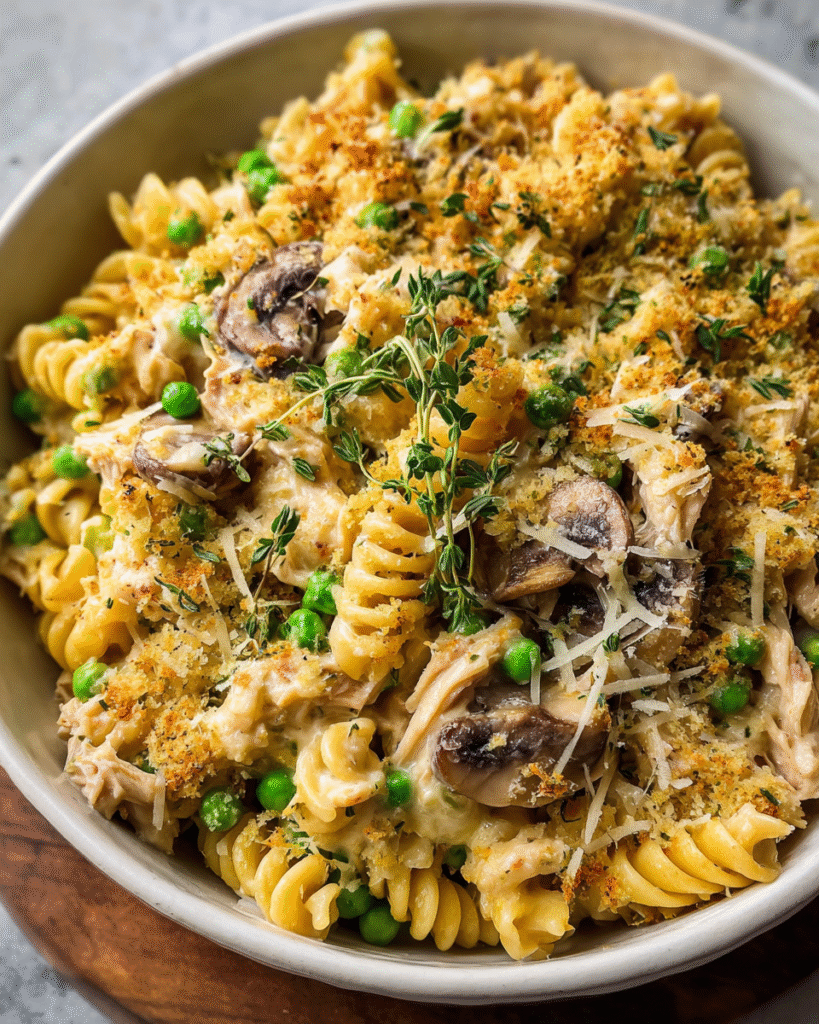
Baking allows flavors to meld while the topping becomes lightly golden. A quick broil at the end adds visual appeal and subtle crunch.
Customization Ideas to Fit Your Kitchen
Swap-ins for dietary needs
Gluten-free flour and pasta make this recipe accessible without changing texture. Almond meal or breadcrumbs both work well for the topping.
Flavor variations without complexity
Add Dijon mustard or a squeeze of lemon for brightness. A pinch of smoked paprika can deepen flavor without changing the core profile.
Pairing with simple sides
Serve with a crisp salad or roasted vegetables. Dishes like roasted vegetables with garlic yogurt sauce complement the casserole without competing flavors.
Meal Prep, Storage, and Reheating Tips
Make-ahead convenience
This casserole can be assembled a day in advance and baked when needed. That flexibility makes it useful for planning ahead.
Storing leftovers properly
Keep leftovers in an airtight container in the refrigerator for up to three days. The texture holds well without drying out.
Reheating without losing moisture
Reheat in the oven covered with foil or gently in the microwave. Adding a splash of broth helps restore creaminess.
FAQs About High-Protein Tuna Noodle Casserole
High protein tuna casserole with cottage cheese
Cottage cheese can replace part of the cheddar for extra protein. Blend it smooth before adding to the sauce to maintain a creamy texture.
High protein tuna rice bake
Rice can replace pasta if preferred. Use cooked brown or white rice and reduce liquid slightly to keep the casserole from becoming too soft.
Can this casserole be frozen?
Yes, freeze it before baking for best texture. Thaw overnight in the refrigerator before baking as directed.
What makes this version higher in protein?
The combination of tuna, cheese, and optional chickpea pasta increases protein content without relying on processed additives.
Conclusion: A Reliable, Protein-Focused Comfort Meal
High-Protein Tuna Noodle Casserole proves that comfort food can still align with nutritional goals. It delivers warmth, flavor, and structure while remaining flexible for different diets and schedules. Whether served fresh from the oven or reheated later, it holds its appeal.
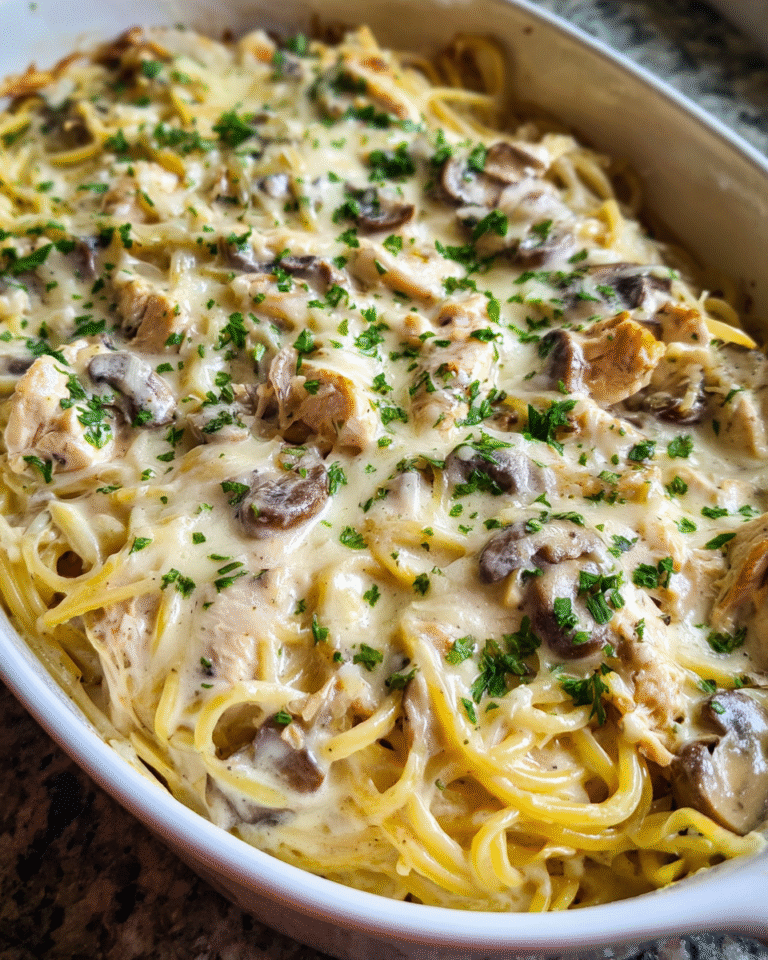
If you enjoy baked classics with a lighter approach, this recipe belongs in your rotation alongside dishes like easy chicken tetrazzini. It’s dependable, adaptable, and built for real life.
For more successful recipes, you can visit our Facebook page or our Pinterest account