Greek Salad – A Refreshing Mediterranean Classic
There’s something incredibly comforting about the simplicity of a Greek salad. In this article, we’ll unravel what makes it so iconic — from its ancient roots to modern adaptations. You’ll discover its essential ingredients, healthy benefits, and step-by-step guidance to recreate it in your kitchen. Whether you’re curious about its origins or looking to tweak the traditional recipe, this is your complete guide to everything Greek salad.
Print
Greek Salad – A Refreshing Mediterranean Classic
- Total Time: 15 minutes
- Yield: 4–6 servings
Description
- Greek Salad made simple: bold, fresh, and healthy with feta, olives, and crisp veggies. A classic Mediterranean recipe in 15 minutes.
Ingredients
-
For the Salad:
-
3 medium ripe tomatoes
-
4 Persian cucumbers (about 8 inches long)
-
1/2 small red onion
-
1 small green bell pepper
-
8 oz feta cheese, cut into cubes
-
1/2 cup (about 5.5 oz) Kalamata olives
-
1 tsp dried oregano
For the Dressing:
-
1 garlic clove, minced
-
1 tsp dried oregano
-
1/4 tsp salt
-
Fresh ground black pepper to taste
-
3 tbsp apple cider vinegar (as a substitute for red wine vinegar)
-
6 tbsp extra virgin olive oil
-
Instructions
-
Combine all dressing ingredients in a jar or small container with a lid. Shake well until fully mixed. Let sit for 20 minutes to develop flavor.
-
Cut tomatoes into wedges, then chop each wedge into smaller chunks. Remove any excess seeds if they are too watery.
-
Slice cucumbers into rounds about 1/5-inch thick. If they’re large, cut them in half lengthwise before slicing.
-
Thinly slice the red onion into rings or half-moons. To reduce sharpness, soak slices in water for 15 minutes, then drain.
-
Slice the bell pepper into short strips.
-
Cube the feta into small bite-sized pieces.
-
In a large bowl, combine the tomatoes, cucumbers, onion, bell pepper, feta, and olives. Sprinkle with oregano.
-
Pour the dressing over the salad and toss gently to mix.
-
Serve immediately for the freshest taste.
- Prep Time: 15 minutes
- Cook Time: 00 minutes
- Category: Healthy Salad Recipes
- Method: No-Cook
- Cuisine: Greek
Table of Contents
Greek Salad Origins and Tradition
What Makes a Greek Salad “Authentic”?
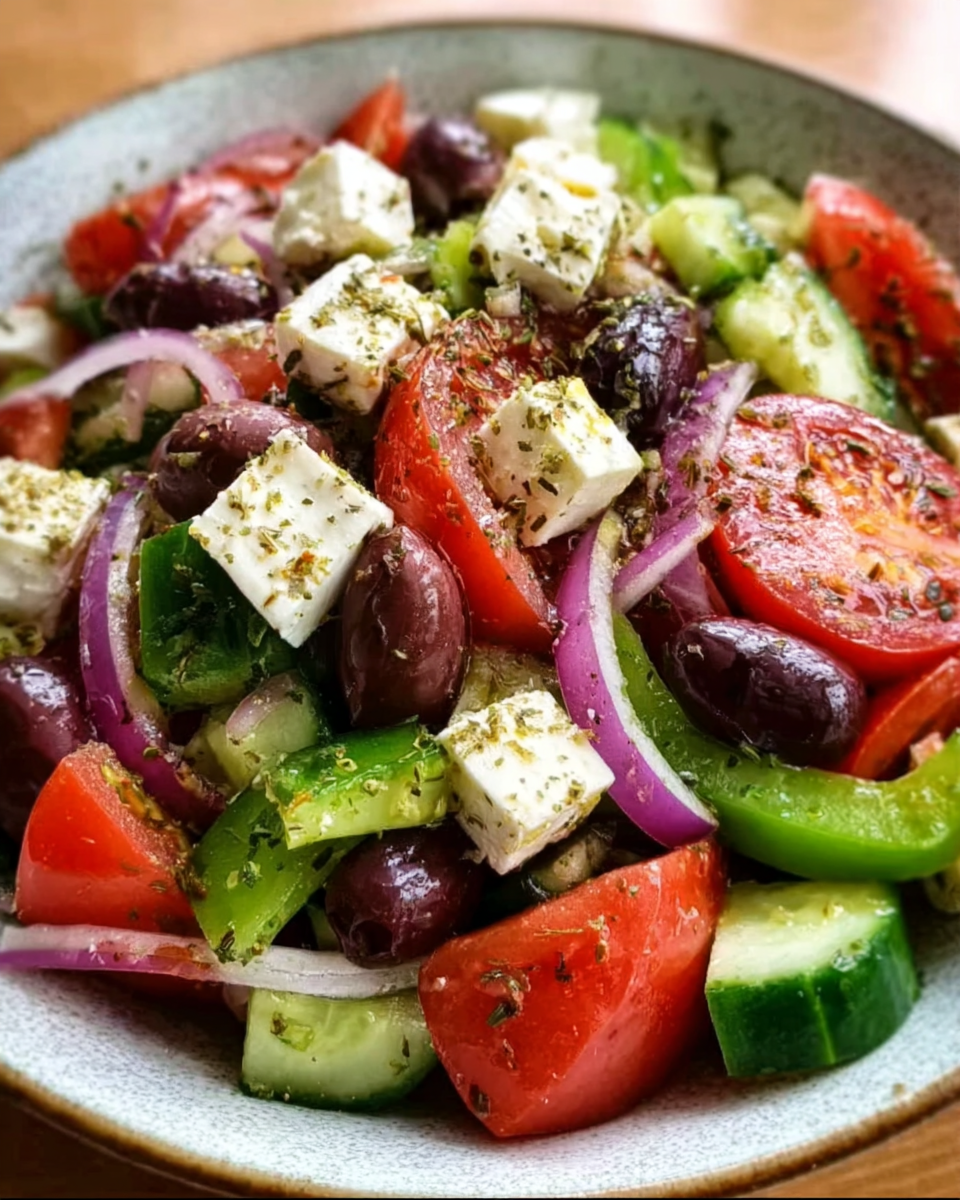
At its core, an authentic Greek salad — or “Horiatiki” as it’s known in Greece — is a rustic dish. No lettuce, no leafy fillers. It showcases chunky tomatoes, crisp cucumber, tangy red onion, briny olives, and thick slabs of feta cheese. It’s not tossed in dressing either. Instead, it’s gently layered and topped with dried oregano and generous extra virgin olive oil.
What sets it apart from other salads is its emphasis on bold, clean flavors. You taste the sun-ripened tomato, the sharp onion bite, the creamy feta. It’s not just a salad — it’s a cultural statement. Authenticity also comes down to regionality. The olives are typically Kalamata, and the olive oil? Always Greek, cold-pressed, and aromatic.
Historical Roots: Why They Call It Greek Salad
The term “Greek salad” may sound straightforward, but it carries centuries of culinary evolution. In Greece, salads like this weren’t just sides — they were central to daily meals. Especially in rural areas, fresh produce from local farms was combined with preserved cheese and olives, forming a quick, nutrient-dense meal.
Over time, this humble village salad evolved into an internationally loved dish. It began appearing on restaurant menus across Europe and the U.S. in the mid-20th century. But despite modern twists, the name “Greek salad” sticks because it celebrates Hellenic agricultural abundance and traditional eating practices.
Greek Salad Variations Within Greece
Interestingly, Greek salad isn’t uniform across Greece. On the islands, you might find it with capers instead of olives. In Crete, it may be served over barley rusks. Some regions include purslane or wild greens. But even with these variations, the backbone of the Greek salad remains: tomatoes, cucumbers, onions, olives, and feta — always cut in hearty chunks.
What’s consistent is the experience it delivers: refreshing, vibrant, and perfectly suited for hot Mediterranean days. If you enjoy inventive salad twists, try this fennel salad with bright citrus and herbs — another refreshing dish rooted in simplicity.
Ingredients of a Traditional Greek Salad
What Is in a Traditional Greek Salad? (Core Components)
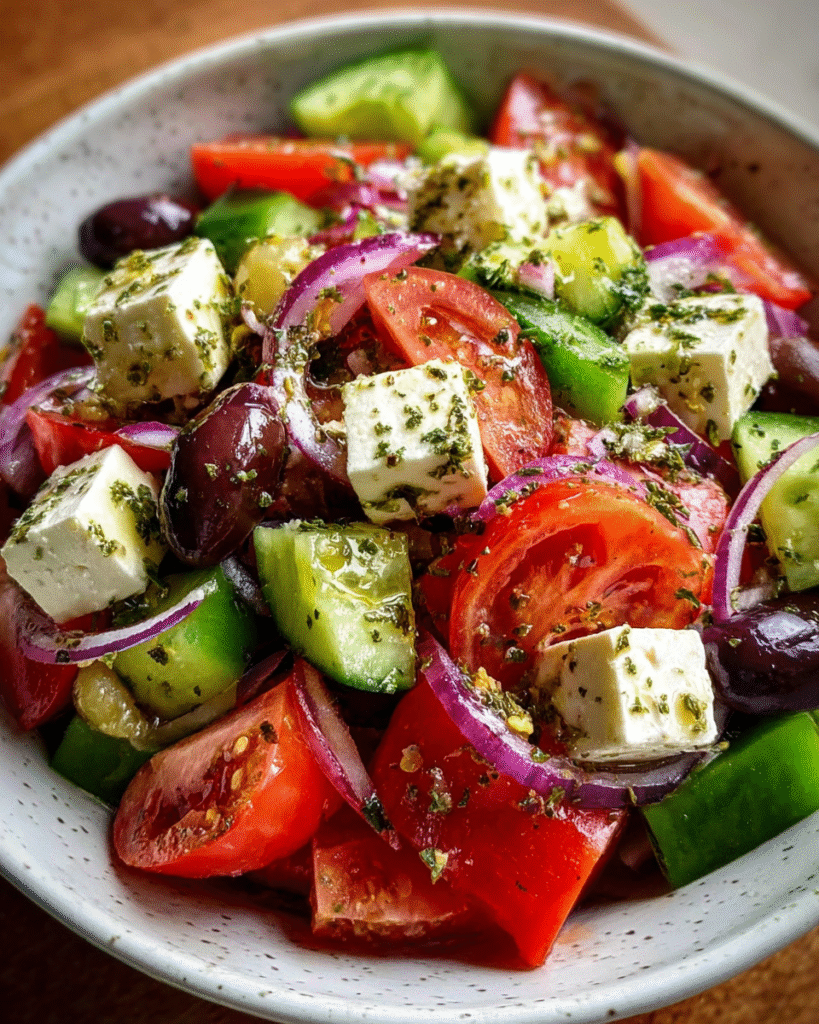
A traditional Greek salad isn’t just about vegetables—it’s a harmony of Mediterranean staples. The main components are simple yet powerful in flavor: ripe tomatoes, crisp cucumbers, red onion, green bell pepper, Kalamata olives, and firm feta cheese. Each element plays a role in the dish’s structure and flavor depth.
Tomatoes bring juiciness and natural sweetness, especially when in season. Cucumbers add cooling crunch, balancing the intensity of raw onion. Bell peppers contribute a fresh, grassy note, while olives deliver briny boldness. The feta? It’s the creamy, salty star that ties everything together, especially when cut into cubes, not crumbled.
Vegetables, Feta, and Olives — Flavor Harmony
The brilliance of a Greek salad lies in how each ingredient shines individually yet complements the rest. There’s no need for mixed greens or lettuce here — just bold textures and distinct flavors. The combination of raw vegetables and creamy feta creates a layered mouthfeel that’s both refreshing and deeply satisfying.
Kalamata olives, with their purplish hue and wrinkled skin, offer richness and depth. They stand up to the creamy feta and the sharp bite of onion. Meanwhile, the mild bell pepper introduces a slight bitterness that balances out the acidity of the tomatoes and the saltiness of the cheese.
The salad also looks as good as it tastes — vibrant reds, greens, and whites evoke the colors of the Greek flag, which gives the dish cultural and aesthetic appeal. For a twist on fresh pairings, try our watermelon salad with cucumber — a sweet and savory summer favorite.
Dressing Essentials: Olive Oil, Oregano, and More
A traditional Greek salad doesn’t drown in dressing. Instead, it’s dressed with intention. The classic combination is high-quality extra virgin olive oil, dried oregano, a splash of vinegar (typically red wine or apple cider), and a pinch of sea salt. That’s it — no need for sugary dressings or mustard emulsions.
Greek olive oil is the game-changer. It adds richness and a slightly peppery bite that enhances every bite of vegetable and cheese. Dried oregano, rather than fresh, is used for its concentrated earthy aroma. Apple cider vinegar works beautifully as a substitute for red wine vinegar, adding just the right tang.
This minimalist dressing keeps the salad clean and allows each ingredient to stand on its own. Together, they create a balance of acidity, fat, and herbs that turn a handful of raw vegetables into a fully satisfying dish.
Optional Add‑Ins and Customizations
What Can I Put in My Greek Salad? (Variations & Add‑Ins)
While purists may argue for strict tradition, the truth is — Greek salad welcomes creative upgrades. If you’re wondering what you can put in your Greek salad beyond the basics, there’s a world of flavor to explore. Popular add-ins include avocado slices for creaminess, roasted chickpeas for extra protein, or even a handful of arugula to introduce a peppery bite.
Many Mediterranean households toss in capers for a briny pop or sun-dried tomatoes for a sweet-savory depth. Chopped fresh herbs like dill or mint can instantly elevate the dish, enhancing both aroma and taste. Even fruit isn’t off-limits — juicy orange segments or pomegranate seeds offer refreshing contrast.
If you’re looking to cater to different dietary needs or simply reinvent your weekday salad rotation, these add-ins keep the base structure of the Greek salad intact while allowing bold customization.
Fresh vs. Pickled: Peppers, Cucumbers, and Beyond
One way to add dimension to your Greek salad is by playing with textures through fresh versus pickled ingredients. Fresh green bell peppers and cucumbers provide crispness and snap. But pickled elements — like red onions soaked in vinegar or caper berries — can bring tang and complexity.
Some modern variations include pickled banana peppers or even pickled artichoke hearts, which blend beautifully with feta. Want to add crunch and acidity at the same time? Quick-pickled cucumbers (just 15 minutes in vinegar, salt, and sugar) can take the salad in a new direction.
The balance between crisp freshness and sharp pickled zing creates an interplay of flavor that makes the dish more dynamic — especially when paired with a rich olive oil dressing.
Making It Heartier: Grains, Herbs, and Protein Options
A classic Greek salad works wonderfully as a light meal or starter. But to make it a full meal, many people add grains or proteins that absorb flavor while enhancing nutritional value. Cooked quinoa, bulgur, or farro can add chewiness and substance. Just let them cool before adding to the salad to avoid wilting the vegetables.
Grilled chicken, shrimp, or chickpeas are common protein add-ins for those wanting a more satiating option without sacrificing the Mediterranean essence. Even a soft-boiled egg on top can be a nourishing addition.
When adding herbs, think beyond oregano: fresh parsley, mint, and dill can add layers of freshness. These additions allow you to transform your Greek salad into a complete, balanced dish — without losing the iconic Greek character.
Health Benefits of Greek Salad
Why Is Greek Salad So Healthy? (Nutrition Overview)
The question isn’t just why Greek salad tastes good — it’s why it feels good, too. One of the top reasons Greek salad is considered healthy lies in its clean, nutrient-dense ingredients. Each forkful delivers essential vitamins, minerals, and antioxidants with minimal calories.
Tomatoes contribute lycopene, a powerful antioxidant known for reducing inflammation and promoting heart health. Cucumbers hydrate and detox the body, while red onions add prebiotic fiber and sulfur compounds beneficial to digestion. Olives and olive oil provide heart-healthy fats and are key players in lowering bad cholesterol.
With no creamy dressings, no fried toppings, and no unnecessary carbs, a traditional Greek salad keeps things lean and light. It’s a salad that fills you up — not out.
Mediterranean Diet Benefits: Fats, Fiber, and Antioxidants
Greek salad fits seamlessly into the Mediterranean diet, a globally recognized eating pattern praised for longevity and disease prevention. This salad is rich in monounsaturated fats from olive oil and olives, which support heart health and reduce the risk of stroke. These fats also help your body absorb fat-soluble vitamins like A, D, E, and K found in the vegetables.
Fiber is another standout feature. With about 4g per serving, the salad promotes digestion and supports a healthy gut microbiome. Feta cheese, though rich, is used modestly and offers protein and calcium without overwhelming the dish.
And don’t overlook the antioxidants. Red onion, tomato skin, and bell peppers all deliver a boost of immune-supporting compounds that help combat oxidative stress — a known contributor to aging and chronic disease.
Low-Calorie, High-Flavor: A Balanced Meal Choice
Greek salad is the poster child for low-calorie, high-flavor meals. One serving averages around 334 calories, yet it feels like a feast thanks to its intense flavors, creamy textures, and hydrating crunch. You don’t need croutons, bacon, or sugar-laden dressings to enjoy every bite.
It’s an ideal dish for those following vegetarian, low-carb, or heart-healthy diets. And since it’s customizable, it works across lifestyles — from keto to plant-based. If you’re after more meals like this, check out our fennel salad — another nutrient-packed option that delivers on flavor.
Step-by-Step Recipe for Greek Salad
Preparing the Salad Ingredients (Chopping & Prepping Tips)
Start by choosing the freshest produce you can find. The better the base ingredients, the brighter the final flavor. Rinse your vegetables under cold water and pat them dry completely. For the tomatoes, use medium ripe ones. Cut them into wedges, then chop each wedge into chunks. If they release too much juice, scoop out the watery seeds to keep the salad crisp.
Next, slice Persian cucumbers into even, thick rounds — about 1/5-inch. If they’re too large, cut them lengthwise first. Thinly slice the red onion into rings or half-moons, then soak them in cold water for 15 minutes to mellow the sharpness.
Slice the green bell pepper into short, clean strips. Keep the pieces uniform for an even bite. Cut the feta into cubes, not crumbles, to preserve its structure and creamy bite. Rinse and drain Kalamata olives, removing pits if necessary.
Crafting the Dressing: Shake, Sip, Taste
The Greek salad dressing comes together in a flash, but the flavor rests in its balance. Combine minced garlic, dried oregano, a pinch of salt, and freshly ground black pepper in a small jar. Add three tablespoons of apple cider vinegar (or red wine vinegar) and six tablespoons of quality extra virgin olive oil.
Seal the lid and shake the jar vigorously for about 20 seconds until emulsified. Let the mixture rest for 20 minutes. This resting period allows the garlic and oregano to infuse deeply into the vinegar and oil. Give it a taste before pouring — it should feel balanced, bold, and slightly tangy.
The goal is a dressing that enhances, not drowns, the salad. It clings to every piece without overpowering the vegetables or feta.
Assembling and Serving: Toss, Garnish, Enjoy
In a large serving bowl, gently combine the tomatoes, cucumbers, red onion, green bell pepper, feta cubes, and olives. Sprinkle an extra pinch of dried oregano over the top for aroma and visual appeal.
Now, pour the dressing evenly across the bowl. Use a large spoon or salad tongs to toss everything gently — just enough to coat without smashing the ingredients. Every component should be dressed but still distinct.
Serve immediately to preserve the crispness of the vegetables and the boldness of the flavor. The salad works wonderfully on its own or as a side dish for grilled meats, seafood, or warm pita. For a summer dinner spread, pair it with our watermelon cucumber salad for a refreshing duo.
FAQs
What is in a traditional Greek salad?
A traditional Greek salad includes ripe tomatoes, crisp cucumbers, sliced red onion, green bell pepper, Kalamata olives, and blocks or cubes of feta cheese. It’s seasoned with dried oregano and dressed with extra virgin olive oil and vinegar — often red wine or apple cider vinegar. You won’t find lettuce in the authentic version, and the ingredients are kept chunky, allowing each bite to deliver bold, distinct flavor.
Why do they call it Greek salad?
It’s called Greek salad because it reflects ingredients and traditions deeply rooted in Greek culture and cuisine. The dish, known locally as “Horiatiki,” originated in rural Greek villages where farmers combined fresh, seasonal produce with preserved items like olives and feta. As it spread globally, it retained the name “Greek salad” to honor its Mediterranean heritage and regional identity.
What can I put in my Greek salad?
While tradition is sacred, Greek salad is also wonderfully adaptable. You can add grilled chicken, chickpeas, quinoa, avocado, or even fruit like orange slices or pomegranate seeds. Herbs like dill or mint can elevate the freshness. Pickled onions or banana peppers add tang, and for extra crunch, you can top it with toasted seeds or nuts. Just keep the base — tomato, cucumber, onion, olives, and feta — intact to maintain its Greek soul.
Why is Greek salad so healthy?
Greek salad is healthy because it’s rich in fiber, antioxidants, and heart-healthy fats — without excess calories or processed ingredients. Tomatoes offer lycopene, olive oil delivers anti-inflammatory benefits, and cucumbers and onions support digestion. Feta provides protein and calcium in modest portions. All together, it fits perfectly into a Mediterranean diet known for reducing chronic disease risk and supporting long-term wellness.
Conclusion
Greek salad is more than a dish — it’s a celebration of freshness, simplicity, and cultural depth. With just a few quality ingredients, you can unlock layers of Mediterranean flavor that nourish the body and satisfy the soul. Whether you stick with the classic recipe or explore modern twists, Greek salad remains a timeless staple that elevates any table. It’s proof that you don’t need complexity to achieve culinary excellence — just balance, boldness, and the joy of real food.
For more successful recipes, you can visit our Facebook page or our Pinterest account.