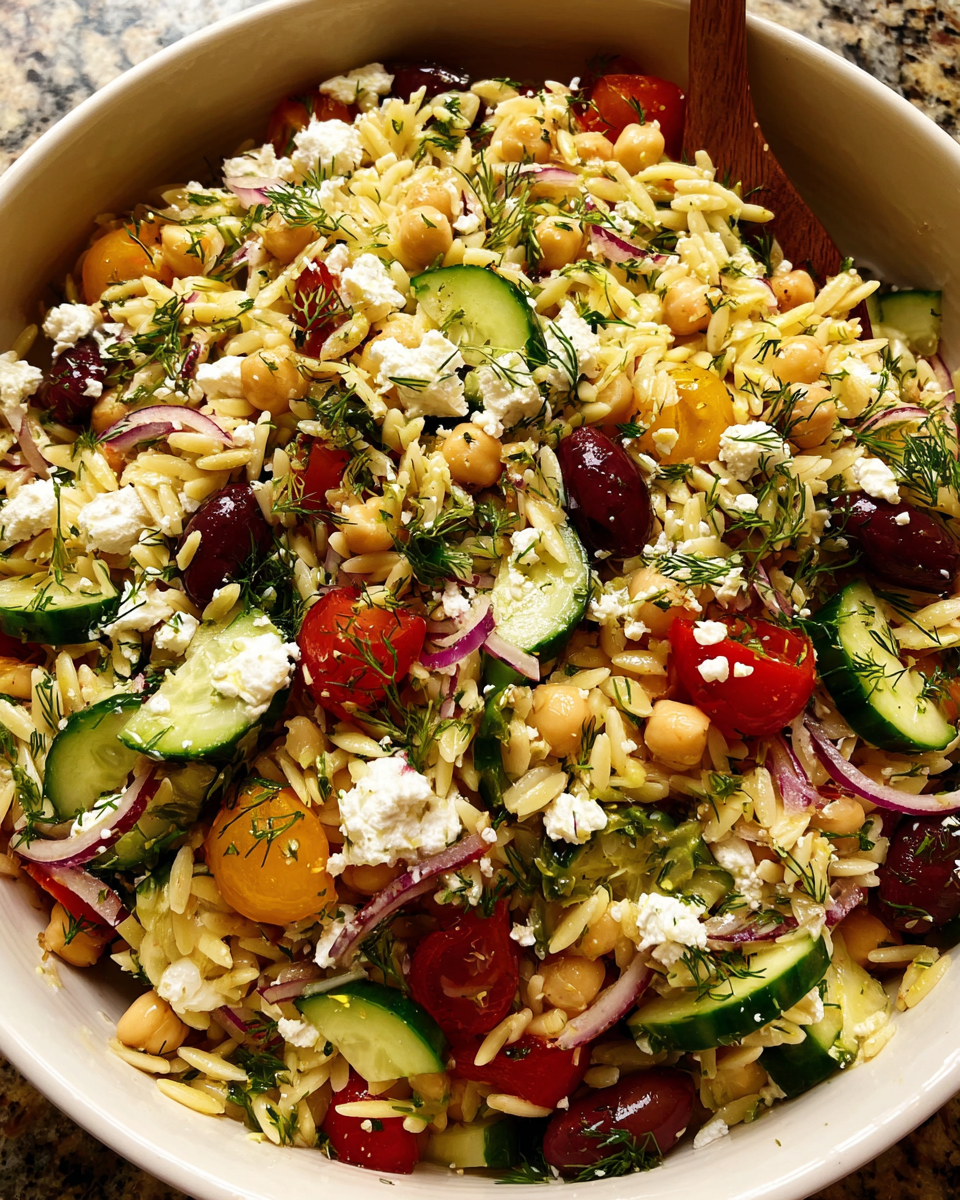
Greek Orzo Salad: Bright, Flavorful Mediterranean Dish
Introduction:
Greek Orzo Salad is a vibrant Mediterranean favorite that delivers fresh flavor in every bite. Combining orzo pasta with juicy tomatoes, crisp cucumbers, briny olives, and creamy feta, this dish is light yet satisfying. Whether served at a summer picnic, a holiday table, or for weekly meal prep, it’s an effortless way to bring bold, sun-kissed flavor to your plate. In this article, you’ll discover what makes Greek orzo salad special, how to make it perfectly, its nutritional benefits, smart serving ideas, and expert tips for the best results—every time.
Print
Greek Orzo Salad: Bright, Flavorful Mediterranean Dish
- Total Time: 25 minutes
- Yield: 6 servings
Description
- Greek Orzo Salad brings fresh Mediterranean flavor with orzo, feta, olives & veggies—easy, healthy, and perfect for any meal.
Ingredients
-
For the Dressing:
-
2 tablespoons fresh lemon juice
-
1/2 teaspoon Dijon mustard
-
1/4 cup extra-virgin olive oil
-
1/4 cup finely chopped red onion
-
2 tablespoons finely chopped fresh dill
-
Kosher salt, to taste
-
Freshly ground black pepper, to taste
For the Salad:
-
8 ounces orzo pasta
-
3 Persian cucumbers, thinly sliced into half-moons
-
2 cups cherry tomatoes, halved
-
1 (15.5-ounce) can chickpeas, drained and rinsed
-
1/2 cup kalamata olives, pitted and halved
-
1 cup crumbled feta cheese (about 4 ounces)
-
Additional chopped fresh dill, for garnish
-
Instructions
-
Prepare the Dressing:
In a large mixing bowl, whisk together the lemon juice and Dijon mustard. While whisking constantly, slowly drizzle in the olive oil until the dressing is emulsified. Stir in the red onion and fresh dill, then season with salt and pepper to taste. -
Cook the Orzo:
Bring a large pot of salted water to a boil. Add the orzo and cook according to the package directions until al dente. Drain and rinse with cool water briefly to stop the cooking process. -
Assemble the Salad:
Add the cooked orzo to the bowl with the dressing. Toss to coat well. Gently fold in the cucumbers, cherry tomatoes, chickpeas, and kalamata olives. Add the crumbled feta and fold gently to combine. -
Garnish and Serve:
Sprinkle with additional chopped dill before serving. Serve chilled or at room temperature.
- Prep Time: 15 minutes
- Cook Time: 10 minutes
- Category: Pasta and Grain Salads
- Method: Boiling, Mixing
- Cuisine: Mediterranean
Table of Contents
What Is Greek Orzo Salad?
Understanding Greek Orzo Salad
Greek Orzo Salad is a Mediterranean-inspired dish that takes the fresh elements of a classic Greek salad and combines them with orzo pasta—a small, rice-shaped pasta popular in Greek and Middle Eastern cooking. Known as kritharaki in Greece, orzo is often used in soups, baked casseroles, or salads. When paired with juicy tomatoes, crisp cucumbers, Kalamata olives, and salty feta, it creates a colorful salad that’s as flavorful as it is filling. The dressing, made with lemon juice, olive oil, and fresh herbs like dill or oregano, ties everything together in zesty harmony.
Key Ingredients That Define the Dish
At its core, Greek Orzo Salad features a few must-have ingredients. Orzo forms the base—cooked until al dente and then cooled for the perfect salad texture. Crisp cucumbers and halved cherry tomatoes add freshness and crunch, while Kalamata olives and chickpeas bring richness and substance. Feta cheese crumbled throughout the dish introduces a creamy, salty contrast. A simple homemade vinaigrette of lemon juice, Dijon mustard, and extra-virgin olive oil coats the ingredients, enhancing flavor without overpowering. Fresh dill or oregano gives it the signature Greek flair that makes this salad unforgettable.
Regional Variations & Creative Twists
While the base remains consistent, Greek Orzo Salad welcomes regional and personal variations. Some cooks add chopped red or green bell peppers for extra crunch or use red wine vinegar in the dressing instead of lemon. Others might toss in grilled zucchini, red onion, or artichoke hearts to enhance flavor and texture. For a protein boost, grilled chicken or shrimp can easily turn it into a hearty main. You might even come across versions topped with a creamy feta dressing or fresh parsley instead of dill. Whatever the twist, the foundation always stays deliciously Greek.
Exploring the Ingredients Behind Greek Orzo Salad
The Role of Orzo in the Salad
Orzo is the heart of Greek Orzo Salad. Though it looks like rice, orzo is actually a pasta made from semolina or durum wheat, offering the comforting texture of pasta with the light feel of a grain. Its size and shape allow it to soak up the dressing beautifully, ensuring every bite is infused with flavor. For a more nutrient-dense option, whole wheat orzo adds fiber and a subtle nuttiness. Gluten-free orzo made from rice flour or legumes is also available, making it easy to adapt this salad to dietary needs without compromising texture.
Fresh Vegetables, Olives, and Legumes
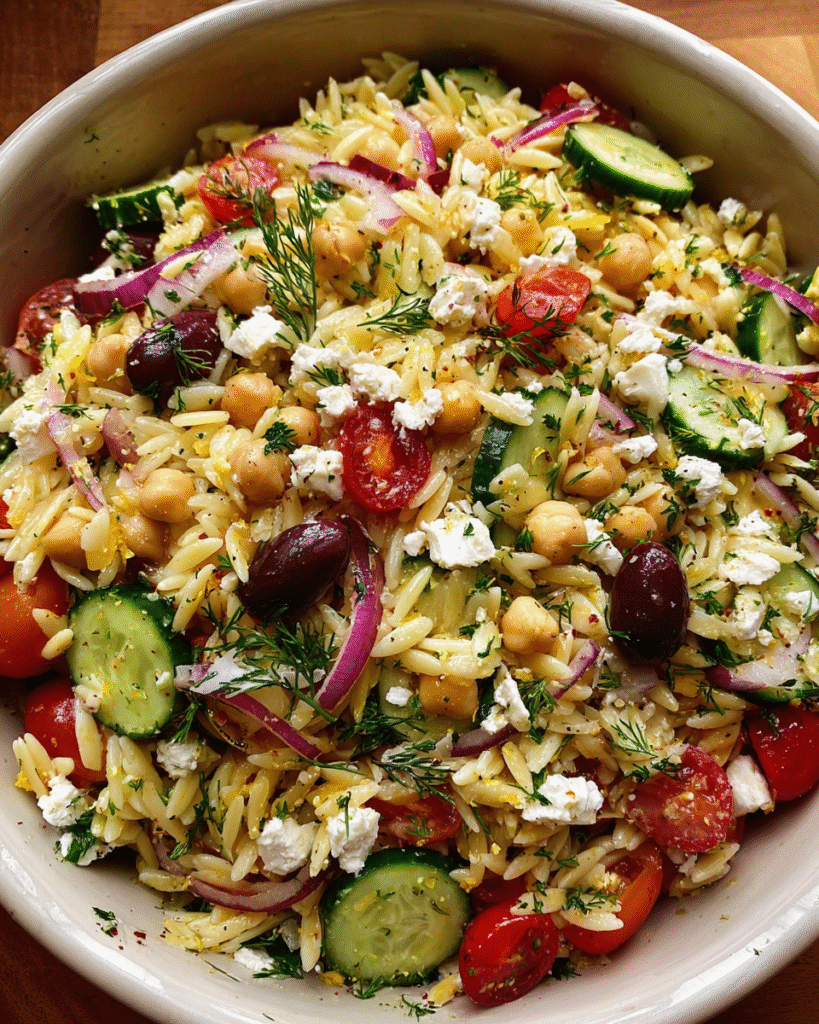
The bright colors and bold textures in Greek Orzo Salad come from a medley of vegetables and legumes. Thinly sliced Persian cucumbers deliver a crisp, hydrating bite, while halved cherry tomatoes burst with sweetness and acidity. Kalamata olives introduce deep, briny notes that contrast beautifully with the lightness of the veggies. Chickpeas, a traditional Mediterranean staple, bring plant-based protein and a creamy texture that balances the salad. Together, these ingredients create a dynamic dish that’s as visually appealing as it is flavorful. You’ll also find these vegetables starring in other refreshing dishes like our Chicken Caprese Pasta Salad.
Cheese, Herbs, and the Dressing
No Greek-inspired dish would be complete without feta cheese. In this salad, crumbled feta offers a creamy, tangy flavor that melts slightly into the warm orzo before chilling. The dressing—a blend of fresh lemon juice, Dijon mustard, and extra-virgin olive oil—ties everything together, coating each ingredient without feeling heavy. Red onion adds a gentle bite, while fresh dill brings a fragrant, grassy finish that lifts the entire dish. For extra Mediterranean flair, try substituting or combining dill with oregano or mint. The layering of flavors in this salad is similar to our Bruschetta Pasta Salad, which also highlights fresh produce and herbs.
Step-by-Step: How to Make Greek Orzo Salad
Whisking the Dressing to Perfection
Every great Greek Orzo Salad starts with a vibrant, well-balanced dressing. In a large mixing bowl, whisk together 2 tablespoons of fresh lemon juice and ½ teaspoon of Dijon mustard. As you whisk, slowly drizzle in ¼ cup of extra-virgin olive oil to create an emulsified vinaigrette. This ensures the oil and lemon don’t separate. Next, stir in ¼ cup finely chopped red onion and 2 tablespoons of freshly chopped dill. Finish with kosher salt and cracked black pepper to taste. This bright, zesty dressing will anchor the salad and elevate each ingredient.
Cooking the Orzo Just Right
Bring a large pot of salted water to a rolling boil. Add 8 ounces of orzo and cook according to the package instructions until al dente—tender with a slight bite. Be careful not to overcook; mushy orzo will turn the salad soggy. Once done, drain immediately and rinse with cool water for a few seconds. This stops the cooking and removes excess starch, preventing clumping. The slightly cooled orzo is then ready to absorb the flavorful dressing while still warm, ensuring deeper flavor penetration throughout the salad.
Tossing and Serving the Salad
Transfer the warm orzo to the bowl with the dressing. Toss thoroughly to coat each grain. Gently fold in 3 thinly sliced Persian cucumbers, 2 cups of halved cherry tomatoes, a 15.5-ounce can of drained and rinsed chickpeas, and ½ cup of pitted, halved Kalamata olives. Finally, crumble 1 cup (about 4 ounces) of feta cheese over the salad and fold it in carefully to maintain its creamy texture. Garnish with more fresh dill for a burst of green. Serve chilled or at room temperature for best results. This salad holds beautifully, making it ideal for meal prep or entertaining.
Health & Nutrition Benefits of Greek Orzo Salad
Is Greek Orzo Salad a Healthy Option?
Absolutely. Greek Orzo Salad isn’t just flavorful—it’s filled with nutritious components. The dish follows the principles of the Mediterranean diet, celebrated for promoting heart health and longevity. It includes a variety of plant-based ingredients like cucumbers, tomatoes, and chickpeas that are high in fiber, antioxidants, and essential nutrients. Olive oil contributes heart-healthy monounsaturated fats, while lemon juice adds a dose of vitamin C. Feta cheese, though salty, provides calcium and protein in moderate amounts. This makes the salad a satisfying, nutrient-rich choice whether you’re enjoying it as a main or a side.
Orzo vs. Pasta: Which Is Better?
Orzo is pasta—just shaped differently. Nutritionally, regular orzo and traditional pasta share nearly identical macros when made from the same semolina flour. But switching to whole wheat orzo introduces a notable difference: higher fiber content, added B vitamins, and a lower glycemic index. That means longer-lasting energy and better digestion. If you’re gluten-sensitive, you can find gluten-free orzo made from rice flour or legumes. Either way, it’s what you combine with orzo—like vegetables, lean protein, and olive oil—that turns this humble pasta into a balanced, wholesome meal.
Nutritional Highlights & Optimization Tips
One serving of Greek Orzo Salad offers a well-rounded blend of macronutrients. On average, it contains around 408 calories, 13 grams of protein, 5 grams of fiber, and 22 grams of fat—most of it healthy, unsaturated fat. It’s vegetarian-friendly and packs in complex carbs from the orzo and chickpeas. To optimize its health benefits, consider reducing the amount of feta or olives if you’re watching sodium, or boosting the vegetable content for added volume and nutrients. Swapping in whole grain orzo also levels up the fiber count while keeping the dish just as delicious.
Tips, Variations & Serving Ideas for Greek Orzo Salad
Make-Ahead Tips & Smart Storage
One of the best things about Greek Orzo Salad is how well it holds up after being made. In fact, letting it sit for a couple of hours in the fridge allows the flavors to meld beautifully. It’s the perfect prep-ahead dish for parties, picnics, or weekday lunches. To store, keep it in an airtight container in the fridge for up to 4 days. If the orzo absorbs too much dressing over time, revive it with a splash of lemon juice or olive oil before serving. Stir well to refresh the texture and distribute the flavors evenly.
Creative Twists & Add-Ins
This salad is endlessly adaptable. To boost the protein and transform it into a hearty entrée, add grilled chicken, shrimp, or tuna. Want to go vegetarian? Toss in more legumes like white beans or lentils. Extra vegetables like red bell peppers, zucchini, or artichoke hearts can add crunch and variety. For a flavor shift, swap dill with fresh mint, parsley, or even basil. You could also drizzle with a tangy red wine vinaigrette or creamy feta dressing instead of the lemon-Dijon base. These small tweaks keep the dish fresh and allow you to tailor it to your taste.
Serving Pairings That Shine
Greek Orzo Salad is a star on its own—but it pairs beautifully with a variety of dishes. Serve it next to grilled lamb, salmon, or kebabs for a Mediterranean feast. It’s equally at home alongside simple grilled chicken or baked falafel. For entertaining, create a spread with pita bread, hummus, and tzatziki. Hosting a summer cookout? Add it to your table with chilled dishes like this Bruschetta Pasta Salad or a flavorful Chicken Caprese Pasta Salad for a colorful and cohesive meal lineup.
Troubleshooting & Common Mistakes in Greek Orzo Salad
Preventing a Dry or Soggy Salad
The texture of Greek Orzo Salad can make or break the dish. If it feels dry, the most common culprit is the orzo absorbing too much dressing. This can happen if the salad sits too long without a refresh. The solution? Before serving, stir in a splash of olive oil or lemon juice to bring it back to life. On the other hand, if your salad turns out soggy, you’ve likely overcooked the orzo or added watery vegetables without draining them properly. Stick to al dente pasta, and pat cucumbers or tomatoes dry if they release too much moisture.
Balancing Flavors the Right Way
A good Greek Orzo Salad should be zesty, briny, and herbaceous—not bland or overpowering. If your salad tastes flat, increase the acidity with extra lemon juice or vinegar, and don’t shy away from salt or herbs. If the salad turns out too salty (especially from feta or olives), try rinsing the chickpeas before adding them or balancing with extra orzo and veggies. A fresh sprinkle of herbs right before serving brightens the entire dish and sharpens the flavor. Remember, seasoning adjustments are your best tool for rescuing a dull or overly aggressive salad.
Keeping the Orzo from Clumping
Sticky or clumpy orzo is a common issue—but easily avoidable. After boiling, rinse the orzo briefly with cold water to remove excess starch and cool it down. This halts the cooking and prevents the grains from sticking together. While still damp, drizzle in a teaspoon of olive oil and toss gently. This coats each piece and keeps it separate while you prep the remaining ingredients. Mixing while the orzo is slightly warm also helps the dressing soak in better, enhancing the final texture and flavor of your salad.
FAQS
What is in Greek orzo salad?
Greek Orzo Salad features a vibrant combination of Mediterranean ingredients. The base is orzo pasta, cooked al dente and cooled. It’s then tossed with crisp cucumbers, juicy cherry tomatoes, Kalamata olives, and protein-packed chickpeas. Crumbled feta adds a creamy, salty bite, while a zesty dressing made from lemon juice, Dijon mustard, and extra-virgin olive oil coats every ingredient. Fresh dill or oregano gives it a final herbal lift, making this salad both refreshing and satisfying.
Is Greek orzo good for you?
Yes—especially when made with whole foods and balanced ingredients. Greek Orzo Salad delivers a mix of complex carbs from orzo and chickpeas, healthy fats from olive oil, and plenty of fiber and vitamins from the fresh vegetables. Feta cheese contributes calcium and protein in moderation. The dish is Mediterranean diet–friendly and naturally vegetarian, offering a well-rounded nutritional profile that works as a light main course or a hearty side.
Is orzo healthier than pasta?
Orzo is actually a type of pasta, shaped like large grains of rice. Nutritionally, it’s similar to regular pasta when made from the same semolina flour. However, choosing whole wheat orzo boosts the fiber and nutrient content. Ultimately, orzo becomes a healthier option depending on what you pair it with—like vegetables, legumes, and healthy oils, all found in this salad.
What is Greek style orzo?
“Greek style orzo” refers to the use of orzo pasta in a dish prepared with classic Greek flavors. This includes ingredients like Kalamata olives, cucumbers, tomatoes, feta cheese, and fresh herbs like dill or oregano. Often served cold, Greek style orzo salad blends these flavors with a lemony olive oil dressing for a refreshing and satisfying dish that reflects Mediterranean cuisine.
Conclusion
Greek Orzo Salad is the perfect harmony of simplicity and bold Mediterranean flavor. With just a handful of fresh ingredients and a light, lemony dressing, this salad becomes an ideal choice for any occasion—whether it’s a summer barbecue, weekly meal prep, or a wholesome vegetarian dinner. Its adaptability means you can easily switch up the vegetables, add protein, or tweak the herbs to match your taste. When paired with other bright pasta dishes like our Chicken Caprese Pasta Salad or Bruschetta Pasta Salad, it completes a flavor-packed meal that feels as fresh as it tastes.
For more successful recipes, you can visit our Facebook page or our Pinterest account