Greek Salmon Salad – A Fresh Mediterranean Twist You’ll Love
Introduction :
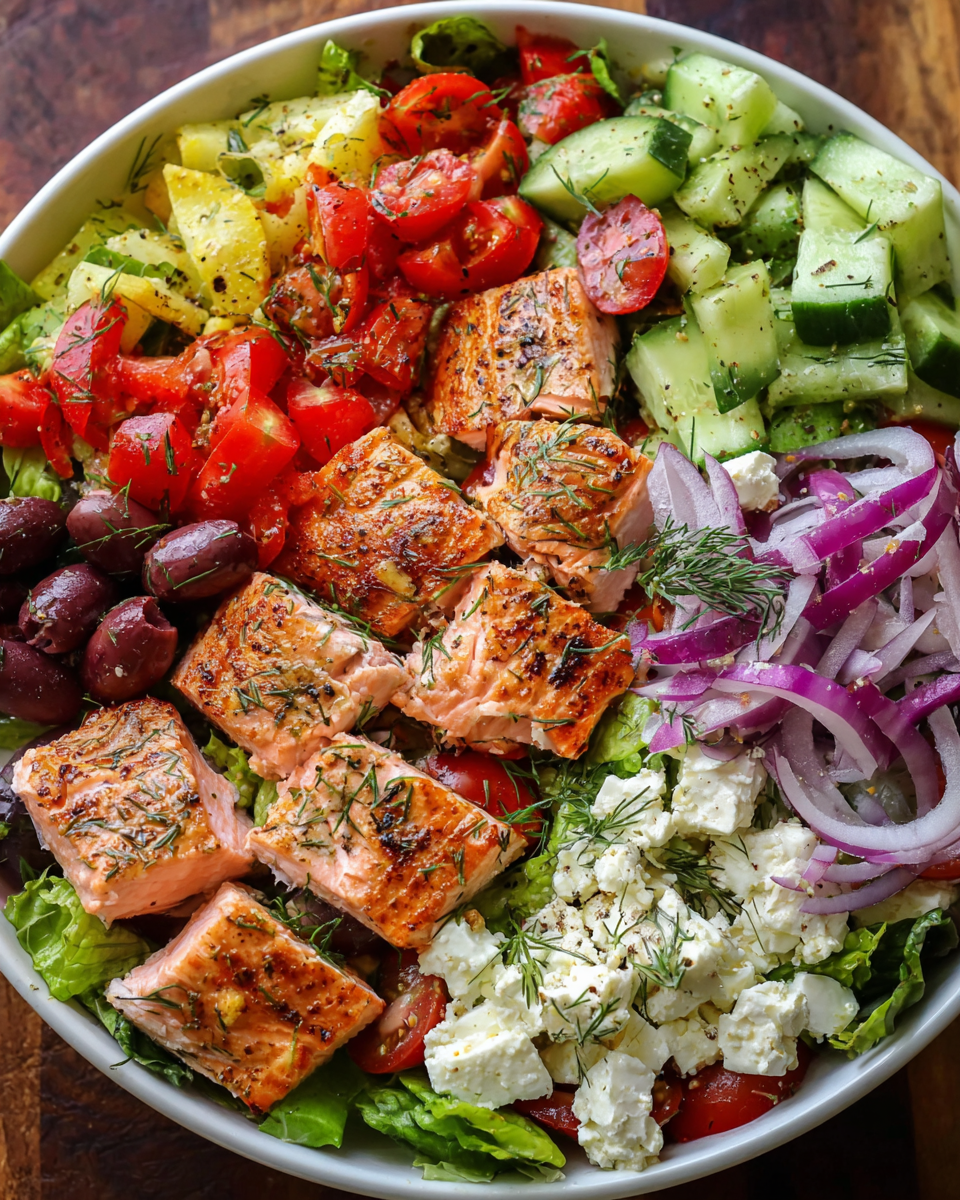
Greek Salmon Salad is the perfect harmony of vibrant Mediterranean flavors and heart-healthy protein. With tender baked salmon, crisp romaine, juicy tomatoes, Kalamata olives, and tangy feta, this dish isn’t just a salad—it’s a full, flavorful meal. Whether you’re craving something wholesome for lunch or a light, refreshing dinner, this Greek-inspired bowl hits all the right notes. In this article, you’ll discover what makes Greek Salmon Salad unique, how to prepare it with ease, the best ways to store and serve it, and why it’s quickly becoming a weeknight favorite in many kitchens.
Print
Greek Salmon Salad – A Fresh Mediterranean Twist You’ll Love
- Total Time: 30 minutes
- Yield: 4 servings
Description
- Greek Salmon Salad is a bold, healthy Mediterranean meal with baked salmon, fresh veggies, and feta. Easy, delicious, and full of flavor.
Ingredients
- Salmon: 1 pound salmon fillets (skinless) 1 teaspoon dried oregano Salt and freshly ground black pepper, to taste Salad: 4 cups chopped romaine lettuce 1 cup quartered English cucumber 1 cup halved cherry tomatoes 1/2 cup diced red bell pepper 1/4 cup thinly sliced red onion 1/3 cup halved Kalamata olives 1/4 cup sliced pepperoncini 4 ounces crumbled or cubed feta cheese 1 tablespoon chopped fresh dill Dressing: 2 tablespoons olive oil 3 tablespoons apple cider vinegar 1 tablespoon Dijon mustard 1/2 teaspoon dried oregano 1/4 teaspoon garlic powder Salt and freshly ground black pepper, to taste
Instructions
- Preheat oven to 375°F. Line a baking sheet with parchment paper. Season salmon fillets with dried oregano, salt, and pepper. Place them on the baking sheet and bake for 8 to 12 minutes, or until cooked through and flaky. While the salmon bakes, prepare the salad ingredients and combine all dressing ingredients in a jar with a lid. Shake well until emulsified. In a large bowl, place the chopped romaine lettuce. Top with cucumber, tomatoes, bell pepper, red onion, olives, pepperoncini, feta, and dill. Once the salmon is slightly cooled, flake it into bite-sized pieces and add to the salad. Drizzle the vinaigrette over the salad or serve it on the side.
- Prep Time: 20 minutes
- Cook Time: 10 minutes
- Category: Protein-Packed Salads
- Method: Baking, Tossing
- Cuisine: Greek
Table of Contents
What is Greek Salmon Salad?
Defining the Greek Salmon Salad – what the name implies
Greek Salmon Salad combines the bold, briny notes of a classic Greek salad with the rich, flaky texture of baked or grilled salmon. It’s not just a variation on a traditional dish—it’s a balanced meal that embodies everything we love about Mediterranean cuisine. Think crisp romaine, juicy tomatoes, cucumbers, Kalamata olives, and creamy feta cheese, all elevated by savory salmon. The result is a Greek salad reimagined as a protein-packed entrée. When prepared right, a Greek Salmon Salad becomes more than a side—it becomes the star of the table.
How Greek salad elements merge with salmon protein
Each component of Greek Salmon Salad brings its own value: tomatoes burst with freshness, cucumbers add crunch, while olives and feta deepen the umami. The salmon brings a meaty richness and Omega-3s that transform the dish from light starter to complete nourishment. When flaked and gently tossed into the salad, the salmon doesn’t overpower—it synergizes with the herbs, pepperoncini, and oregano dressing. This fusion balances freshness and satiation, making Greek Salmon Salad a staple for those craving both flavor and fuel.
Why this dish stands out in a Mediterranean diet
Mediterranean cuisine emphasizes whole foods, lean proteins, healthy fats, and plenty of vegetables—everything found in Greek Salmon Salad. This salad fits the model perfectly and does so deliciously. It’s ideal for those seeking heart-healthy meals, a high-protein pescatarian option, or simply a satisfying way to eat clean. From its nourishing ingredients to its bold seasoning, this dish delivers Mediterranean values in every bite. For another exciting salad option rooted in similar flavor profiles, try this Arugula Pear Salad that’s just as light and nutrient-rich.
Ingredients for Greek Salmon Salad
Key salad components – vegetables, olives, feta and greens
Greek Salmon Salad starts with a vibrant medley of vegetables and leafy greens. Chopped romaine acts as the crisp, neutral base. Cherry tomatoes add juiciness, while red bell peppers and English cucumbers offer crunch and color. Red onions deliver a subtle sharpness, and Kalamata olives introduce a salty, briny depth that defines Greek-style salads. A generous sprinkle of feta cheese—either crumbled or cubed—adds creaminess and richness. Finally, sliced pepperoncini brings a zingy kick, and fresh dill finishes the blend with herbal brightness. This colorful variety ensures every bite is texturally balanced and flavor-packed.
Salmon preparation – selecting and seasoning the fish
Choosing high-quality salmon is key to the flavor and texture of your salad. Skinless fillets work best for flaking and tossing later. Lightly season the salmon with dried oregano, salt, and freshly ground pepper before baking at 375°F for 8 to 12 minutes. The seasoning allows the natural flavor of the fish to shine, while the baking method keeps the salmon moist and tender. This preparation results in juicy, flaky fillets that integrate smoothly into the salad. You can also grill or pan-sear the salmon if you prefer a smoky char or crispy edges.
Dressing and herbs – what gives the flavor punch
No Greek Salmon Salad is complete without a bold vinaigrette. A combination of olive oil, apple cider vinegar, Dijon mustard, dried oregano, garlic powder, salt, and pepper creates a zesty dressing that ties the ingredients together. This dressing emulsifies beautifully when shaken in a jar and coats the salad evenly without overpowering it. Fresh dill rounds out the flavor profile, harmonizing with the oregano and mustard. This simple yet punchy vinaigrette transforms the dish from ordinary to crave-worthy. For another herb-forward, bold-flavored dish, try the Chopped Green Goddess Salad packed with creamy dressing and vibrant greens.
Step-by-Step: How to Make a Greek Salmon Salad
Preparing the salmon – bake, grill or sear for best texture
Start by preheating your oven to 375°F and lining a baking sheet with parchment paper. Season your salmon fillets generously with dried oregano, salt, and freshly ground pepper. Baking the salmon for 8 to 12 minutes ensures it’s cooked through while staying tender and juicy. If you’re after a slightly smoky flavor or crispy texture, consider grilling or pan-searing the salmon instead. No matter the method, the key is to avoid overcooking—salmon should flake easily and remain moist at the center.
Building the salad – combining the greens, veggies and toppings
While the salmon cooks, begin building your salad. In a large mixing bowl, layer the chopped romaine lettuce as your base. Add the quartered cucumbers, halved cherry tomatoes, diced red bell peppers, thinly sliced red onions, and halved Kalamata olives. Toss in the sliced pepperoncini and top it all with crumbled feta cheese and chopped fresh dill. This colorful combination provides layers of crunch, saltiness, and creaminess. It’s not just a salad—it’s a beautifully textured foundation waiting for the protein-rich salmon.
Bringing it together – flaking salmon, adding dressing, serving
Once your salmon has cooled slightly, flake it into bite-sized pieces and gently place it on top of your salad. Prepare the vinaigrette by shaking olive oil, apple cider vinegar, Dijon mustard, oregano, garlic powder, salt, and pepper in a jar until emulsified. Drizzle it generously over the salad just before serving, or offer it on the side for personal preference. Serve immediately to enjoy the perfect mix of warm, flaky salmon and crisp vegetables. This harmony of temperatures and textures is what makes Greek Salmon Salad an unforgettable meal.
How Long Can You Keep Greek Salmon Salad?
Storage guidelines for the salad components
Greek Salmon Salad is best enjoyed fresh, but it can be stored safely with a bit of planning. If you anticipate leftovers, keep the components separate. Store the salad base (romaine, vegetables, and feta) in an airtight container in the refrigerator. Keep the flaked salmon in its own sealed container, and the dressing in a small jar. This separation prevents the greens from wilting and ensures that each element retains its integrity. When properly stored, the salad ingredients can last up to 3 days.
Best practices for salmon leftovers and avoided food-safety issues
Cooked salmon should be cooled completely before refrigeration. Always store it within two hours of cooking to avoid bacterial growth. Use a shallow container to cool it faster and place it on a shelf (not the fridge door) where the temperature is more stable. Refrigerated salmon remains safe to eat for up to three days. If the salmon smells off or feels slimy, it’s time to toss it. When reheating, do so gently—low heat maintains moisture and prevents it from drying out.
Tips for maintaining salad freshness and texture
To enjoy the best version of your Greek Salmon Salad the next day, reassemble it just before eating. Toss the greens with the dressing only when you’re ready to serve. If you’re packing it for lunch, consider using a mason jar: layer dressing at the bottom, followed by vegetables, feta, and salmon, and top with romaine. Shake it when ready to eat. This layered method prevents soggy greens and delivers crunch and flavor in every bite.
What to Eat With Greek Salmon Salad?
Suggested side dishes and accompaniments
Greek Salmon Salad is satisfying on its own, but pairing it with the right sides can elevate your meal. A warm slice of crusty whole-grain bread or a few pieces of pita make great companions—perfect for scooping up bits of feta or soaking up extra dressing. Roasted lemon potatoes, a staple in Greek cuisine, provide a comforting starch option. You can also serve it alongside a chilled orzo salad or hummus with fresh-cut veggies to round out the plate without overwhelming the salad’s flavors.
Beverages and menu pairings that enhance the dish
This salad pairs beautifully with crisp, citrus-forward white wines like Sauvignon Blanc or Assyrtiko. If you’re steering clear of alcohol, try sparkling water with a splash of lemon or a homemade cucumber-mint lemonade for a refreshing, complementary sip. The clean, Mediterranean flavors of Greek Salmon Salad also make it a perfect match for mezze-style platters—think dolmas, baba ganoush, or tzatziki. These add-ons stay within the regional profile while allowing variety at the table.
Serving occasions – lunch, dinner, entertaining
Greek Salmon Salad transitions effortlessly from a casual lunch to a more elegant dinner. Its bright colors and rich textures make it a standout dish for entertaining guests. Serve it as a light main course during summer gatherings or as a nutritious weeknight dinner after a busy day. It’s especially appealing for those following Mediterranean, high-protein, or pescatarian diets. You’ll find its versatility makes it one of those rare meals that fits nearly any occasion—and always leaves a lasting impression.
What Is a Traditional Greek Salad Made Of?
Classic ingredients of the authentic Horiatiki Salata (Greek village salad)
Traditional Greek salad, known locally as Horiatiki, skips lettuce altogether and focuses on just a few fresh, bold ingredients. It typically includes thick slices of vine-ripened tomatoes, cucumber, red onion, green bell pepper, Kalamata olives, and a slab of feta cheese on top. Everything is generously drizzled with high-quality olive oil, seasoned with oregano, and occasionally finished with a splash of red wine vinegar. This rustic salad reflects the simplicity and freshness of Greek village cuisine, where every element is meant to shine without being overworked or over-dressed.
Differences between the traditional Greek salad and the Greek Salmon Salad twist
Greek Salmon Salad adapts this traditional dish by adding romaine lettuce for extra volume and crunch, and by including cooked salmon as a hearty protein source. The classic whole slab of feta becomes cubed or crumbled for easier mixing. Pepperoncini and fresh dill make appearances too—ingredients not found in Horiatiki but common in Americanized versions. The vinaigrette also incorporates Dijon mustard for tang and emulsification, giving it a modern, slightly sharper twist. The result is a more robust, meal-worthy salad that still honors its Greek roots.
Why the authentic version often omits lettuce and how adaptations vary
In Greece, lettuce is rarely used in traditional salads because local produce—especially tomatoes and cucumbers—are celebrated in their peak seasonal ripeness. However, in many international kitchens, romaine or other greens are added to stretch the salad and create a fuller meal. That adaptation is especially useful when integrating salmon, as it balances the weight of the protein. While purists may favor the original Horiatiki, the Greek Salmon Salad offers a practical and delicious evolution that fits modern palates and busy lifestyles.

FAQs
How to make a Greek salmon salad?
To make Greek Salmon Salad, start by baking skinless salmon fillets seasoned with oregano, salt, and pepper at 375°F for 8 to 12 minutes. While the salmon cooks, assemble the salad base: chopped romaine, cherry tomatoes, cucumbers, red bell pepper, red onion, Kalamata olives, pepperoncini, feta cheese, and dill. Mix the dressing—olive oil, apple cider vinegar, Dijon mustard, oregano, and garlic powder—in a jar and shake until combined. Once the salmon cools slightly, flake it and layer it over the salad. Drizzle with dressing or serve it on the side for a fresh, protein-packed meal.
How long can you keep Greek salad?
Traditional Greek salad can last up to 2 days when stored in the fridge, though the textures begin to soften. For Greek Salmon Salad, store the components separately for best results. Keep the vegetables and greens in an airtight container, and store the cooked salmon in another container. Refrigerated salmon should be eaten within 3 days. Always add the dressing right before serving to maintain freshness and crunch.
What to eat with Greek salmon?
Greek salmon pairs wonderfully with roasted vegetables, lemon potatoes, warm pita bread, or a side of hummus. To keep things light, opt for a chilled orzo salad or grilled zucchini. For beverages, serve a crisp white wine like Sauvignon Blanc or enjoy it with sparkling water infused with lemon and herbs. The Mediterranean flavors open the door to a variety of sides, allowing the salmon’s richness to shine without overpowering the dish.
What is a traditional Greek salad made of?
A traditional Greek salad, or Horiatiki, includes fresh tomatoes, cucumber, green bell pepper, red onion, Kalamata olives, and a thick slice of feta cheese. It’s typically seasoned with oregano, olive oil, and occasionally red wine vinegar. Unlike modern versions, it contains no lettuce or leafy greens. The ingredients are served in large, rustic pieces and meant to be enjoyed in their purest form—simple, bold, and bursting with natural flavor.
Conclusion
Greek Salmon Salad is more than just a healthy meal—it’s a celebration of Mediterranean flavor, simplicity, and balance. With flaky, seasoned salmon resting atop a bed of crisp vegetables, briny olives, and creamy feta, it’s a dish that satisfies both body and palate. The zesty vinaigrette ties every bite together, while the flexibility of the ingredients makes it easy to adapt. Whether you’re preparing it for a quick weekday lunch or a relaxed dinner with friends, this salad delivers bold taste and nourishing fuel. Try it once, and it’s bound to become a go-to in your meal rotation.
For more successful recipes, you can visit our Facebook page or our Pinterest account