Greek Style Pasta Salad: Creamy, Tangy & Seriously Easy
Introduction :
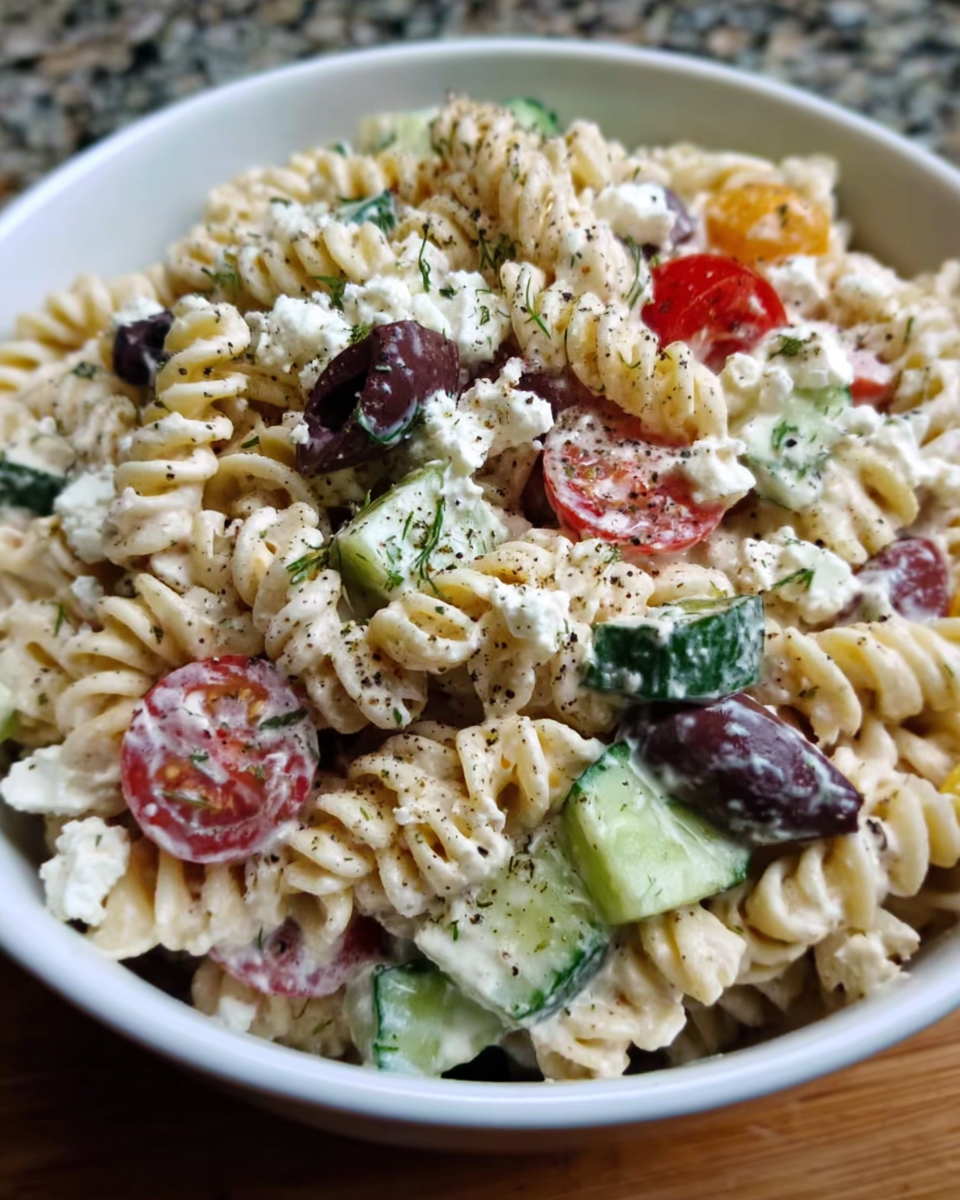
If you’re craving a vibrant and satisfying dish that’s quick to whip up, Greek style pasta salad might just be your next obsession. This Mediterranean-inspired favorite blends tender rotini pasta with crisp cucumbers, juicy tomatoes, briny kalamata olives, and a creamy lemon-herb dressing bursting with Greek flavors. Whether you’re prepping for a picnic, potluck, or meal prep, this salad delivers every time. In this article, we’ll explore what makes this dish unique, dive into its essential ingredients, master the creamy dressing, avoid common mistakes, and walk through a step-by-step recipe that’ll turn your kitchen into a Greek-inspired haven.
Print
Greek Style Pasta Salad: Creamy, Tangy & Seriously Easy
- Total Time: 30 minutes
- Yield: 6 servings
Description
- Greek style pasta salad combines creamy dressing, tangy feta, and fresh veggies. Perfect for potlucks, meal prep, and Mediterranean flavor lovers.
Ingredients
-
1 pound rotini pasta
-
1 cup grape tomatoes, halved
-
1 cup kalamata olives, halved
-
1 English cucumber, chopped
-
1 cup plain Greek yogurt
-
1/2 cup mayonnaise
-
1/2 cup crumbled feta cheese
-
1/4 teaspoon garlic powder
-
3 tablespoons lemon juice
-
1 teaspoon dried dill weed
-
1/2 teaspoon dried oregano
-
Salt and black pepper, to taste
Instructions
-
Cook the rotini pasta according to package instructions. Once done, rinse with cold water and drain thoroughly.
-
While the pasta cooks, mix the grape tomatoes, olives, and chopped cucumber in a large bowl.
-
In a separate medium bowl, whisk together Greek yogurt, mayonnaise, lemon juice, garlic powder, dill weed, oregano, salt, and pepper until smooth.
-
Stir in the crumbled feta cheese until evenly combined.
-
Add the cooled pasta to the vegetable mixture and toss gently to combine.
-
Pour the creamy dressing over the pasta and vegetables, stirring until everything is well coated.
-
Chill in the refrigerator for at least one hour before serving.
-
Sprinkle additional dill weed on top just before serving for extra flavor.
- Prep Time: 15 minutes
- Cook Time: 15 minutes
- Category: Pasta and Grain Salads
- Method: Boiled and Chilled
- Cuisine: Greek-Inspired
Table of Contents
Greek Style Pasta Salad — What It Is & Why It Works
Definition & origin of Greek style pasta salad
Greek style pasta salad is a flavorful hybrid that marries the best of two worlds: the fresh, zesty essence of traditional Greek salad and the hearty, satisfying texture of pasta. This fusion dish doesn’t originate from Greece itself, but from modern interpretations of Mediterranean cuisine, where food lovers sought to create something more filling than a classic Greek salad—yet just as bright and refreshing. Think of it as a contemporary twist that captures the soul of Greek ingredients while making it ideal for casual gatherings or weeknight dinners.
How Greek salad inspires the pasta version
The inspiration behind this dish is unmistakably Greek. Classic Greek salad—also known as horiatiki—relies on a few bold ingredients: tomatoes, cucumbers, olives, feta, and oregano, all tossed with olive oil and lemon juice. Greek style pasta salad follows this formula, swapping out the leafy greens for short pasta shapes like rotini or penne. The dish keeps the integrity of the core vegetables and herbs, while adding a creamy element that makes it richer and more satisfying. Greek yogurt and feta cheese form the backbone of this creamy dressing, subtly mellowing the sharpness of lemon and herbs.
What distinguishes a “Greek style” from generic pasta salads
What sets Greek style pasta salad apart from more generic versions? First, it leans heavily on Mediterranean flavors—briny olives, tangy feta, aromatic dill and oregano. Second, the dressing often uses Greek yogurt or a mix of yogurt and mayonnaise, offering a lighter, tangier alternative to the usual mayo-only or vinegar-based dressings. Finally, the ingredient harmony creates depth: crunchy cucumbers, juicy tomatoes, creamy cheese, and al dente pasta all work together. Compared to standard deli-style pasta salads, this one feels more vibrant, fresh, and flavorful—especially when paired with other dishes like this pepperoni pasta salad for variety on your summer table.
Core Building Blocks — What Goes in a Greek Pasta Salad
Pasta base — shapes and cooking tips
At the heart of any Greek style pasta salad is a well-cooked pasta base. Short, spiral-shaped varieties like rotini or fusilli work best—they trap the creamy dressing and cling to small bits of vegetables and cheese. Cook the pasta just until al dente; overcooking leads to a mushy salad that won’t hold up well once mixed. Once cooked, rinse the pasta under cold water to stop the cooking process and remove surface starch, which can cause clumping. Drain thoroughly to prevent a watery dressing. A slightly firm texture creates the perfect contrast with the creamy yogurt-based sauce.
Vegetables, olives, and briny elements
Greek pasta salad shines because of its contrast in textures and flavors. Cherry or grape tomatoes offer sweetness and color, while chopped English cucumber brings coolness and crunch. Kalamata olives, with their deep purple hue and salty bite, add complexity and depth to every forkful. These briny elements are essential—they’re what give the salad that unmistakable Greek flair. For an extra layer, thinly sliced red onions or banana peppers can be added for bite and brightness. It’s this mix of crisp, juicy, and tangy components that makes each bite layered and refreshing.
Cheese & dairy — feta, yogurt, mayo combinations
Feta is a cornerstone of Greek cuisine, and it plays a starring role in Greek style pasta salad. Its crumbly texture and tangy, salty profile create contrast against the creamy dressing. But the real secret to the salad’s luxurious texture lies in the dressing. Combining plain Greek yogurt with mayonnaise offers the best of both worlds: tang from the yogurt, creaminess from the mayo. A touch of lemon juice and garlic powder elevates the entire dish. The result is a sauce that coats every piece without overpowering the fresh ingredients. For a similar creamy twist, see how this pesto pasta salad uses cheese and herbs to full effect.
Dressing & Flavor Balancing for Greek Style Pasta Salad
Tangy vs creamy approaches
Greek style pasta salad often walks the line between light and indulgent. While some recipes lean entirely into a vinaigrette-based dressing—olive oil, lemon juice, red wine vinegar—others, like ours, embrace a creamy twist. The combination of Greek yogurt and mayonnaise not only smooths out the acidity but adds richness without feeling too heavy. This creamy base becomes a blank canvas for layering bold Mediterranean flavors. The key is maintaining that tang—lemon juice and vinegar offer brightness, balancing the creaminess. The final dressing should taste zesty but smooth, and never bland.
Herbs, garlic, and seasonings
What elevates the flavor of Greek pasta salad isn’t just the dressing—it’s the strategic use of herbs and seasonings. Dried dill adds a fresh, grassy note that echoes the salad’s chilled nature. Oregano, another staple of Greek cooking, brings a subtle bitterness and earthiness. Garlic powder is preferred here over fresh garlic for a more evenly distributed flavor that won’t overpower. A touch of black pepper provides heat, while salt amplifies everything. These seasonings don’t just flavor the dressing—they bind the pasta and vegetables together into a cohesive, crave-worthy bite.
Achieving balance: acid, salt, richness
Striking the right balance in this salad means letting no single element dominate. Acid from lemon juice sharpens the yogurt and lifts the richness of mayo. Salt enhances the olives, feta, and dressing without turning the salad briny. The richness should be present but not cloying—each ingredient must have room to shine. If anything tastes too flat or heavy, an extra splash of lemon juice or pinch of oregano often solves the problem. Once mixed and chilled, the ingredients marry beautifully, making every forkful balanced, refreshing, and deeply satisfying.
Step-by-Step Recipe — Greek Style Pasta Salad
Ingredient list & proportions
To craft the perfect Greek style pasta salad, you’ll need just the right balance of textures and flavors. Here’s what to gather:
- 1 pound rotini pasta
- 1 cup grape tomatoes, halved
- 1 cup kalamata olives, halved
- 1 English cucumber, chopped
- 1 cup plain Greek yogurt
- 1/2 cup mayonnaise
- 1/2 cup crumbled feta cheese
- 1/4 teaspoon garlic powder
- 3 tablespoons lemon juice
- 1 teaspoon dried dill weed
- 1/2 teaspoon dried oregano
- Salt and black pepper to taste
These ingredients work in harmony—crisp veggies, briny accents, and a rich yet refreshing dressing to tie it all together.
Cooking, cooling & mixing steps
Start by bringing a large pot of salted water to a boil. Cook the rotini until just al dente, following the package instructions. Immediately rinse the pasta under cold water to stop the cooking and remove excess starch. Drain thoroughly.
In a large mixing bowl, combine the halved tomatoes, chopped cucumber, and kalamata olives. In a separate bowl, whisk together the Greek yogurt, mayonnaise, lemon juice, garlic powder, dill, oregano, salt, and pepper until smooth. Fold in the crumbled feta cheese.
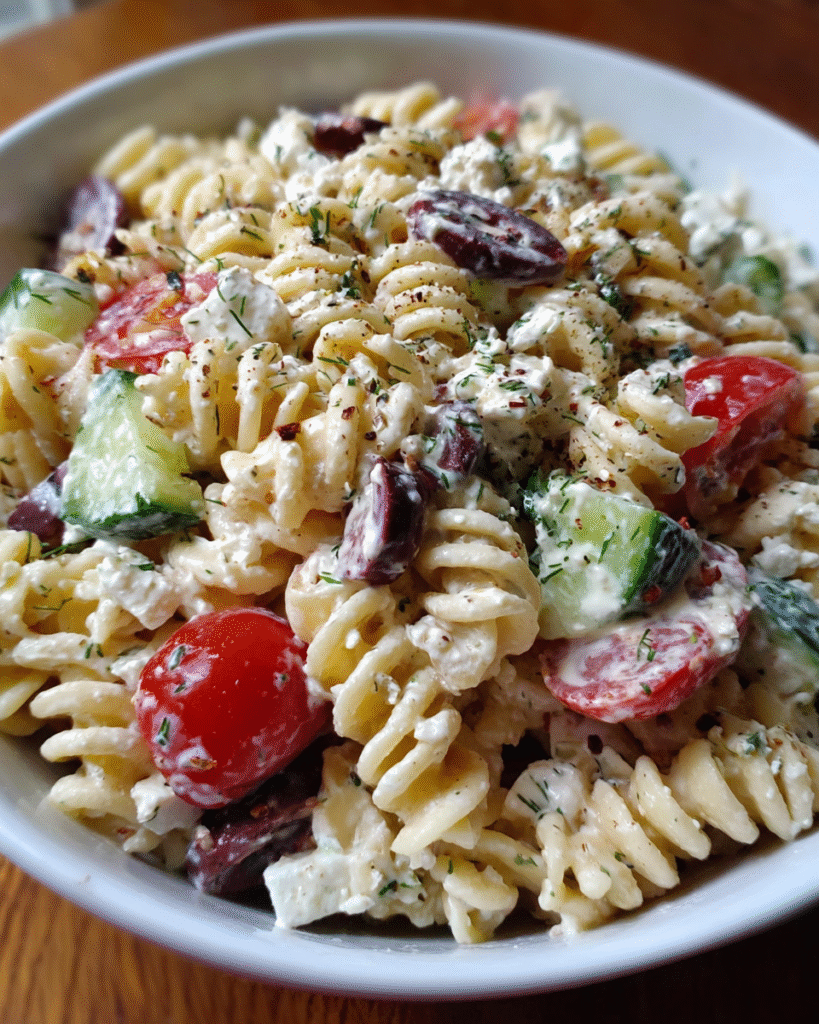
Add the cooled pasta to the vegetable mix, then gently toss to combine. Pour the creamy dressing over everything and stir until evenly coated. The dressing should coat every bite without overwhelming the fresh textures.
Chilling, serving tips & garnishes
Refrigerate the salad for at least one hour before serving. This chilling time allows the flavors to meld and the dressing to thicken slightly. Just before serving, give the salad a gentle stir. For an extra pop of flavor, sprinkle a pinch more dried dill on top or garnish with a few additional crumbles of feta.
This salad pairs well with grilled meats, flatbreads, or even as a stand-alone lunch. It’s especially ideal for meal prep or summer potlucks—refreshing, filling, and crowd-pleasing.
Five Mistakes to Avoid in Pasta Salads (Including Greek Style)
Wrong pasta shape or overcooking
One of the most common mistakes in pasta salad is using the wrong type of pasta or overcooking it. In Greek style pasta salad, rotini is ideal because its spiral shape captures dressing and bits of veggies. Avoid long pastas like spaghetti or overly small shapes that get lost in the mix. Overcooked pasta turns soft and soggy when mixed with dressing, especially after chilling. Always cook your pasta just to al dente, then rinse with cold water to stop the process immediately and preserve texture.
Undersalting or rinsing pasta incorrectly
Undersalting your pasta water can leave your salad tasting flat, no matter how flavorful the dressing. Be generous with salt when boiling your pasta—it should taste like the sea. Also, while rinsing pasta is essential to cool it down and remove starch, failing to drain it well can dilute the dressing. Always let your pasta air dry for a few minutes after rinsing. Wet pasta will make your creamy Greek dressing slide off instead of clinging beautifully to each piece.
Dressing at wrong time / imbalance in sauce
Timing is everything when it comes to adding dressing. If you dress the pasta while it’s still warm, the sauce can separate or become greasy. On the flip side, waiting too long can cause dryness. Let the pasta cool completely, then mix it with veggies before adding dressing. Also, be wary of overdressing. Creamy dressings can overwhelm light ingredients like cucumbers and tomatoes. This Greek style recipe uses a well-balanced blend of yogurt and mayo, but always taste and adjust for lemon, salt, and herbs. The dressing should complement, not dominate.
FAQs
What goes in a Greek pasta salad?
A traditional Greek pasta salad includes cooked rotini or similar pasta, cherry or grape tomatoes, chopped cucumbers, kalamata olives, and crumbled feta cheese. These ingredients mirror the components of a classic Greek salad but add pasta to make it heartier. The dressing is typically a blend of Greek yogurt and mayonnaise, flavored with lemon juice, garlic powder, dried dill, and oregano. Optional additions include red onion slices, banana peppers, or fresh herbs for extra flavor and texture.
What are the main ingredients of a Greek salad?
The core elements of a traditional Greek salad—also known as horiatiki—are tomatoes, cucumbers, red onions, kalamata olives, and feta cheese. It’s usually seasoned with oregano and dressed simply with olive oil and a splash of vinegar or lemon juice. Unlike leafy salads, Greek salad doesn’t include lettuce. It’s known for its bold, salty, and tangy flavors and is often served as a refreshing side or starter.
What makes a Greek salad different?
Greek salad stands out because of its simplicity and balance. It avoids heavy dressings and instead uses high-quality olive oil and acid (like lemon juice or vinegar) to enhance the natural flavors. The presence of feta and olives gives it a distinct salty, briny edge that many other salads lack. In a Greek style pasta salad, those same principles apply, but pasta adds substance, and creamy dressing adds a modern twist while preserving that zesty Mediterranean character.
What are the five mistakes to avoid in pasta salad?
Using the wrong pasta shape or overcooking it.
Undersalting the pasta water.
Adding dressing to hot or too-wet pasta.
Using unbalanced dressings that are too oily or heavy.
Not letting the salad chill long enough to develop flavor.
Avoiding these pitfalls ensures your Greek pasta salad comes out flavorful, fresh, and perfectly textured every time.
Conclusion
A well-made Greek style pasta salad is more than just a side dish—it’s a vibrant, satisfying meal that bridges bold Mediterranean flavor with creamy comfort. With a perfect balance of tangy yogurt dressing, briny olives, juicy tomatoes, crisp cucumbers, and al dente pasta, it’s a dish that works for any occasion, from meal prep to picnics.
By mastering the core ingredients, understanding dressing dynamics, and avoiding common mistakes, you can confidently recreate this dish again and again. Whether served on its own or alongside grilled favorites, this salad will always deliver freshness and flavor. For more inspiration, try pairing it with other refreshing options like pesto pasta salad or a classic pepperoni pasta salad for your next gathering.
For more successful recipes, you can visit our Facebook page or our Pinterest account