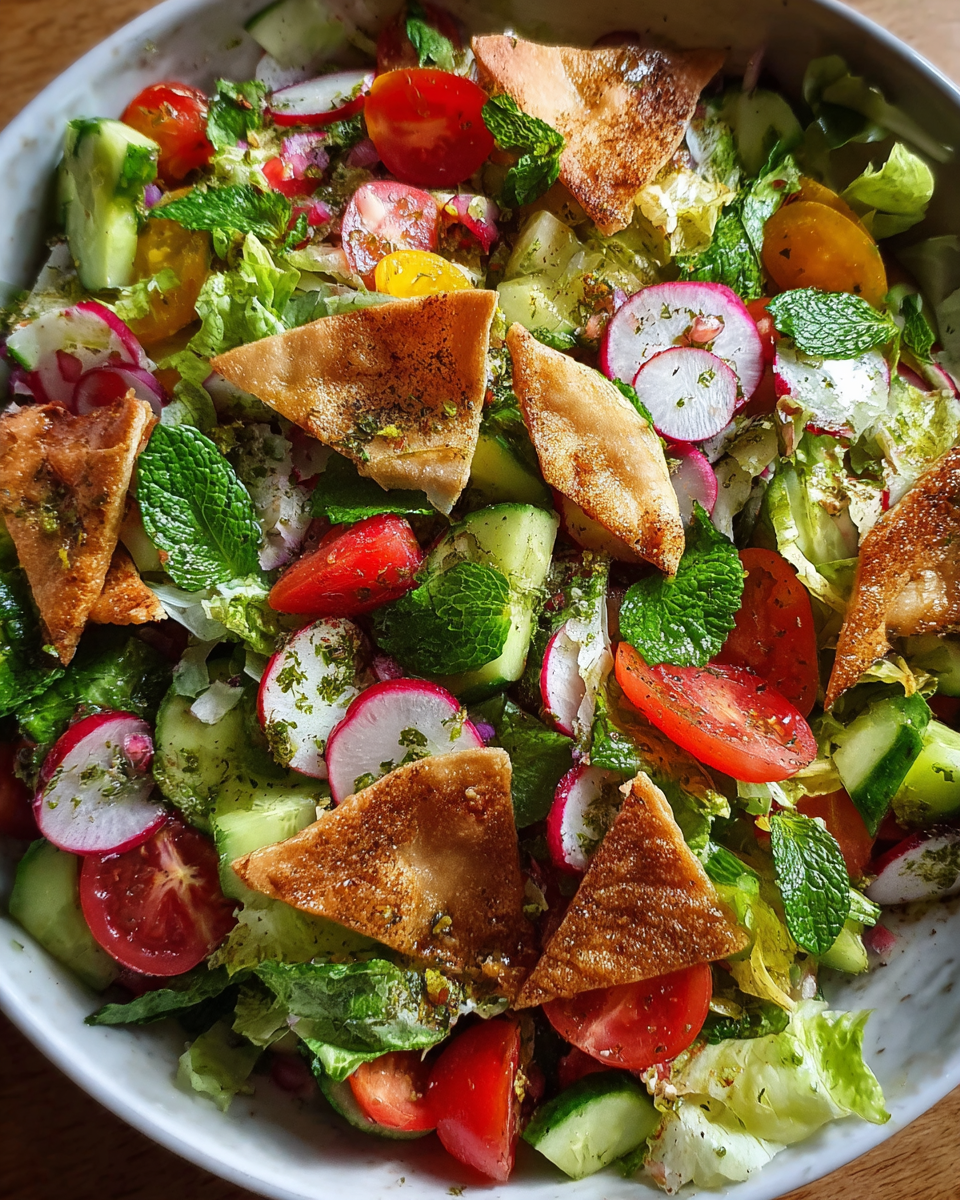
Lebanese Fattoush Salad – A Crunchy, Flavor-Packed Classic to Refresh Your Table
Crisp vegetables, tangy sumac, and golden pita chips come together in one of the Middle East’s most celebrated dishes: the Lebanese Fattoush Salad. This vibrant and refreshing “bread salad” delivers a symphony of textures and bright, herbal flavors rooted in Levantine tradition. In this article, you’ll uncover its origins, essential ingredients, how to prepare it step-by-step, ways to customize it, and the health benefits it offers. Whether you’re a seasoned cook or just salad-curious, Lebanese Fattoush Salad deserves a spot at your table. Let’s dive into everything that makes this beloved dish so irresistible.
Print
Lebanese Fattoush Salad – A Crunchy, Flavor-Packed Classic to Refresh Your Table
- Total Time: 25 minutes
- Yield: 4 servings
Description
- Lebanese Fattoush Salad is crisp, tangy, and packed with bold Middle Eastern flavor. Learn how to make it perfectly every time.
Ingredients
-
For the Dressing:
-
2 tablespoons olive oil
-
1 tablespoon fresh lemon juice
-
1 tablespoon pomegranate molasses
-
1 garlic clove, finely minced
-
1 teaspoon dried mint
-
½ teaspoon ground sumac
-
½ teaspoon salt
-
¼ teaspoon ground black pepper
For the Salad:
-
1 head baby gem lettuce, roughly chopped
-
3 small cucumbers, sliced
-
10 cherry tomatoes, halved
-
½ green bell pepper, thinly sliced
-
8 small radishes, thinly sliced or quartered
-
1 small red onion, thinly sliced
-
10 fresh mint leaves, finely shredded
For the Garnish:
-
½ teaspoon ground sumac
-
½ teaspoon dried mint
-
1 pita bread, cut into small pieces
-
1 tablespoon olive oil
-
Instructions
-
Make the Dressing:
In a small bowl, whisk together olive oil, lemon juice, pomegranate molasses, minced garlic, dried mint, sumac, salt, and pepper until well blended. Alternatively, shake the ingredients in a sealed jar until combined. -
Prepare the Pita Chips:
Toss pita bread pieces with olive oil and spread them out on a baking sheet. Broil for a few minutes until golden and crispy. Let them cool. -
Chop the Vegetables:
Wash and dry all vegetables. Roughly chop the lettuce, halve the cherry tomatoes (or dice large ones), slice the cucumbers and bell pepper, and chiffonade the mint leaves. Slice or quarter the radishes and thinly slice the red onion. -
Assemble the Salad:
Combine all the vegetables and mint in a large bowl. Add the dressing, half of the pita chips, and sprinkle with sumac and dried mint. Toss gently. -
Finish and Serve:
Top with the remaining pita chips just before serving for extra crunch.
- Prep Time: 20 minutes
- Cook Time: 5 minutes
- Category: Healthy Salad Recipes
- Method: Tossed
- Cuisine: Middle Eastern
Table of Contents
What is Lebanese Fattoush Salad?
The Origins and Etymology of Fattoush
The word “fattoush” comes from the Arabic root fatta, meaning “to crush” or “crumbled bread.” It’s more than just a salad—it’s a cultural staple across the Levant. In Lebanese households, this dish evolved as a practical way to repurpose stale pita bread by crisping it up and tossing it with fresh vegetables and herbs. It’s traditionally served during warm seasons and features prominently in iftar meals during Ramadan. Over generations, fattoush became a symbol of resourceful cooking, turning leftover bread into something deeply satisfying, flavorful, and culturally rich.
Typical Ingredients in a Lebanese Salad Bowl
A true Lebanese Fattoush Salad relies on a medley of garden-fresh ingredients. The base includes romaine or baby gem lettuce, sliced cucumbers, juicy tomatoes, crunchy radishes, and bell peppers. Red onions add bite, while fresh mint and parsley introduce herbal brightness. The salad is dressed with a tangy vinaigrette of olive oil, lemon juice, garlic, and the essential Middle Eastern ingredient: pomegranate molasses. A sprinkle of sumac—a sour, ruby-colored spice—adds citrusy depth, making fattoush unmistakably bold yet balanced in flavor.
Why the “Bread Salad” Concept Makes It Unique
Unlike typical Western salads, fattoush features crispy pieces of pita bread that soak up just enough dressing without going soggy. This sets it apart from tabbouleh and other Levantine salads. The toasted or fried pita gives a satisfying crunch that plays beautifully against the tender vegetables. That duality of texture—soft and crisp—is what makes Lebanese fattoush salad a standout dish across the Middle East. When assembled right before serving, it maintains that signature bite that keeps you going back for more.
Key Ingredients & How They Work for Lebanese Fattoush Salad
The Veggie Base: Lettuce, Cucumbers, Tomatoes, Radishes
The backbone of every Lebanese Fattoush Salad is its fresh, crunchy vegetables. Baby gem or romaine lettuce provides a leafy softness that contrasts beautifully with the firmer textures of cucumbers and radishes. Cucumbers add a cool, juicy bite, while cherry tomatoes bring natural sweetness and bright acidity. Radishes, either sliced thin or quartered, lend a peppery snap. This blend creates layers of texture and flavor in every forkful. Each component contributes to the salad’s overall balance: refreshing, crisp, and never dull.
Herbs, Sumac, and Pomegranate Molasses: The Flavour Boosters
No fattoush is complete without its distinctive flavor accents. Fresh mint is more than garnish—it lifts the entire dish with its cooling aroma. Dried mint adds a deeper, earthy herbal note. But the real stars are sumac and pomegranate molasses. Sumac gives the salad its citrus-like tang, almost replacing the need for vinegar. Pomegranate molasses, a thick, syrupy reduction, adds both acidity and subtle sweetness. These two ingredients transform a basic salad into a bright, complex flavor experience that’s unmistakably Levantine.
Pita Chips or Toasted Bread: The Crunch Factor
One of the defining features of Lebanese fattoush salad is the inclusion of crispy pita chips. Traditional cooks would fry pieces of leftover pita bread in olive oil, but oven-baked or air-fried versions work just as well. The trick is to add them at the last minute to retain their crunch. These golden shards soak up the dressing just slightly while still offering a satisfying snap. They serve the same role as croutons in Western salads, yet bring a heartier, rustic touch unique to the Middle East.
Making Your Own Lebanese Fattoush Salad at Home
Step-by-Step: Preparing the Dressing
The dressing is the flavor core of a Lebanese Fattoush Salad. In a small bowl or sealed jar, whisk together olive oil, fresh lemon juice, and pomegranate molasses. Add finely minced garlic, dried mint, sumac, salt, and black pepper. Shake or stir until fully blended. This dressing should taste bright, slightly sweet, and deeply tangy. The sumac and pomegranate molasses give it that signature fattoush kick. Always taste and adjust: a little more lemon juice if you like it sharper, or more molasses for added depth.
Step-by-Step: Chopping Vegetables & Herbs
Wash and dry all the vegetables thoroughly—water clings and will dilute your dressing. Roughly chop baby gem lettuce and halve cherry tomatoes. Slice cucumbers into rounds or half-moons. Thinly slice green bell pepper, red onion, and radishes. For fresh herbs, chiffonade the mint leaves by stacking, rolling, and slicing them into thin ribbons. Combining these veggies in a large bowl sets the stage for a crunchy, colorful composition. Everything should be bite-sized to make every mouthful harmonious.
Step-by-Step: Creating and Adding Pita Chips for Best Texture
Cut one pita into small squares or triangles. Toss the pieces with olive oil and bake or broil until golden brown and crisp. Let them cool completely before adding to the salad. Just before serving, mix half the chips into the salad along with the dressing. Toss gently to coat. Reserve the other half of the chips for garnishing, which keeps them ultra-crisp when the salad hits the table. This layering trick is the secret to perfect fattoush texture every time.
Variations & Serving Suggestions for Lebanese Fattoush Salad
Vegan & Gluten-Free Twists
The classic Lebanese Fattoush Salad is already vegan by nature—no dairy, eggs, or animal products involved. To make it gluten-free, simply swap regular pita for gluten-free flatbread or crackers before crisping them in the oven. You can also use baked chickpeas or quinoa crisps for an equally satisfying crunch. Want more protein? Toss in chickpeas, grilled tofu, or even lentils without compromising the dish’s bright, zesty vibe. These variations let everyone enjoy fattoush while staying within their dietary needs.
Serving with Grilled Meats or as a Standalone Meal
Fattoush is incredibly versatile. Serve it as a refreshing side to grilled chicken, lamb skewers, or fish, and it immediately balances the richness of those proteins. It’s also hearty enough to stand alone as a light lunch or dinner, especially when topped with roasted chickpeas or paired with hummus and baba ganoush. Many pair it with vibrant dishes like this Green Bean Salad with Feta to create a mezze-style spread that brings bold, garden-fresh flavor to the center of the table.
Regional or Seasonal Variations of Fattoush
Across the Levant, fattoush takes on local personalities. In some regions, it includes purslane instead of lettuce or green onions in place of red. During summer, fattoush often features extra cucumbers and juicy heirloom tomatoes. In colder months, roasted root vegetables can add warmth and earthiness. This adaptability is part of what makes it timeless. You can even modernize it with ingredients like avocado or arugula—just stay true to the lemon-sumac dressing and crisp pita foundation.
Health Benefits & Nutrition of Lebanese Fattoush Salad
Nutrient Profile and Major Advantages
A well-balanced Lebanese Fattoush Salad is packed with fiber, vitamins, and antioxidants. Fresh vegetables like lettuce, tomatoes, cucumbers, and radishes provide hydration and essential nutrients such as vitamin C, potassium, and folate. The olive oil in the dressing delivers heart-healthy fats, while garlic and sumac contribute anti-inflammatory and antimicrobial properties. Plus, pomegranate molasses brings in polyphenols, which are known for their antioxidant activity. All this makes fattoush not just refreshing, but also nourishing and energizing for your body.
How the Bread-Chip Crunch Fits into a Balanced Diet
The pita chips aren’t just delicious—they help make the salad more satisfying and complete. When used in moderation and baked instead of fried, they add texture without overpowering the dish’s nutritional value. If you’re aiming for a lighter version, try whole-wheat pita or use a smaller portion. The balance between raw vegetables and a crunchy starch source makes this salad more filling than many other greens-based bowls, and it keeps hunger at bay for longer.
Tips to Lighten or Boost It (e.g., Using Wholegrain Pita)
If you’re looking to optimize this dish nutritionally, consider using wholegrain pita bread for added fiber and micronutrients. You can also experiment with adding quinoa, sunflower seeds, or pumpkin seeds to boost protein and healthy fats. Want it even lighter? Reduce the oil slightly in the dressing or increase the herb ratio for bold flavor with fewer calories. For a full, hearty plate, pair it with something vibrant like this Citrus Cabbage Salad, which offers a similarly fresh and zingy profile.
Troubleshooting & Tips for Perfect Lebanese Fattoush Salad
How to Keep Pita Chips Crisp and Fresh
The secret to a standout Lebanese Fattoush Salad lies in mastering the pita chips. To keep them crisp, toast or bake them until golden and cool them completely before storing. Only add them to the salad right before serving. Mixing too early causes sogginess as the chips absorb moisture from the vegetables and dressing. For extra crunch insurance, serve the remaining chips on the side so everyone can add them fresh to their plate.
How to Balance Flavor: Lemon, Sumac, Salt
This salad is all about balance. Too much lemon or sumac can make it too sour, while too little results in a flat profile. Start by following the recipe’s ratio of olive oil to lemon juice and adjust to your taste. Don’t forget the salt—just enough brings out the brightness in the tomatoes and herbs. If your salad tastes dull, a pinch more sumac or a drizzle of pomegranate molasses can restore the tangy spark that defines fattoush.
What to Avoid: Soggy Bread, Over-Dressed Salad
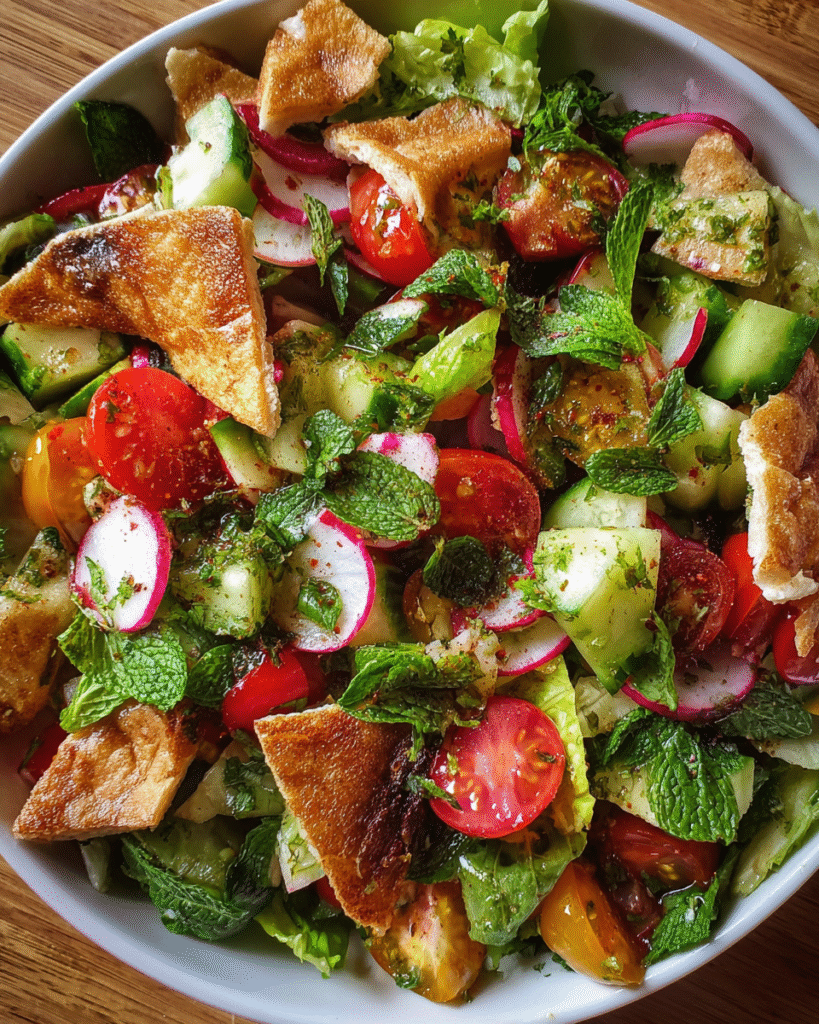
Common pitfalls include overdressing the vegetables or adding pita too soon. Always toss the salad gently and only when ready to serve. If making in advance, prep all components separately and combine them at the last minute. Another mistake? Cutting vegetables too small or unevenly, which ruins the texture and presentation. Keep pieces chunky and consistent so the flavors and textures shine. With these simple tricks, you’ll turn an ordinary salad into a Mediterranean showstopper.
FAQS
What is fattoush salad made of?
Fattoush salad is made with chopped fresh vegetables like lettuce, cucumbers, tomatoes, radishes, and bell peppers, combined with crispy pita bread pieces. The salad is tossed in a vibrant dressing featuring olive oil, lemon juice, garlic, pomegranate molasses, and sumac. Fresh herbs like mint and parsley are often added for extra flavor. The combination delivers a crunchy, tangy, and refreshing bite in every forkful.
What is in a Lebanese salad?
A traditional Lebanese salad can include ingredients like romaine lettuce, tomatoes, cucumbers, onions, and fresh herbs. Fattoush is one of the most popular types, alongside tabbouleh. While tabbouleh focuses on parsley and bulgur, fattoush highlights a broader mix of vegetables and the signature crunch of toasted pita chips. Sumac and pomegranate molasses are typical additions that bring depth and brightness to the dish.
What does fattoush mean in Lebanese?
“Fattoush” comes from the Arabic word fatta, meaning “crumbled bread.” In Lebanese culinary tradition, it refers to a salad that includes pieces of fried or toasted pita. Historically, it was a way to repurpose stale bread and avoid waste, turning it into something delicious and hearty. Today, it’s a beloved staple of Levantine cuisine enjoyed worldwide.
What is Levantine fattoush?
Levantine fattoush is a regional variation of the bread salad popular across Lebanon, Syria, Jordan, and Palestine. It features fresh vegetables, sumac, mint, and crunchy pita chips. Though recipes vary slightly from region to region—some adding purslane or using different spices—the core ingredients and flavor profile remain consistent. It’s a dish that represents the vibrant, practical, and herb-rich style of Levantine cooking.
Conclusion – Why You Should Make Lebanese Fattoush Salad
Lebanese Fattoush Salad is more than just a colorful plate—it’s a vibrant expression of Middle Eastern tradition rooted in smart, simple cooking. With its crisp vegetables, tangy dressing, and signature pita crunch, it offers a bold contrast of textures and a deeply satisfying taste experience. Whether you’re looking for a light lunch, a versatile side dish, or a fresh way to bring more veggies to the table, this salad delivers on every level.
It’s also endlessly customizable: make it vegan, gluten-free, or protein-packed with a few easy tweaks. Paired with a refreshing Green Bean Salad with Feta or the zesty Citrus Cabbage Salad, it becomes the perfect foundation for a bright, balanced spread. The combination of sumac, lemon, and herbs awakens the palate—and proves that simple ingredients, when treated right, can truly shine.
So next time you crave something fresh, crunchy, and soul-satisfying, bring fattoush into your kitchen. It might just become your new go-to salad.
For more successful recipes, you can visit our Facebook page or our Pinterest account