Minestrone Soup: Nourishing Comfort in Every Hearty Spoonful
Introduction
Minestrone soup is more than just a bowl of vegetables—it’s a comforting embrace of rustic flavors, rich history, and nourishing ingredients. Whether you’re craving something cozy on a chilly evening or looking to pack more goodness into your meals, minestrone soup delivers. In this article, you’ll discover what makes minestrone soup unique, its Italian roots, secret flavor boosters, and step-by-step preparation tips—even how Jamie Oliver puts his own twist on it. We’ll also explore variations and smart storage tips, so you can make this timeless classic your own. Ready to unravel the wholesome world of minestrone soup? Let’s dive in.

Minestrone Soup: Nourishing Comfort in Every Hearty Spoonful
- Total Time: 1 hour 5 minutes
- Yield: 5 to 6 servings
Description
- Minestrone soup is a hearty, healthy Italian classic packed with vegetables, beans, and pasta. Discover the secrets to this rich and cozy dish.
Ingredients
-
- 1 tablespoon olive oil
- 1 small yellow onion, chopped
- 2 garlic cloves, minced
- 1 can (28 ounces) crushed tomatoes
- 2 cups low-sodium vegetable broth
- 2 cups water
- 3 tablespoons tomato paste
- 2 teaspoons Worcestershire sauce (vegetarian if needed)
- 1 can (14 ounces) kidney beans, drained and rinsed
- 1 teaspoon salt
- 1 teaspoon black pepper
- 1 cup small pasta (such as ditalini, orzo, or tiny shells)
- 1/4 cup grated parmesan cheese (optional)
- 1 rib celery, chopped
- 1 large carrot, peeled and diced
- 1 zucchini, diced
- 1 medium potato, peeled and diced
- 1 cup green beans, cut into 1-inch pieces
- 2 cups baby spinach (or frozen spinach, kale, etc.)
Optional for serving:
-
- Extra grated parmesan cheese
- Chopped fresh parsley
- Crusty bread
Instructions
- In a large pot, heat the olive oil over medium-high heat.
- Add chopped onion and garlic; cook for about 2 minutes until the onion becomes translucent.
- Stir in the carrot, celery, and zucchini. Cook for 1 minute to coat with flavor.
- Add the crushed tomatoes, vegetable broth, water, tomato paste, Worcestershire sauce, kidney beans, salt, and pepper. Stir to combine.
- Bring to a simmer, then cover and reduce heat to maintain a gentle simmer for 20 minutes.
- Add the diced potato and green beans. Simmer for an additional 5 minutes.
- Stir in the pasta and cook until just tender, about 1 to 2 minutes less than the package instructions.
- Remove from heat. Stir in the spinach and parmesan cheese if using. Adjust seasoning with more salt or pepper if needed.
- Serve hot, garnished with extra parmesan and parsley if desired. Pair with warm crusty bread.
- Prep Time: 20 minutes
- Cook Time: 45 minutes
- Category: SOUPS
- Method: Stovetop
- Cuisine: American
Table of Contents
Understanding Minestrone Soup
What is Minestrone Soup Made Of?
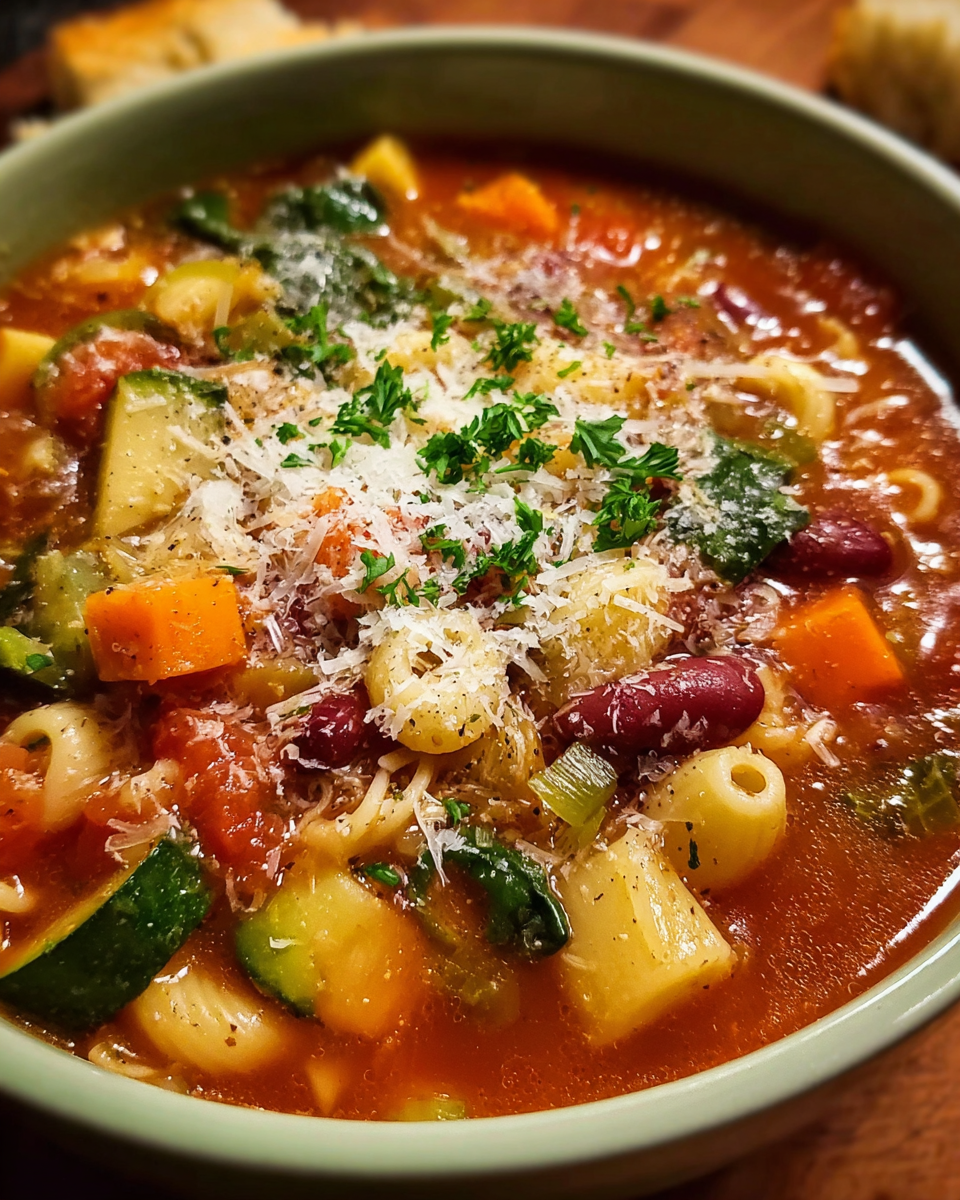
Minestrone soup is a hearty Italian vegetable soup that thrives on variety and simplicity. Traditionally, it’s made with seasonal vegetables, beans, pasta or rice, and a flavorful broth base. The beauty of minestrone soup lies in its flexibility—you can use almost any vegetable available, making it a go-to for reducing kitchen waste and maximizing nutrition. Staples often include onions, carrots, celery, tomatoes, potatoes, and greens like spinach or kale. In our version, we bring it all together with zucchini, green beans, and kidney beans in a rich tomato base enhanced with garlic, olive oil, and Italian herbs.
Key Ingredients That Define Minestrone Soup
A great minestrone starts with a solid foundation of aromatics—olive oil, garlic, and onions. Then come the classic vegetables like carrots, celery, and zucchini, which add color, texture, and depth. The soup gains its signature heartiness from starchy additions such as diced potatoes and small pasta like ditalini or orzo. Beans, particularly kidney or cannellini, contribute plant-based protein and a creamy texture. Broth, either vegetable or chicken, forms the base, while tomato paste and crushed tomatoes inject boldness and acidity. A final flourish of fresh greens and parmesan cheese adds vibrancy and umami, rounding out every spoonful.
How Minestrone Soup Differs from Other Vegetable Soups
What separates minestrone soup from standard vegetable soups is its complexity and balance. It’s not just a collection of chopped vegetables in water. Minestrone delivers layered texture from beans, chew from pasta, and depth from tomato-rich broth—all harmonized by Italian seasoning. Many other vegetable soups are lighter, more brothy, or puréed, whereas minestrone retains its chunkiness and variety. Its ability to adapt to seasonal ingredients while still maintaining its distinct Italian roots makes it truly iconic. If you enjoy robust soups like creamy healthy soup, minestrone offers a similar depth—only with a rustic, home-cooked feel.
The Origin & Meaning of Minestrone Soup
Why Is It Called Minestrone Soup?
The word “minestrone” comes from the Italian verb minestrare, meaning “to serve.” Originally, it referred simply to a course of soup, not a specific recipe. Over centuries, “minestrone” evolved to describe a thick, rustic vegetable soup commonly served in peasant homes throughout Italy. Unlike fixed dishes with rigid ingredients, minestrone soup became a culinary symbol of frugality and resourcefulness. The name stuck because it captured the soul of the dish—a large, satisfying mix served generously to nourish family and friends. It’s less about precision and more about comfort and abundance, echoing generations of Italian home cooking.
Historical Roots of Minestrone Soup in Italy
Minestrone soup dates back to ancient Roman times when the diet was plant-forward and heavily reliant on legumes and vegetables. As trade routes expanded and more ingredients became available—like tomatoes and potatoes from the New World—minestrone evolved. Every region in Italy developed its own version using local produce and customs. In Liguria, it’s common to stir in a dollop of pesto for added flavor, while in Tuscany, cannellini beans are the star. Despite these regional differences, the foundation remains unchanged: a seasonal, vegetable-rich soup cooked with love. Its history isn’t just culinary—it’s cultural.
Regional Variations of Minestrone Soup Across Italy
No two bowls of minestrone are alike in Italy. Northern versions often include rice and butter-based broths, while southern styles lean into olive oil, tomatoes, and a bold kick of garlic. Liguria’s pesto-topped variation is especially famous, adding fragrant basil and pine nut richness. In coastal regions, fish or seafood might make an appearance. These variations reflect local agriculture and customs, making minestrone soup a living recipe that evolves with time and place. Its adaptability has also inspired American interpretations, like our hearty version or even vegetable beef soup that mimics the same chunky, satisfying format.
The Secret Ingredient in Minestrone Soup
What Is the Secret Ingredient in Minestrone Soup?
While minestrone soup proudly showcases a garden of vegetables, its secret isn’t what you see—it’s what you taste. The most transformative element? Umami depth. This often comes from a small but mighty addition like parmesan rind simmered in the broth or a splash of Worcestershire sauce. In our version, Worcestershire sauce subtly amplifies all the flavors, adding savory richness without overpowering the fresh ingredients. Some cooks also swear by tomato paste, anchovy paste, or a spoonful of pesto stirred in at the end. These “secret” ingredients aren’t dominant—they quietly enhance, rounding out the entire soup into something deeply comforting.
How Beans, Pasta or Rice Elevate Minestrone Soup
Legumes and grains do more than bulk up minestrone—they define its soul. Kidney beans, a staple in many versions, add satisfying texture and plant protein. Small pasta shapes like ditalini, or rice in regional recipes, absorb the broth and turn each bite into a chewy, cozy delight. These ingredients create balance, turning a vegetable dish into a full meal. Beans and pasta also release starch as they cook, subtly thickening the soup. This makes minestrone both filling and sustaining, perfect for lunch, dinner, or even next-day leftovers. Every spoonful offers a bit of everything, keeping the flavor varied and satisfying.
Techniques to Maximize Flavor in Minestrone Soup
Flavor layering is key to unforgettable minestrone soup. Start by sautéing onion and garlic in olive oil—this simple step builds the aromatic base. Add vegetables in stages: root vegetables like carrots and potatoes go in early, while greens and pasta come last to preserve texture. Deglazing the pot with broth helps lift all the browned flavor bits, while simmering everything together allows ingredients to meld naturally. Add acidic balance with tomato paste and crushed tomatoes, and finish with parmesan cheese for richness. Always taste and adjust salt and pepper before serving. These techniques unlock complexity without complicating the process.
How to Make Minestrone Soup: A Step‑by‑Step Guide
Preparing the Base: Sautéing Onion, Garlic, Veggies
The foundation of any flavorful minestrone soup begins in the pot—with aromatics. Start by heating olive oil over medium-high heat, then sauté chopped onion and minced garlic until soft and fragrant. This simple step builds the savory depth that makes every bite more comforting. Next, stir in chopped celery, diced carrots, and zucchini. Allow these vegetables to cook for a minute or two so they soak up the aromatic oil. This layering method coaxes out natural sugars and textures, forming a rich base that supports the heartier ingredients added later.
Building the Broth & Adding Beans, Pasta, Greens
Once your vegetables are fragrant and slightly softened, it’s time to build the body of the soup. Add crushed tomatoes, low-sodium vegetable broth, water, and tomato paste for a bold and balanced broth. Enhance it with a splash of Worcestershire sauce—this under-the-radar ingredient adds a deep umami richness that elevates every spoonful. Season with salt and pepper. Now, stir in kidney beans and let the soup gently simmer for 20 minutes. After that, add diced potatoes and green beans, simmering for 5 more minutes. Just before serving, stir in the pasta and baby spinach. The greens wilt into silky ribbons while the pasta absorbs the delicious broth.
Finishing Touches: Cheese, Herbs, Bread for Minestrone Soup
With the base and body complete, it’s time to finish strong. Stir in freshly grated parmesan cheese for a touch of creaminess and umami, or leave it out for a vegan-friendly version. Taste the soup one last time—adjust seasoning if needed with extra pepper or a pinch of salt. For presentation and flavor, sprinkle chopped parsley over each bowl before serving. And don’t forget a side of crusty bread—it’s perfect for soaking up the rich tomato broth. Serve hot and enjoy this classic, cozy meal that tastes even better the next day.
How to Make Minestrone Soup Jamie Oliver Style
How to Make Minestrone Soup Jamie Oliver Version
Jamie Oliver’s take on minestrone soup is rooted in rustic charm and seasonal flexibility. His approach encourages using whatever vegetables are on hand, staying true to the soul of traditional minestrone. He typically includes leeks, cabbage, and fresh herbs like rosemary and thyme. The base is made with a soffritto of onion, celery, and carrot, slow-cooked to sweeten and deepen the broth. Instead of pasta, he often opts for rice or even leftover cooked grains. Jamie finishes his soup with a drizzle of olive oil and a fresh grating of parmesan or a dollop of pesto for richness and aroma.
Differences Between the Jamie Oliver Version and Your Recipe
Our recipe is a more structured, family-friendly version, using accessible ingredients that are easy to find year-round. While Jamie embraces improvisation, we offer a straightforward path with defined measurements and balanced flavors. Our version includes kidney beans, crushed tomatoes, and ditalini pasta, which gives it a hearty, satisfying bite. We also use Worcestershire sauce for added depth—something not typically seen in Jamie’s recipe. His style is flexible and rustic, while ours prioritizes consistent results, making it ideal for busy home cooks. Both methods celebrate fresh produce and simplicity but cater to slightly different cooking styles.
Tips for Adapting the Jamie Oliver Version to Your Pantry
If you’d like to try Jamie’s style but tailor it to what you have, start by swapping in any soft greens like kale, cabbage, or Swiss chard in place of spinach. Skip the pasta and use cooked barley, brown rice, or even quinoa. Instead of crushed tomatoes, you can use fresh chopped tomatoes if in season. Embrace flexibility: add seasonal vegetables, herbs from your windowsill, or any legumes on hand. The goal is to build comfort from simplicity—just like Jamie does—with your own creative spin.
Serving, Storing & Variations of Minestrone Soup
How to Serve Minestrone Soup for Maximum Impact
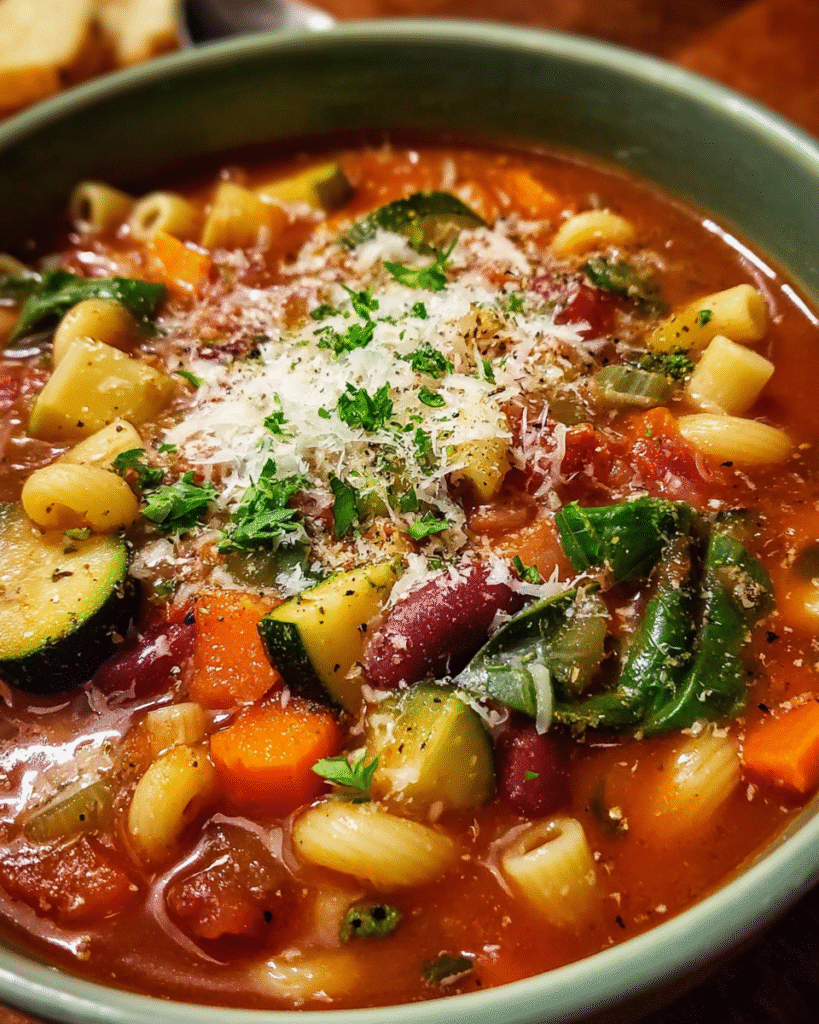
Serving minestrone soup is all about warmth, comfort, and presentation. Ladle it hot into wide bowls to showcase the vibrant vegetables and pasta. A generous sprinkle of freshly grated parmesan cheese on top adds richness and visual appeal. For a rustic touch, garnish with chopped parsley or a drizzle of olive oil. Pair with a slice of crusty bread—perfect for dipping into the flavorful tomato broth. Minestrone is a complete meal, but a light side salad or antipasto platter can round it out beautifully, making it suitable for both casual dinners and elegant gatherings.
How to Store and Reheat Leftover Minestrone Soup
Minestrone soup stores wonderfully, making it an excellent make-ahead meal. Let it cool completely before transferring to an airtight container. Store in the refrigerator for up to 4 days or freeze for up to 3 months. When reheating, gently warm it over medium heat on the stovetop or in the microwave. If the pasta has absorbed too much liquid, just add a splash of broth or water to loosen it. Stir occasionally to ensure even heating and adjust seasoning if needed. This soup often tastes even better the next day as the flavors continue to meld.
Creative Variations: Vegan, Gluten-Free, Seasonal Minestrone Soup
The beauty of minestrone soup lies in its adaptability. For a vegan version, omit the parmesan cheese and use vegan Worcestershire sauce. Going gluten-free? Swap traditional pasta for a gluten-free alternative like rice noodles or gluten-free fusilli. Embrace seasonal ingredients: add butternut squash or sweet potatoes in fall, asparagus and peas in spring, or corn and bell peppers in summer. You can even add leftover roasted vegetables for extra depth. Whether you’re customizing for dietary needs or simply using what’s in your fridge, minestrone welcomes creativity without compromising its heartwarming appeal.
FAQS
What is minestrone soup made of?
Minestrone soup is made from a medley of vegetables, beans, pasta or rice, and a savory broth. Common ingredients include onions, garlic, carrots, celery, potatoes, zucchini, spinach, kidney beans, and tomatoes. It’s a flexible recipe designed to use seasonal produce and pantry staples, making it both economical and hearty. Herbs and spices like basil, oregano, and black pepper bring depth, while parmesan cheese often finishes the dish with added richness.
What is the secret ingredient in minestrone soup?
The secret ingredient in minestrone soup is anything that adds umami depth and richness—often a parmesan rind or Worcestershire sauce. These hidden enhancers don’t overpower the soup but subtly elevate every flavor. Some cooks also use a spoonful of pesto or tomato paste to build complexity. It’s not one secret, but the layering of flavors that transforms it from simple to extraordinary.
Why is it called minestrone soup?
The name “minestrone” comes from the Italian word minestrare, meaning “to serve.” Originally, it referred to a simple soup course. Over time, it became associated with thick vegetable-based soups served across Italy. It reflects the dish’s purpose: a large, hearty, and nourishing bowl meant to be shared. Its humble roots and regional adaptability make it a cornerstone of Italian home cooking.
How to make minestrone soup Jamie Oliver?
Jamie Oliver’s version of minestrone soup is based on flexibility and seasonal ingredients. He starts with a soffritto of onion, carrot, and celery, then adds vegetables like leeks, greens, and beans. Sometimes he uses rice instead of pasta. The soup is slow-cooked for depth and often finished with fresh herbs, a drizzle of olive oil, or a spoonful of pesto. His method encourages creativity with what’s already in your pantry.
Conclusion
Minestrone soup isn’t just a recipe—it’s an experience of warmth, tradition, and adaptability. With its roots in Italian kitchens and its soul in seasonal vegetables, this humble dish offers endless variations that suit every taste and dietary need. Whether you follow a classic approach, explore Jamie Oliver’s version, or infuse it with your own pantry favorites, minestrone soup rewards you with bold flavors and comforting textures in every bite. From busy weeknights to slow Sunday meals, it brings nourishment without fuss. Try it once, and it might just become your go-to for cozy, healthy satisfaction—year-round.
For more successful recipes, you can visit our Facebook page or our Pinterest account