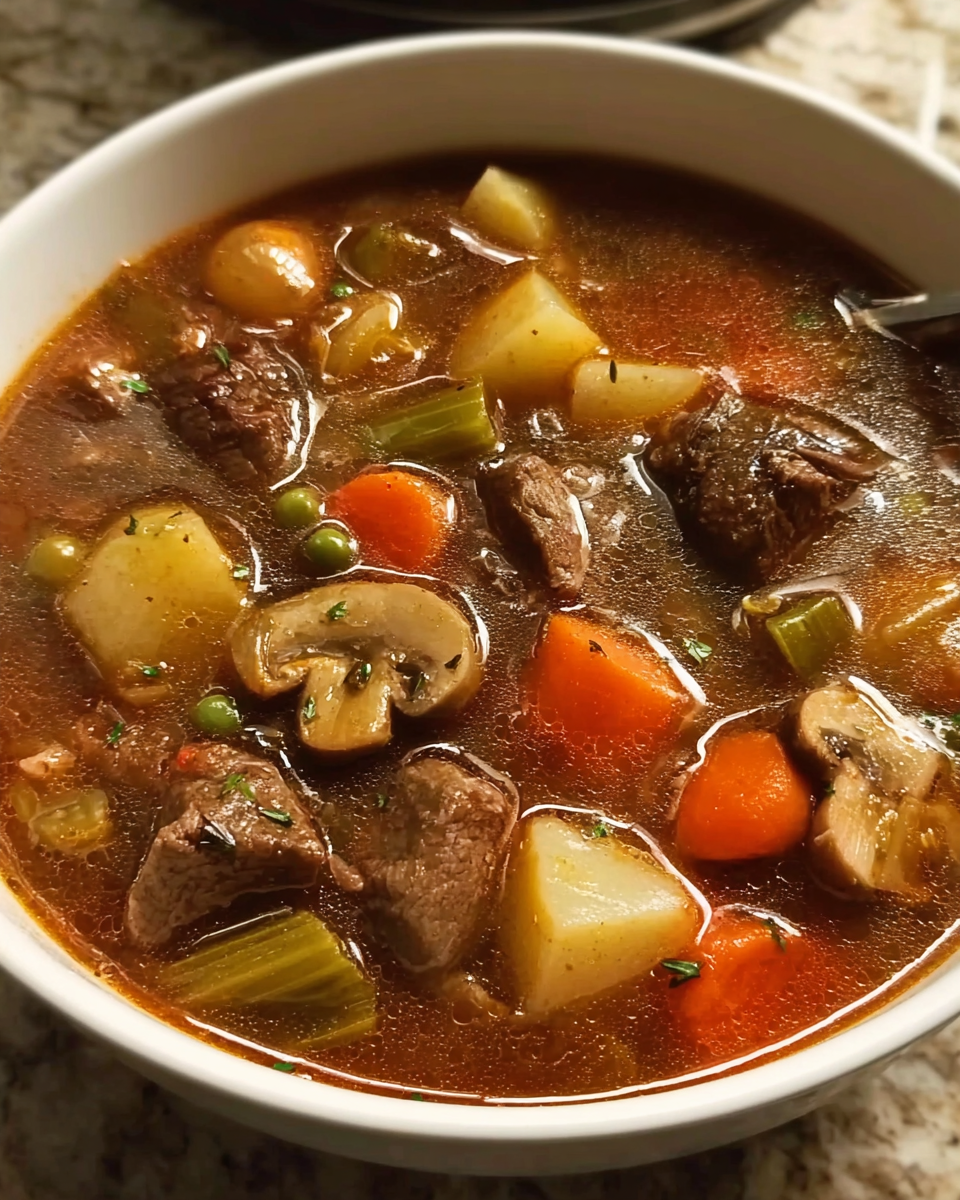
Vegetable Beef Soup That Warms the Soul: A Hearty Family Favorite
There’s something deeply comforting about a steaming bowl of vegetable beef soup on a chilly day. This article dives into its homestyle richness, from nostalgic memories to practical cooking tips. We’ll cover what makes this classic dish unforgettable, the essential ingredients, smart cooking techniques, and vegetable pairings to create your perfect bowl. You’ll also find expert answers to popular questions and a complete printable recipe at the end.
Print
Vegetable Beef Soup That Warms the Soul: A Hearty Family Favorite
- Total Time: 2 hours 5 minutes
- Yield: 5 servings
Description
- Vegetable beef soup with tender beef, vibrant vegetables, and bold broth. A comforting, flavorful homemade classic in every spoonful.
Ingredients
- 1.5 tablespoons olive oil, divided
- 1 pound stewing beef, cut into 2/3-inch cubes
- 1/2 teaspoon salt
- 1/2 teaspoon black pepper
- 1 medium onion, chopped
- 3 cloves garlic, minced
- 2 celery stalks, sliced into 1/3-inch pieces
- 3 carrots, sliced into 1/5-inch pieces (halve larger ones)
- 4 tablespoons all-purpose flour
- 2 1/2 cups low-sodium beef broth
- 1.5 cups water
- 2 tablespoons tomato paste
- 2 bay leaves
- 1 teaspoon dried thyme
- 1 cup frozen peas
- 2 medium potatoes, diced into 2/3-inch cubes
- Optional: 1 tablespoon butter or oil and 6 ounces small mushrooms, halved or quartered
Instructions
- In a large heavy pot, heat 1 tablespoon oil over high heat until very hot. Pat beef dry and season with salt and pepper.
- Brown beef in batches, adding more oil if necessary. Transfer browned beef to a bowl.
- If the pot is dry, add a touch more oil. Add onion and garlic, cooking for 2 minutes.
- Add celery and carrots, and cook for another 2 minutes until the onion is translucent.
- Stir in flour, and slowly pour in beef broth while stirring to avoid lumps.
- Add water, tomato paste, bay leaves, and thyme. Stir well, then return beef to the pot.
- Cover and simmer on medium-low heat for 1 hour and 15 minutes, or until beef is tender.
- Add potatoes and peas. Simmer uncovered for 20 minutes. If using mushrooms, cook them separately in butter or oil for 5 minutes until browned, then add them during the last 5 minutes.
- Soup is ready when potatoes are cooked through and beef is fall-apart tender. Adjust seasoning to taste.
- Serve hot, optionally with crusty bread.
- Prep Time: 15 minutes
- Cook Time: 1 hour 50 minutes
- Category: SOUPS
- Method: Stovetop simmering
- Cuisine: Western
Table of Contents
A Story Behind Every Bowl of Vegetable Beef Soup
My family’s soup pot memories
When I think of vegetable beef soup, I’m instantly transported to my grandmother’s tiny kitchen in New Orleans. The scent of seared beef and simmering vegetables would fill the air by mid-morning. I remember standing on a stool beside her, helping peel carrots and sneak a taste of potatoes. It wasn’t just food—it was our weekend ritual. Back then, she didn’t use timers or measuring spoons. She simply knew when it was “just right.” This soup tells stories. It’s rooted in resilience, made from simple ingredients, and brimming with flavor that comes from patience.
Why this soup stands out in my kitchen
While many meals have come and gone from my weekly rotation, this soup remains a permanent fixture. I’ve modernized it just enough—adding depth with a touch of tomato paste and thyme—but I’ve stayed true to its essence. The beauty of vegetable beef soup lies in its balance: tender beef, hearty veggies, and rich broth in one soul-soothing spoonful. It’s a dish that welcomes variation and thrives on familiarity. Whether you’re feeding a family or meal prepping for the week, this soup adapts to your needs.
Ingredient harmony: What makes it flavorful
Creating a truly satisfying vegetable beef soup is about using ingredients that work together seamlessly. Start with quality stewing beef for deep umami. Use vegetables that hold their texture—like potatoes, carrots, and celery—and simmer them gently so each bite retains its integrity. Tomato paste brings a subtle acidity, while thyme and bay leaves infuse aromatic warmth. For extra depth, sauté mushrooms separately and add them toward the end. If you enjoy comforting dishes like chowders or soups with a rich base, you’ll also love this easy broccoli soup, which pairs beautifully with crusty bread.
Building the Perfect Vegetable Beef Soup from Scratch
Smart prep steps that make a difference
Success with vegetable beef soup begins before you even turn on the stove. The most important prep step is drying the beef thoroughly before browning—it’s the key to that irresistible golden crust that builds deep flavor. Chop all vegetables evenly to ensure they cook at the same pace. Carrots should be thinner than potatoes because they take longer to soften. Also, using low-sodium broth gives you more control over saltiness. Pre-measuring your flour and tomato paste helps avoid fuss later when timing is crucial.
Choosing the right beef and broth base
Not all beef cuts are created equal for soups. Use stewing beef or chuck roast, cut into even chunks around 2/3-inch thick. Avoid lean cuts like sirloin—they dry out quickly and won’t deliver the same richness. Searing the beef in batches ensures a proper crust rather than steaming it in a crowded pot. For broth, always go with a low-sodium beef stock or a mix of beef broth and water for balance. The flour helps thicken the broth subtly, creating a velvety texture. This same principle is used in recipes like seafood chowder, where broth thickness defines mouthfeel.
Vegetables that elevate texture and taste
Carrots, celery, and onions form the essential flavor base of any vegetable beef soup, but don’t stop there. Add frozen peas for brightness and diced potatoes for bulk. Mushrooms, while optional, provide earthy depth—sauté them first in a touch of butter or olive oil until browned. This step concentrates their flavor and ensures they don’t become soggy in the soup. Avoid overcooking; vegetables should stay tender but not mushy. When timed right, every spoonful delivers variety in texture and taste, from soft potatoes to meaty chunks.
Cooking Techniques to Maximize Flavor in Vegetable Beef Soup
Mastering the simmering process
The heart of any great vegetable beef soup lies in its simmer. This is where flavors bloom, and textures develop. After browning your beef and sautéing the base vegetables, slowly stir in the broth and flour mixture to avoid lumps. Bring the pot to a gentle boil, then reduce to a medium-low simmer. Cover and let it cook for at least 75 minutes—this slow method breaks down the collagen in beef, making it fork-tender. Keep the lid slightly ajar to allow steam to escape without drying out the soup. Stir occasionally to prevent sticking.
Seasoning for layered flavor
One common mistake with homemade soups is under-seasoning. To truly unlock the flavor of your vegetable beef soup, salt and pepper must be added at multiple stages: when browning beef, sautéing vegetables, and again before serving. Tomato paste introduces a gentle acidity that brightens the broth, while thyme and bay leaves add a savory herbal note. You can finish with a pinch of sugar if the soup tastes too sharp, or a squeeze of lemon to brighten a dull batch. Taste often—it’s the best way to stay in control of your final result.
Time-saving options without compromising taste
Busy nights don’t mean sacrificing quality. To save time, chop veggies a day in advance and store them airtight in the fridge. Pre-browned beef can be frozen in batches, making weeknight prep faster. You can even cook the soup in a slow cooker after browning the beef and vegetables on the stove—just transfer to the slow cooker and simmer on low for 6–8 hours. For a lighter weeknight pairing, serve it with a salad or a side of crusty bread, or as part of a two-soup dinner alongside an easy broccoli soup for contrast.
Customizing, Storing, and Reheating Vegetable Beef Soup
Customize it your way: Add-ins and swaps
One of the best things about vegetable beef soup is its flexibility. You can tailor it to your preferences or pantry without losing the dish’s essence. Want to make it heartier? Stir in barley or cooked pasta. Prefer a lighter version? Use ground beef instead of stew cuts. Add green beans, corn, or even spinach for extra veggies. If you’re short on beef broth, a combo of vegetable broth and Worcestershire sauce mimics that savory depth. Don’t be afraid to experiment—just keep the cooking sequence the same to preserve texture and balance.
How to store for best flavor retention
Once your soup cools, transfer it to airtight containers. It’ll keep in the fridge for up to 4 days. For longer storage, freeze it in portion-sized batches—soups with potatoes can change texture when frozen, but if diced small, they hold up well. When storing, avoid letting soup sit uncovered for too long, as this causes it to lose moisture and flavor. Label and date each container so you know how long it’s been stored. This method makes it easy to reheat only what you need, saving time and reducing waste.
Smart reheating: Keep flavor and texture intact
To reheat vegetable beef soup, bring it to a gentle simmer over medium heat. Stir regularly to redistribute ingredients and prevent sticking. Avoid boiling—it can toughen the beef and turn vegetables mushy. If reheating from frozen, thaw overnight in the fridge or use a defrost setting if you’re short on time. Taste again before serving—soups often need a quick seasoning refresh after storage. Add a splash of broth or water if it has thickened too much, and consider topping with fresh herbs or a squeeze of lemon for a burst of brightness.

FAQS
What all goes in vegetable beef soup?
A classic vegetable beef soup includes stewing beef, onions, garlic, carrots, celery, potatoes, and peas simmered in a savory broth made with beef stock, tomato paste, and herbs like thyme and bay leaves. Optional additions include mushrooms, corn, green beans, or barley for extra texture and variety.
What is the secret ingredient in vegetable soup?
The secret to unforgettable vegetable beef soup lies in layers of flavor. Tomato paste adds a touch of tang and richness, while sautéed mushrooms deliver an earthy depth. Seasoning gradually throughout cooking, especially with dried herbs like thyme, also helps build that complex, homey taste.
How to make an easy beef soup?
To make an easy beef soup, start by browning stewing beef for a deep, savory base. Then sauté onions, garlic, carrots, and celery, add broth, tomato paste, and seasonings, and simmer until tender. Add potatoes and peas toward the end for perfectly cooked vegetables. Minimal prep, maximum comfort.
What vegetables do you put in beef stew?
Common vegetables for beef stew or vegetable beef soup include carrots, celery, onions, and potatoes. Frozen peas, corn, and green beans are also excellent additions. Choose firm vegetables that can hold their shape during simmering and absorb the beefy broth well.
Conclusion: A Bowl of Comfort That Never Fails
From nostalgic family memories to expert preparation tips, vegetable beef soup offers both heart and substance. Its tender chunks of beef, vibrant vegetables, and rich broth create a timeless dish that’s endlessly customizable. Whether you’re reviving a cherished tradition or discovering this classic for the first time, it’s a meal that satisfies on every level. With just a bit of prep and patience, you can bring this comfort food staple to your table anytime. For more soul-warming recipes, explore our rich seafood chowder and ultra-creamy easy broccoli soup.
For more successful recipes, you can visit our Facebook page or our Pinterest account