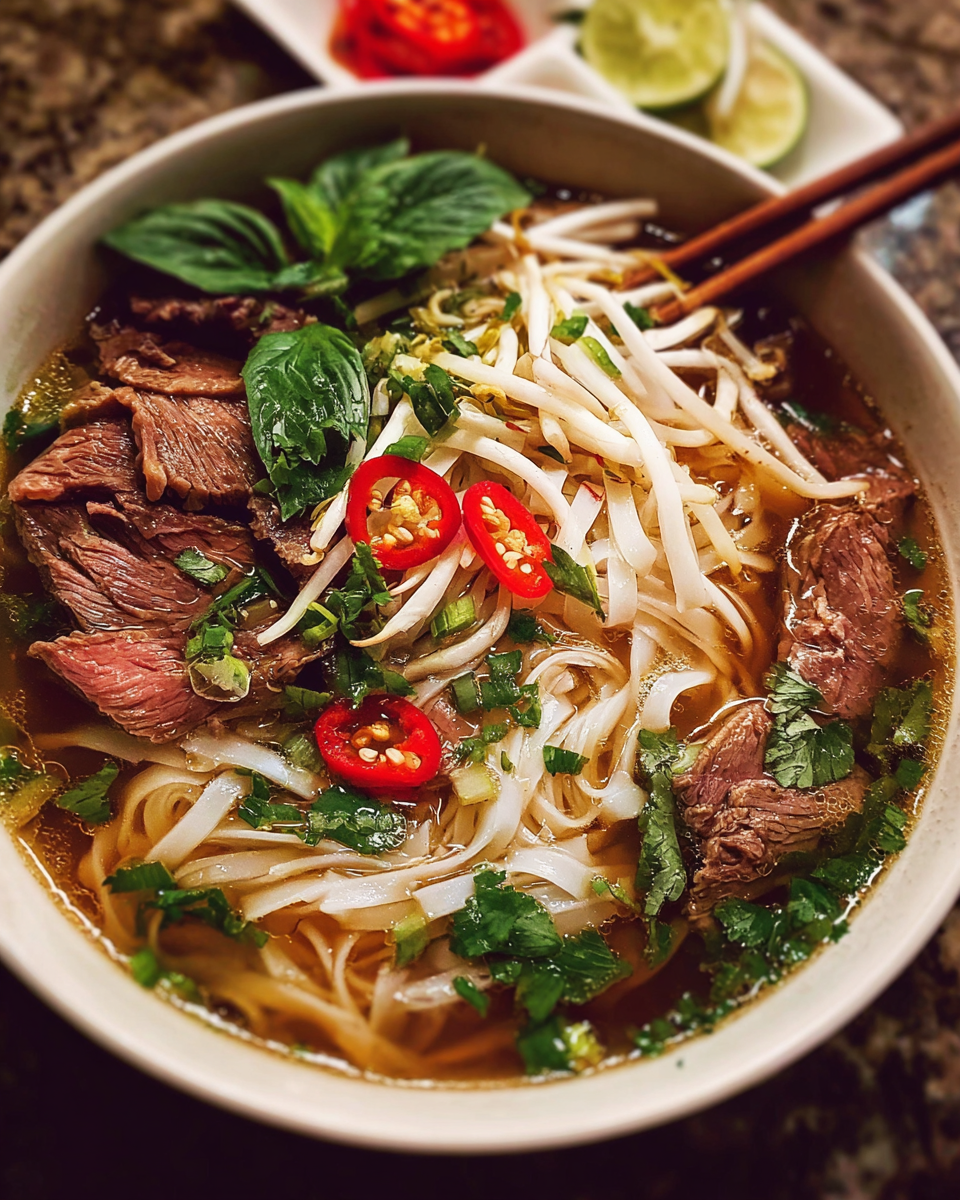
Vietnamese Pho Recipe: Authentic Comfort in a Bowl
Introduction
Few dishes evoke warmth, comfort, and cultural richness like a steaming bowl of Vietnamese Pho. This iconic beef noodle soup is more than just a recipe — it’s a culinary journey rooted in tradition, fragrance, and flavor. In this article, we’ll unravel the secrets of crafting an authentic Vietnamese Pho recipe at home, from carefully charred aromatics to the perfectly spiced broth. We’ll explore its origins, breakdown the essential ingredients, and offer tips to enhance your pho experience. Whether you’re a home cook or a seasoned foodie, you’re about to discover the soul of Vietnamese cuisine in one flavorful bowl.
Print
Vietnamese Pho Recipe: Authentic Comfort in a Bowl
- Total Time: 4 hours 40 minutes
- Yield: 6 servings
Description
- Vietnamese Pho recipe with brisket, rich broth, and authentic spices. Learn to make the perfect pho at home with step-by-step instructions.
Ingredients
- Aromatics:
- 2 large onions, halved
- 5 oz fresh ginger, halved lengthwise
Spices:
- 10 whole star anise
- 4 cinnamon sticks
- 4 green cardamom pods
- 3 whole cloves
- 1 1/2 tablespoons coriander seeds
Broth Base:
- 3 pounds beef brisket
- 15 cups water
Seasoning:
- 2 tablespoons white sugar
- 1 tablespoon salt
- 3 tablespoons fish sauce (or light soy sauce)
Noodle Bowl (per serving):
- 1.5 oz dried flat rice noodles (or 4 oz fresh)
- 1 oz raw beef tenderloin, very thinly sliced
- 3–5 slices cooked brisket
Toppings:
- Bean sprouts
- Thai basil (3-5 sprigs)
- Cilantro (3-5 sprigs or additional basil)
- Lime wedges (optional)
- Thinly sliced red chili (optional)
- Hoisin sauce (optional)
- Chili sauce like sriracha (optional)
Instructions
- Char Aromatics: Heat a dry heavy skillet over high heat. Place onions and ginger cut-side down and cook until charred. Flip and char the other side. Set aside.
- Toast Spices: In a dry pan, toast star anise, cinnamon, cardamom, cloves, and coriander seeds over medium-high heat for 3 minutes. Set aside.
- Prepare Brisket: Rinse brisket under cold water. Place in a large pot with water. Bring to a boil and cook for 5 minutes. Drain and rinse brisket under cold water.
- Cook Broth: Wipe the pot clean. Add 15 cups of fresh water. Bring to a boil, then add the brisket, charred aromatics, and toasted spices. Stir in sugar and salt. Reduce heat, cover, and simmer for 3 hours. Remove brisket, let cool, then refrigerate for later use.
- Finalize Broth: Continue simmering the broth uncovered for 40 minutes. Strain through a fine mesh sieve, discarding solids. Return liquid to pot. Stir in fish sauce (or soy sauce). Taste and adjust seasoning as needed. The broth should be savory, spiced, and mildly sweet.
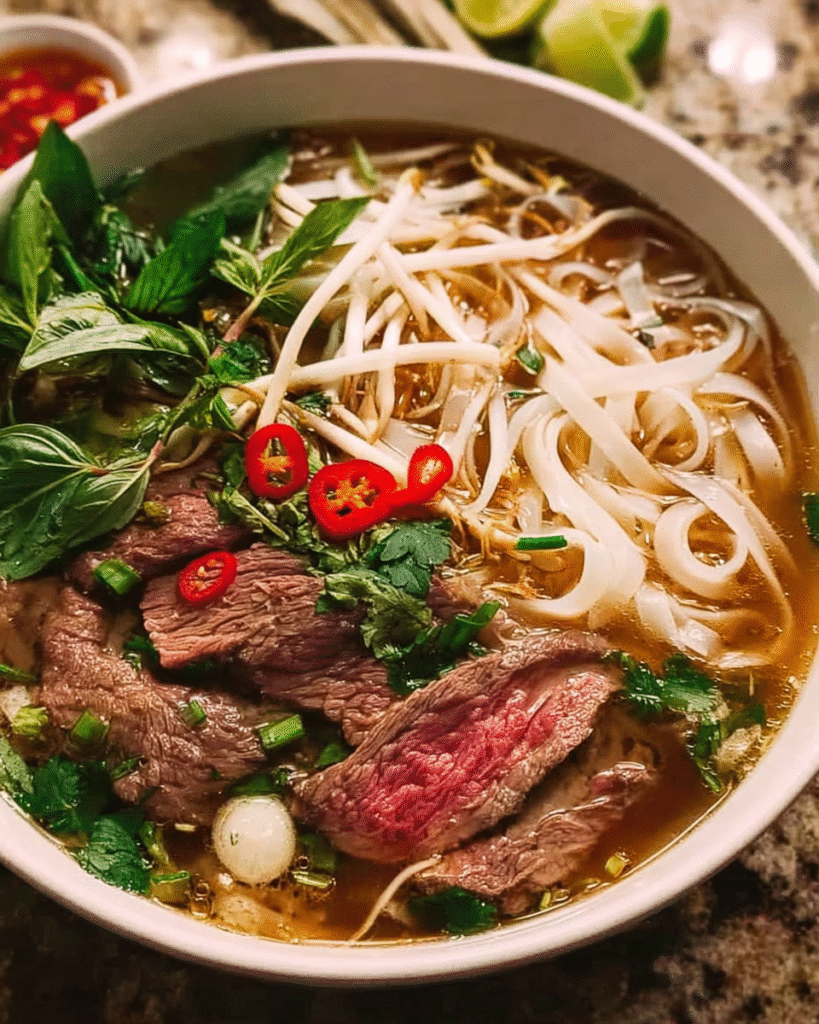
- Assemble Pho Bowls: Prepare noodles according to package instructions. Drain well. Place noodles in each bowl. Top with raw beef slices and cooked brisket. Pour approximately 14 oz hot broth over the contents to gently cook the raw beef. Serve immediately with toppings on the side for customization.
- Prep Time: 20 minutes
- Cook Time: 3 hours 20 minutes
- Category: SOUPS
- Method: Simmering
- Cuisine: Vietnamese
Table of Contents
The Origins of Vietnamese Pho Recipe
A Taste of History in Every Sip
Pho has humble beginnings in Northern Vietnam in the early 20th century, influenced by both Chinese and French culinary traditions. Its signature clear broth and flat rice noodles gained rapid popularity due to its depth of flavor and accessibility. Over time, as pho made its way down to the South, the dish evolved — garnishes became more abundant, and the broth turned slightly sweeter. Today, whether you enjoy it street-side in Hanoi or from a home kitchen in New Orleans, pho reflects a beautiful blend of culture, technique, and taste.
Why This Vietnamese Pho Recipe Stands Out
Unlike shortcuts that rely on store-bought broth or quick flavor packs, this Vietnamese Pho recipe goes back to the essentials — fresh beef brisket, charred onions and ginger, and a medley of toasted spices. What results is a broth that sings with umami, sweetness, and a delicate spice that isn’t overpowering. The slow simmering process unlocks a complexity no quick fix can match, ensuring every spoonful is steeped in authenticity. Try pairing it with comforting recipes like this Slow Cooker Mexican Chicken Soup for a diverse, flavor-packed meal plan.
Vietnamese Pho as a Cultural Symbol
More than a meal, pho represents the spirit of Vietnam — resilience, warmth, and community. Families often gather around large pots of pho, especially during holidays or special weekends. The act of sharing and customizing one’s own bowl with toppings like Thai basil or chili sauce makes it interactive and deeply personal. In Vietnamese homes, pho isn’t just cooked — it’s celebrated.
The Secrets Behind the Pho Broth
Building a Vietnamese Pho Broth from Scratch
The backbone of any Vietnamese Pho recipe is its broth — rich, aromatic, and layered with complexity. To achieve this, you start by charring aromatics like onions and fresh ginger. This step deepens the flavor and adds a smoky warmth that’s essential to authentic pho. Toasting spices such as star anise, cinnamon, cloves, cardamom, and coriander intensifies their aroma and brings out natural oils. Once added to the pot, these elements create a base that’s both savory and subtly sweet — a signature trait of pho.
The brisket plays a vital role, too. It’s parboiled to eliminate impurities, then slow-simmered for hours to extract maximum flavor. While some recipes may use bones, this version proves you can achieve a clean, deep flavor with brisket alone. It’s a method that mirrors time-honored techniques, resulting in a broth that’s clear yet bursting with character.
Flavor Balancing with Traditional Seasoning
Achieving a perfect pho broth is about harmony — every ingredient must contribute without overpowering. This Vietnamese Pho recipe uses white sugar and salt to balance the spices, and fish sauce to deepen the umami. The broth is simmered uncovered for the final 40 minutes to concentrate flavors before being strained. This results in a clean, deeply infused liquid that forms the heart of your pho bowl.
Unlike commercially prepared versions, this broth avoids additives, allowing each spice and aromatic to shine. Whether you’re serving it at a casual dinner or a weekend gathering, the fragrance alone tells your guests this dish was crafted with care.
For more soup inspiration, explore this delightful Creamy Chicken Noodle Soup that’s equally comforting yet completely different in style.
Why Slow Simmering Makes All the Difference
Fast pho is tempting — but it won’t deliver the same depth. The magic of this Vietnamese Pho recipe lies in the patience of its process. Simmering the broth gently over hours allows flavors to unfold, meld, and evolve. Impurities rise and are removed, and what’s left is clarity both in flavor and appearance. Slow cooking extracts the full essence of the brisket and spices, giving you a broth that isn’t just hot — it’s soulful.
Perfecting the Noodle Bowl
Choosing the Right Noodles and Protein
An exceptional Vietnamese Pho recipe doesn’t stop at the broth — it shines through in how each bowl is assembled. Traditional pho features flat rice noodles, either dried or fresh. Dried noodles should be soaked and boiled just until tender, while fresh ones require only a brief blanching. Overcooking makes them mushy; undercooking leaves them too firm. The goal is a soft, silky texture that effortlessly absorbs the broth’s flavor.
Next comes the protein. This recipe balances thinly sliced raw beef tenderloin and pre-cooked brisket slices. The raw beef is added directly to the bowl before the hot broth is poured over it, gently poaching the meat to tender perfection. This method preserves the beef’s natural sweetness and creates a striking contrast between the tenderloin and the deeper, richer brisket.
Assembling and Customizing the Perfect Bowl
Each bowl of pho is a chance to personalize. Start by placing the noodles in a large bowl, followed by the raw beef slices and cooked brisket. Then, ladle in approximately 14 ounces of hot broth — the heat will cook the raw beef instantly, releasing its juices into the soup. This interactive cooking method is one of pho’s defining characteristics.
From there, toppings transform the dish. A generous handful of bean sprouts adds crunch. Thai basil and cilantro infuse herbal notes. For added brightness, squeeze in lime. If you enjoy heat, add thinly sliced red chili or a dash of sriracha. Sweet and savory fans often stir in a swirl of hoisin. No two bowls are ever the same — that’s part of pho’s enduring charm.
This vibrant, customizable nature is why pho resonates with home cooks looking for both tradition and creativity on the same plate.
Tips, Tricks, and Serving Suggestions
Elevating Your Vietnamese Pho Recipe at Home
To truly master Vietnamese pho at home, attention to detail makes all the difference. First, use a fine-mesh strainer when finishing the broth — clarity is essential. Cloudy broth can indicate rushed cooking or unfiltered solids. Second, slice the raw beef tenderloin as thinly as possible; placing it in the freezer for 10–15 minutes makes this easier. The thinner the slice, the more effectively it cooks when hit with hot broth.
It’s also vital to control your heat while simmering. Keep it low and gentle to avoid over-reduction or bitterness from over-extracted spices. If you’re preparing pho in advance, store the broth separately and reheat before serving to maintain that just-made freshness.
Lastly, don’t skip the charred aromatics or toasted spices — these steps are foundational. They may seem minor, but they dramatically enhance the complexity and aroma of the broth, setting your dish apart from basic shortcuts or instant mixes.
Serving Pho Like a Pro
When it’s time to serve, presentation enhances the experience. Use deep, wide bowls to allow room for noodles, toppings, and broth to mingle. Offer a platter of garnishes on the side so everyone can customize their own bowl — this brings a communal feel to your table, much like in Vietnamese households.
Serve pho piping hot. The broth should slightly cook the raw beef and warm the noodles thoroughly. Keep a kettle of hot broth ready in case anyone wants a refill — it’s a generous touch that echoes the hospitality pho is known for.
Consider pairing your pho with light sides like pickled vegetables or fresh spring rolls to round out the meal without overwhelming the palate. And don’t forget to offer sauces — hoisin, chili, and even a bit of fish sauce can let each diner tailor the flavor to their liking.
FAQS
What is Vietnamese pho made of?
Vietnamese pho is a flavorful soup consisting of a clear beef broth, flat rice noodles, and a mix of raw and cooked beef. Key ingredients include charred onions and ginger, toasted spices like star anise and cinnamon, and seasonings such as fish sauce, sugar, and salt. It’s typically garnished with fresh herbs like Thai basil, cilantro, and bean sprouts, and served with lime, hoisin sauce, and chili sauce on the side for customization.
What is the secret ingredient in pho?
While pho is made from a blend of spices and aromatics, many consider fish sauce to be the secret ingredient. It adds a deep, savory umami flavor that brings balance and authenticity to the broth. Another often-overlooked secret is the charring of the ginger and onions, which imparts a distinct smoky depth to the soup.
What are the 5 spices in pho?
The five essential spices that define an authentic Vietnamese Pho recipe are star anise, cinnamon sticks, cloves, green cardamom pods, and coriander seeds. These spices are toasted before simmering to release their oils and create the complex, warm flavor that pho is celebrated for.
How do you use pho?
Pho is enjoyed as a complete meal. To use it, assemble your bowl with noodles, beef (raw and/or cooked), and then pour in hot broth. Add your choice of toppings such as bean sprouts, herbs, and sauces. Stir gently and enjoy each bite with chopsticks and a spoon to savor the broth. It’s best eaten hot, fresh, and with a generous squeeze of lime or dash of chili for extra zing.
Conclusion
Vietnamese Pho is far more than just soup — it’s a symbol of cultural heritage, patience, and artistry in a bowl. This authentic Vietnamese Pho recipe honors tradition while simplifying steps for modern home cooks, making it accessible without compromising flavor. With its aromatic broth, tender beef, and customizable toppings, pho offers a nourishing, sensory experience. Whether you’re new to Vietnamese cuisine or revisiting a favorite, this recipe invites you to bring warmth, history, and heart to your table. Craft it once, and you’ll find yourself coming back to it again and again.
For more successful recipes, you can visit our Facebook page or our Pinterest account